

UPDATE: We didn’t tell you that this is by the one and only Dave Chalker, Editor-in-chief of Critical Hits.
One of the things that stuck with me after attending a talk by game designer Monte Cook was his opinion on character sheets. He wasn’t talking about layout, or amount of stats or any of that: he was talking about the margins.
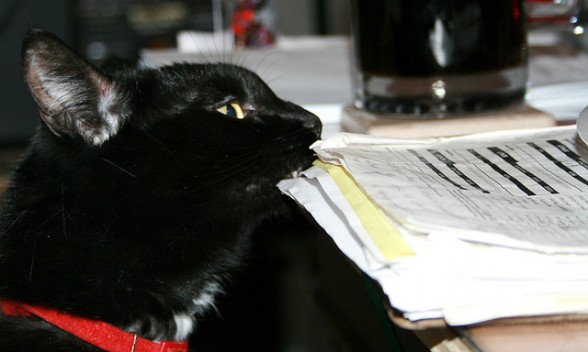
More so in older editions of D&D, the margins of the character sheet were used to mark aspects of your character that didn’t conveniently fit into the rules. Cursed to never be able to find true happiness, cool scar running along the PC’s arm, pursued by a scorned lover, paralyzing fear of water.
There are so many great tools in modern RPGs that it can be easy to lose all the non-rules parts of characters, especially for DMs. When there are rules for every character flaw or lasting scar, it can be tough to break out of the mold. Here are three quick tips to try and bring some of that back.
Give PCs Unexplainable Powers
When your story fits with it, you can tell a PC that he has the power to do something- he just has to tell the DM. Don’t write out the rules. Instead, have that player jot down a note in the margin like “Can invoke the power of Unnamed God” or “Overcharge a spell.” You can make some notes on what that means to you, but don’t share the exact effects. When they do that, you can describe the additional effect based on the situation they’re using it.
By keeping the exact benefits changing, you can preserve the mystery for longer. Or, use it as a springboard to develop into a full-fledged power that the PC gets to keep.
Tie-in Strange Circumstances
When giving out rewards to the PCs, whether it be treasure or something more intangible, consider tying it to something strange. Maybe the sword that they discovered has an unusual smell. Maybe the new spell discovered has an added descriptor of “might cause madness.” Perhaps when spending the treasure, the character finds that it refuses to be spent on certain things by sending impulses to the character.
The trick here is to make it not entirely “your character has found something that he worked hard to get, and is now hosed.” These rewards should have some extra benefits to go along with the quirks, otherwise, the players probably won’t bother. Also it’s good to keep the effects from being strictly mechanical drawbacks.
Record History
When the heroes have become well-liked in a region, have them write it down somewhere on their sheet. When the party encounters a hag and it curses one of the PCs, have that PC write the curse down. When the character almost drowns in an encounter, have them write it down.
By putting it on the character sheet as a defining moment, it’s more likely to be remembered and referenced. Let the characters drive this- if they are trying to strike a bargain in another city, they can say “well, we’re well-liked in this city…” and you can have the character recognize them from this exploit: “Hey, my brother in law is from there!” Same with the more negative examples. If a player sighs and says (even jokingly) “oh, the hag’s curse is finally going into effect,” bring that into the game. Then later, that can be turned around if the player decides to deal with the curse, and emerges from the experience all the better.
By busting out of the rules that are provided, no matter the system, you can add extra flavor in a way that can only be done at your table, and not by a ruleset. Try it and see, and let me know if you’ve done anything similar.




Obsidian Portal is the award winning Online Campaign Management System for tabletop role-playing games. It’s free to use, it can be accessed from any web browser and it's built from the ground up for gamers by gamers.
We host a huge community of tabletop RPG players who are all looking to get the most out of their tabletop gaming experience. You play your campaign and we help you manage it. It’s that simple.
Excellent post — to get all literary, this reminds me of how important it is to keep the PCs in a state of what Keats called “negative capability”, or more simply put,”capable of being in uncertainties, mysteries, doubts without any irritable reaching after fact & reason.” Or even more simply put, what they don’t know or understand yet has infinitely more interest in it than what they do, and keeping them in that state with slow, methodical reveals (which, unlike the TV show Lost, should remain consistent) that build towards really cool stuff.
More from Dave, please!
I agree, great post. We do things like this all the time…or at least I do. I have my characters birthday in the margins as well as the safe word we use to make sure that no imposters enter the party.
Its also a great space for all the additional modifiers I have for my skills. The back of the pages also a great place for neat details. Keep my characters fancy change of clothes on the back.
Is there a transcript of Monte’s talk? I’d love to read it. He’s done some really awesome work for RPGs.
O.o
Hey Tristan- there’s no transcript I know of, but here’s the writeup from my notes of his seminar: http://critical-hits.com/2009/07/05/origins-2009-monte-cook-designing-a-better-dungeon/
Character booklets are great for having places for all those pesky details. When a character (not my PC, someone else’s) came up with a stupid tactic that somehow worked (the dice approve is my best guess) or when the same PC learns from the GM that his mother is famed for her pickles..there’s a place in the notes.
When my character got the nickname “Corporal Crispy” after dying by fire. Twice. There’s not a place on the sheet & it wasn’t in the notes, but it helped me to remember that she’s ‘ahem’ cautious about flames after that.
Some of those intangibles can also have tangible aspects. You did safely retrieved Lord SoandSo’s daughter; he was so impressed that he wrote a letter of recommendation for you. You can pull that out when trying to get another job, as part of your bona fides.
Pingback: On 2010-12-04 I said… | Dave: The Game
Caption for picture:
“Oh hai, I adjustered your Con score… and btw ur Cats Grace buff ran out, kkthxbai!”
…Troels
We have sort of the opposite in action in my games. I have two players who have written some minor details about their characters’ past and i’m working that into the game directly.
One was playing a sort of lizardman paladin and had said his was the last of his kind, but then another player also played a lizardman, so now i have it where there are different tribes of lizardmen, and he was raised by humans who had no idea that there were others like him.
Another is playing a renegade dwarf who may or may not be guilty of murdering several people. I began his storyline right off the bat with his trial and exile. now he’s on a quest to prove himself innocent and restore his family’s honor.
iam a huge fan of all theese minor things… ive had a player who became the host of a minor demon, granting him odd knowledge, a player who lost his arm to have it reattached by alchemical means, effectively making it unable to register pain, modded the claric class in 3,5 so that the character have to actually pray for specificly what help they want in the situation so i (the GM) could decide what exact spell their deity would grant