Blog Archives
Interview with Evil Hat’s Fred Hicks
As some of you may know, Evil Hat is working on making a Dresden Files RPG. Everyone involved is busting their humps to get it ready for ORIGINS. Evil Hat publisher Fred Hicks took some time last week to answer some questions about the system and why you should be interested in picking it up. Lets read, shall we?
OBSDIAN PORTAL: Can you briefly tell us about the setting that The Dresden Files RPG and the books at large takes place in?
FRED HICKS: Two different answers, there. I’ll take the books first: they occur in a modern-day Chicago, where Harry Dresden is the only practicing wizard / private eye who advertises in the Yellow Pages. It has a blend of noir and adventure-fiction sensibility to it, and a big helping of urban fantasy gone gritty.
The Dresden Files RPG *could* take place there… but it doesn’t have to, necessarily. We have an entire chapter that talks about getting everyone together around the table, picking a city that interests them, and then turning it into its Dresden Files magic-lives-behind-the-scenes setting for the game.
OBSDIAN PORTAL: Where did Jim get the inspiration for this modern-day-fantasy-noir world?
FRED HICKS: Jim’s the first to admit he stole ideas from all over. The Anita Blake series by Laurell K. Hamilton was an early influence. The name Harry Dresden came from a combination of World War II research and the HBO movie “Cast A Deadly Spell”. Bob the Skull, who’s pretty much exactly what he sounds like, was a joke Jim had with his writing teacher. But it’s hard to really pin down one place and say “from there”, because Jim is a voracious reader. Where’d he get the idea? From all of genre fiction.
OBSDIAN PORTAL: What role does Jim Butcher have in its ongoing creation?
FRED HICKS: “Its” meaning the RPG? His direct involvement is light, honestly, though he and his agent have looked at the game to give it final approval. Jim’s just too busy to really actively get into the mix. Luckily, we have a very effective proxy for him in the form of the novels and short stories. Our lead setting developer, Chad Underkoffler, documented all of the material exhaustively in preparation for writing those portions of the game, and it really paid off.
OBSDIAN PORTAL: Ok, enough about Jim for a second, who else is on TDF RPG team?
FRED HICKS: There’s Chad, who I already mentioned, and me — I’m the publisher, the layout guy, and one of the developer/authors. Rob Donoghue laid some groundwork quite some time ago (and is working on the index for the game presently), and Genevieve Cogman helped us find our feet with the setting, writing an early draft of the introductory chapters for each of the two RPG books. The big guns, though, are Lenny Balsera as lead system developer, Ryan Macklin as lead project developer, Amanda Valentine as our managing editor, and Clark Valentine as our man providing covering fire for the system and setting sides of the effort. Adam Dray also helped out with editing for a while. Then there are all the Alpha playtesters — too many to mention here — who helped us build confidence that we had the system on the right track after a few failed attempts.
OBSDIAN PORTAL: The Dresden Files RPG is powered by an updated Fate 3.0 system. Can you tell us what kinds of updates were made? Does it still play like the Fate system we all know and love?
FRED HICKS: It plays like the Fate you’d know from SOTC, but with the dials firmly twisted in different directions — all done in service of producing a play experience that feels like the novels. Combat is FAR more dangerous than ever before. People are fragile and sometimes it’s better to lose a fight or walk away from one than to try to gut it out through to the end. The relationship between power and free will (you trade off the latter for more of the former) is baked right into the elements of the Fate Point economy. And we’ve taken all of the lessons of the last four years with Spirit of the Century and applied them to produce game system advice that is clearer and more on-target than before. This gives us a few mild terminology shifts as well, but getting into that kind of specific is better handled by a book than an interview.
OBSDIAN PORTAL: Where should we point our friends when they ask; “What’s the Dresden Files RPG?”
FRED HICKS: Start with the game’s website –http://www.dresdenfilesrpg.com — and one of the earlier novels. Honestly, any one of the first four, up through Summer Knight, would do. I hear Summer Knight is one of the better ones for reeling them in. On the website we’re “leaking” out bunches of information about the setting and character types and magic and all that. Some browsing around there will tell them a lot.
OBSDIAN PORTAL: Does TDF RPG have classes or races or factions?
FRED HICKS: Not *exactly*. We offer up a bunch of playable templates — recipes for creating characters and the powers that are appropriate for them — but they’re not as restrictive as any of the things you’re talking about usually are. A cross section would be: wizards, werewolves, minor talents, emissaries of power, champions of God, changelings, and certain kinds of maybe-not-so-evil vampires. But there’s more than just those.
OBSDIAN PORTAL: What character options are open to players interested in exploring their more monstrous sides?
FRED HICKS: Two kinds of playable werewolf and changelings are probably going to be front and center for that, but the field’s pretty wide, there — the trick is to come up with something monstrous that’s not SO monstrous that it represents a creature driven by its nature rather than with the option of free will. Only the latter have the chance of being player characters.
OBSDIAN PORTAL: What character options exist for those who like to shoot first and role-play later/never?
FRED HICKS: I believe those options are called “dead”.
OBSDIAN PORTAL: What character options exist for the white knight in all of us that seeks to banish evil from the world?
FRED HICKS: You could always pick up one of the currently ownerless Swords of the Cross to become a Knight. So white knights are almost literally possible. There are some options that land short of that. But really we expect a lot of good-guy thinking, when it comes down to it — the people who stand against the darkness could be regular-Jane cops, they could be empowered by their faith in their religion, or they could be rough and tumble wizards just trying to make a little bit of difference in their corner of the world.
OBSDIAN PORTAL: What types of Magic are there in this world?
FRED HICKS: The two main varieties of magic — beyond innate powers specific to certain kinds of creatures — are evocation and thaumaturgy. Evocation is the flash-bang-boom stuff, quickly cast and usable in a combat setting. It tends to be all about straight lines, pushing power from point A to point B, conceptually simple stuff. Thaumaturgy is the slower, ritualized stuff that requires preparation and research, but can produce potent, long-ranging, and more widely varied effects. A spin-off of those is what we call Sponsored Magic, which combines those two methods, but draws some of its power from a deal made with some kind of supernatural entity rather than from your own potential.
OBSDIAN PORTAL: How is the production schedule coming along?
FRED HICKS: Good! The first pass on layout is done, but there’s another couple months of effort to go before we can really think about starting up preorders. Closer than ever, though, and with an end in sight. I think — hope — we’re on track for our intended Origins 2010 release.
OBSDIAN PORTAL: Will there be a physical product release, or is TDF RPG all about the digital distribution?
FRED HICKS: It’ll be two _big_ books — the first volume, “Your Story”, is about 400 pages long, and the second, “Our World” is over 250. You can find out more about the particulars over on the game’s website.
OBSDIAN PORTAL: What’s your favorite aspect of the system?
FRED HICKS: How closely it lands to the feel of the books just in terms of how the system operates in play. We don’t tell people “you must do X to make it feel like the Dresden Files”… it just _feels like the Dresden Files_ when you play it. Hot stuff.
OBSDIAN PORTAL: What are you most proud of in TDF RPG?
FRED HICKS: How close it is to being done. It’s been a ludicrously long road.
OBSDIAN PORTAL: What kind of price point are we looking at here?
FRED HICKS: Well, full color hardcovers with page counts like what I mentioned above — you can look at similar products in the market and draw some educated and reasonably accurate conclusions. But we haven’t settled on the final price points yet.
OBSDIAN PORTAL: Can we expect any future content in the form of supplements or accessories for TDF RPG?
FRED HICKS: We’re not explicitly planning for that, but it doesn’t mean it can’t happen. For now we’re looking at delivering a complete game in those two volumes and then letting the novels themselves act as supplements. We’re definitely planning on hosting some public “let’s stat this story!” exercises via the blog over on The Dresden Files RPG website.
OBSDIAN PORTAL: When can we start playing?!
FRED HICKS: Soon! The book releases in June, and we’re hoping to start a preorder by then, if not 1-2 months before then, which will include folks getting to download the PDF immediately when they place their preorders through us or through Indie Press Revolution.
Free System Friday, 2/19/2010
It’s Free System Friday! Tired of your current RPG system? Try a new one for free! Last week, we gave you a great setting idea from the mind of designer Will Hopkins. This week: ICAR.
Icar is set in the far future, presently 92030. The human race has been through many wars but none as far reaching as the war that begun one thousand years ago. Now, the galaxy is split between a race of intelligent robots, called the Droids and the human race. The droids rarely impinge the territory of the human race, fighting amonst themselves they are little threat.
Watching over the human race is the Imperium, which is a benevolent organisation which desires the progress and survival of the race. The Imperium understands the gravity of its task. Without them, the human race would soon break apart. Of the three areas of space (called clusters) that humans control, one is rich and life is easy, one is industrially based and the third is still being colonised.
99% of the human race live and die without any knowledge of what is going under the surface of society. Gaia, a means of communicating in a virtual reality, has allowed subversive syndicates to operate within human space. The syndicates work either to make money illegally or to simply explore avenues of human existence that are denied to them by the Imperium.
The player characters begin as pawns in a huge space opera where millions of people’s lives are often at risk, by fighting for what they believe, they improve and grow in power until they are the ones holding the strings.
Grab some friends, grab the ICAR core rule elements, and make a new campaign today!
Contest Results for the Stats & Art Contest: The Giraffelich!
So we announced our 6 winners on our Newsletter. By the way, do you get the Obsidian Portal Monthly Newsletter? To get it, edit your Obsidian Portal Profile, check Receive e-mail updates, and click Update! Anyway, we announced the winners, now we’ll show you the winning entries!
Stats:
First Place: Matthew Rinehart’s giraffelich.
Second Place: Geoff Nunn’s giraffelich.
Third Place: Owen K.C. Stephens’ giraffelich.
Art:
First Place: Justin Swadlo

Second Place: Bryan Cohen
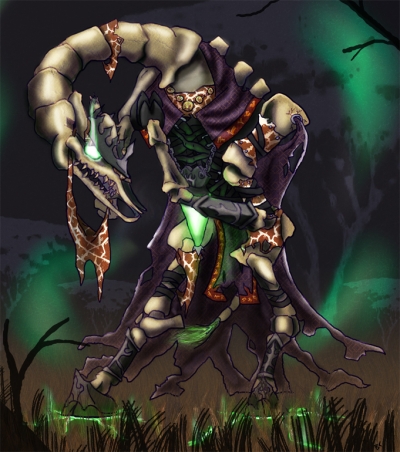
Third Place: Nicole Jekich
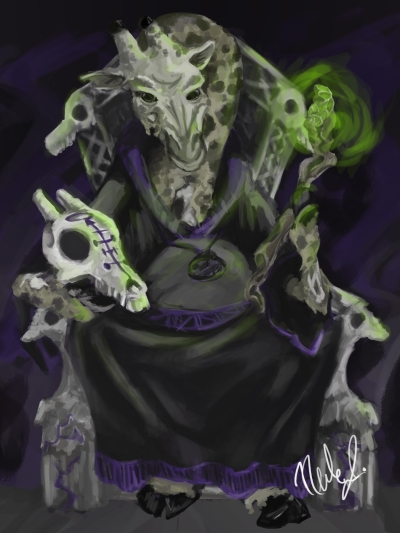
Congrats to all the winners! If you won, e-mail our Content Director (dan (at) obsidianportal (dot) com) to get your $25 Amazon Gift Certificate.
Free System Friday, 2/12/2010
It’s Free System Friday! Tired of your current RPG system? Try a new one for free! Today’s setting comes to us from designer Will Hopkins and it’s called City of Rain, City of Darkness.
Imagine a city where it never stops raining, airships rule the skies, and desperate citizens fight for survival. The wealthy build higher and higher into the sky, seeking to escape the damp while they leave to the darkness the laborers on which industry thrives. Technology and industry march on through the shadows and the downpour, and every citizen must make a living somehow. Welcome to City of Rain, City of Darkness…
Grab some friends, grab the setting notes, grab some rules, and make a new campaign today!
Guest Blogger Article, 2/10/2010
Cartography 101: Tips for making your game maps accurate and attractive.
by Johnn Four
This week’s article is all about maps! And it comes to us once again from that master of RPG advice, Johnn Four. In this first part in a three part installment, Johnn talks about Lines.
Maps Have Three Parts – Part 1: Lines
When mapping, I tend to just focus on the corridors, rooms, streets, caverns, and buildings. However, every map has more than just these areas; each has three zones in your design control. Next map you build, think of these zones and how you can change things up to be fun and interesting for your gaming.
Zone 1: The Lines
Most of the time, the lines represent walls and boundaries, and these things have shapes and textures. Lines are often hastily sketched on battlemaps and player maps, and then overlooked during descriptions. GMs draft their lines without much thought for mapping in-game.
Beef Up Description
When drawling map lines in dungeons and civilized areas, take a moment to think about what the lines represent, what the PCs would see and touch. Make notes about this directly on maps, with arrows, for easy reference. Use these notes to feed your descriptions of these areas.
Players groove off extra details like these to become immersed, and the little bit of time taken for this counteracts some of the hyper-efficiency of some game systems where it seems like you just get whisked from one battle to the next without much breathing room – without much living.
Use Evocative Materials
Notice how it gets boring telling the players the same descriptions over and over? “You are in a 10’x10′ inn room. It has the usual furnishings.”
Don’t give up. Instead, get creative. Fantasy offers so many options, thanks to strange materials, magic, slavery, potentially infinite project lives, divinity, and esoteric knowledge. Get yourself out of modern, scarcity-based thinking. Think big. Think wild.
* Gems
* Precious metals
* Magically hardened wood
* Strangely transparent – wood, stone, metal
* Alive
* Evil, demonic, or cursed
* Liquid
* Gaseous
Check out this rock and mineral directory [http://www.enchantedlearning.com/geology/rocks/glossary/] for more ideas. Bend anything from this web page to your imagination.
Faster Mapping
Cavern maps in modules are a pet peeve of mine. So is sloppy battle-mapping. Both involve such sins as partial squares, lines you can’t possibly recreate on player maps, and useless spaces.
Avoid Partial Spaces
If your game system has rules for partial battlemap squares, then this is not an issue. For my game of choice, though, you are screwed. What is the movement cost of half a square? Third? Eighth? Can a PC fit into such spaces? Can a large creature use those spaces?
If your game system rules only support full squares, then just map with full squares. Otherwise, it’s confusing and problematic.
Some designs might require partial squares. Ok. I support this. If you want to create rooms with interesting shapes, or decide builders would have used the shortest, straightest paths for connector spaces, ok.
Be prepared for interaction in these spaces though. Whip up some house rules, perhaps, or talk over general guidelines with players. One player thinking those spaces are just for show, while another uses them for advantage, creates group friction.
Take your average cavern map, for example. A tiny creature can fit into almost all the folds and creases, as can various rewards and other game elements. Just not the PCs. Unless they reach in. Are they allowed? I’ve played and GM’d games where it’s assumed those spaces were of no consequence.
Make Mapping Easier
Draw lines that are quick and easy to reproduce during sessions for players or by players, for battlemaps or progress maps.
For example, cavern maps are killers to reproduce. So, what ends up happening is the player map or the battlemap just gets rounded off. Fancy, curly walls and passages become straight or jagged lines. Who has the time and patience to turn an 8.5″ x 11″ map into a huge map for minis by hand during a session?
If the players aren’t going to see the benefit of complex lines and maps, then do yourself a favour and make your lines simple to recreate during sessions.
Same goes with weird shapes and complex areas on maps. Anything you can do to make in-game mapping faster and easier on you, the better. Keep maps simple, make descriptions and encounters rich.
What Goes On The Lines?
The lines themselves aren’t empty. They have strange inhabitants often overlooked during design. These inhabitants get quickly added on or neglected.
Entrances and Exits
Entrances and exits sometimes have strategic value. They restrict movement or enhance it. Do you want a villain to escape easily? It would be a shame that an ill-placed portal traps an important NPC. Remember: Dead ends eliminate choices and stop progress. Plan exits with pacing and exploration in mind.
Notice how the area around a door needs to be kept clear? This can carve up your game space in undesirable ways. For example, placing a door in a narrow, end part of a room makes that area unsuitable for furnishings and interactive bits. Or, placing a door in the middle of a line might split a space into two, limiting other design and encounter decisions.
Strategic exit and entrance placement helps guide trap and hazard placement. For example, a defile determines movement, and traps can be more precise with better triggering success. Traps in high traffic areas are hazards to the locals, though, so consider hidden entrances for them to use, or use traps that have better precision. A pit in front of the kitchen door means all the orcs go hungry.
Doorknobs
Be prepared for the doorknob question. This trips me up often. Can the entrance be locked? If so, how? From what direction? Check out this sequence of DMing mishap:
DM: You come before a door. It has glowing runes on it.
Group: What is the door made out of?
DM: Wood with bands of metal for reinforcement.
Group: How does the door open? Can it be locked?
DM: The door has hinges, and there is no keyhole. It’s probably barred. [Looks at map. Realizes it has to be barred from the players’ side to make sense.]
DM: There is a length of wood nearby, resting against the wall.
Group: Great! We bar the door and camp out here for the night.
DM: Damn you dirty apes!
Yeah. That’s happened to me. Many times, in many configurations. Logic traps for everything from door location to door material to locking mechanism. One giant DM hazard if you’re not careful.
Light Fixtures
Light fixtures are another interesting element. Their regular placement might create a pattern that you can interrupt as a clue, perhaps to point out a secret door or important furnishing.
How are the lanterns, torches, or other light source fixed to the wall? If you are planning to use darkness for effect, be wary of placing portable light sources without thought. If you have cunning space-based challenges, such as chasms or traps, be wary of fixtures that grant advantage, such as rope tie-off spots (better yet, place these with intention as potential solutions to such puzzles).
The Lines Are A Lie
Lines narrow vision and creativity. They trick you into thinking there is less in a location than there actually is. During games, I become too focused on the path, direction, and distance. The lines are a lie. There’s more to any space than just its boundaries. Read the next part of this series: Maps Have Three Parts – Part 2: Adventuring Spaces.
Free System Friday, 2/05/2010
It’s Free System Friday! Are you tired of your current table-top RPG system? Try a new one for free! Today’s system is Crimes People Play by Joe Williams. Joe is the co-author of other fun RPG games like Lost Souls and Legendary Lives.
In Crimes People Play, you and your friends play a colorful group of detectives out to solve baffling mysteries. It features an open ended storytelling system that gives power to the players!
This is a great game of shared narrative and light rules. Grab some friends, grab the rules, and make a new campaign today!