Monthly Archives: October 2026
Update Post – October 20, 2026

Hail, Portal People!
The season clock has chimed again, so it’s time for another reckoning. See below for all of the new features and bug fixes that were added to OP since the previous Update Post.
If you have any questions, comments, or feedback, feel free to post them in the Community Forums, or email support directly at [email protected].
Campaign of the Month October 2026: The Final Reaping

Mysterious forces are at work in this Shadowdark RPG version of the legendary world of Greyhawk. Main players, and sometimes whole societies, are sowing distrust and dissent among the Commonfolk; so what will the adventurers do to progress? Find out what happens when a creator blows his perception check against its deception check as we converse with GM Aveneer discussing his campaign, The Final Reaping.

First off, feel free to tell us about the person behind the GM screen. Where are you from? What do you do aside from gaming? Alter Egos? Life partners? Family? Where can we interact with you on the internet?
I am from Chicago. I am a high school math teacher and math team coach. I have a wife and daughter, both of which do not share my obsession with RPGs, which I am glad for. It’s nice that they have their own interests. I didn’t want my daughter to become a mini-me. My Instagram is @nuttle_shuttle
Tell us a bit about your players. How long have you been playing together. Describe your typical gaming session. Online or In Person?
My players are a mixture of ladies and gentlemen, some of whom I’ve been playing with since college (early 90s). The ladies came later, as they are spouses. Most games we play in person, D&D 5e, with laptops on Roll20, but this campaign, The Final Reaping, is a Shadowdark game, so I wanted to keep the tech to a minimum, so we are all pencil, paper and dice for it. I usually set my games in the World of Greyhawk because I think it’s the best blend of high fantasy and mystery, with enough lore built in, but enough space to put your own stuff in there.
As for a typical session, usually everyone is late, and them we spend 30 minutes bickering about food. Finally, once we start playing, we go for 4 to 5 hours. My games are a mix of SERIOUS FANTASY and random gouts of hilarity mixed in (usually from player antics and monologues/conversations). The Final Reaping is deadlier than other games, because such is the nature of Shadowdark.
This game is also unique in that it is a “drop-in” game, meaning that whomever is available to play shows up and plays. That is why the players change from session to session. This came about because we have a schedule that we follow as a gaming group, and if not enough people can play, I wanted to have something else for us to do. So this game sort of started as background noise but is slowly inching its way to a more prominent spot.
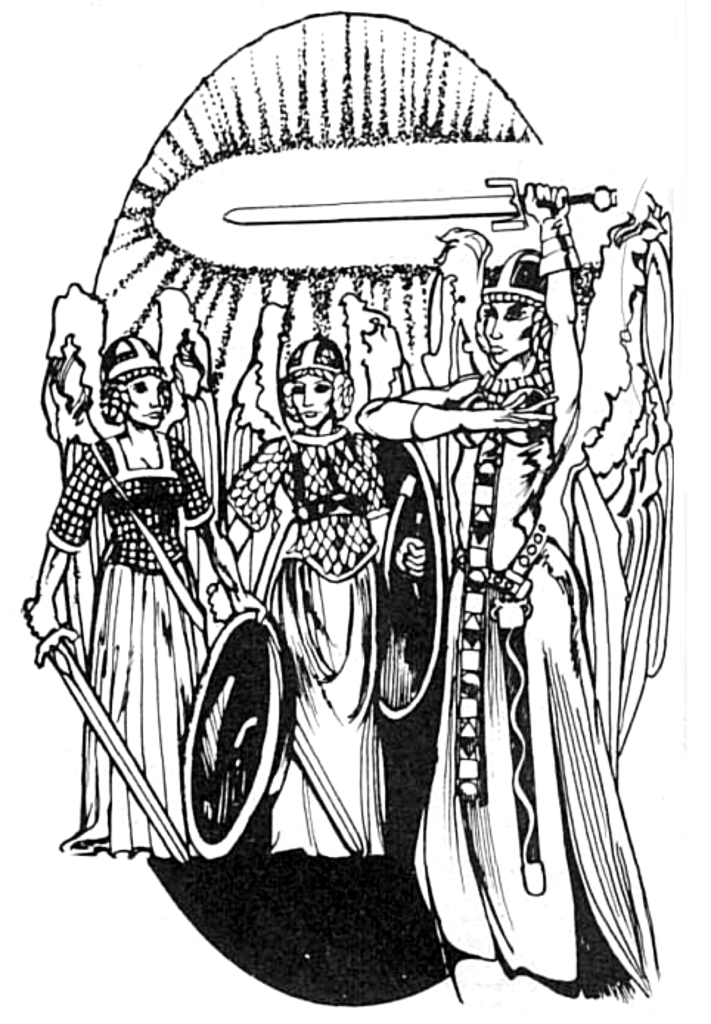
You have chosen to structure your campaign with everything on the Landing Page. Nonetheless, there are some significant design techniques employed in creating the set up with links and pictures. Please describe what tools you used in doing this, and how you came to decide on the layout of the campaign.
All of my other Obsidian Portal campaign pages (Miscreants from Meazeltown; Dragons Are Little Bitches, Man; The Temple of Elemental Evil; and The Further Adventures of the Crimson End) have the same structure. I wanted this to be a bit different. I saw this structure somewhere and I liked it. I have no talent whatsoever in programming so I did what all programmers do: I asked AI to help me build it. Since I wanted it to have an old-school flavor, I made the color palette mostly monochromatic, and I chose images that came from OG D&D books and modules. I also love fonts so I wanted to find some interesting ones to use. Sometimes I go overboard, and at first I did, by using a very flowy, difficult-to-read font for the normal text, but I just switched it up for the default Shadowdark font (Montserrat).
I suppose I could go even further and make the sub-pages similar to the Landing Page, with images of each NPC/place/item/etc. in a box that links to their wiki page, but that is a tale for another day…
The Allies and Enemies windows are interesting. Currently there are only two listings in the Enemies section and both seem to have had previous experiences with the Adventuring Group. Is it the same group of players, and, without giving away any secrets, do you intend for them to have major roles as antagonists in the New Campaign?
I don’t want to flag enemies as “enemies” unless players are sure that they are enemies. There are lots of betrayals and double-crossings in my games, and so players aren’t really sure who to trust at first. For example, the players encountered The Scythe and The Skull (the two creatures that disrupted the ritual of Incabulos) and my players were asking among themselves if those two were on the players’ side or if they should be attacked. I mean, one of them wielded a bloody scythe and the other had the skull of a lizard on his head, but they didn’t actively attack the players, so are they really enemies?
The enemies listed are ones that the players have actively crossed swords with, though I should update that based on our last session. And, to be honest, Ulfar the Black was a random encounter who the players set free after defeating him and his surly band of baddies, so who can tell what burns in his heart?
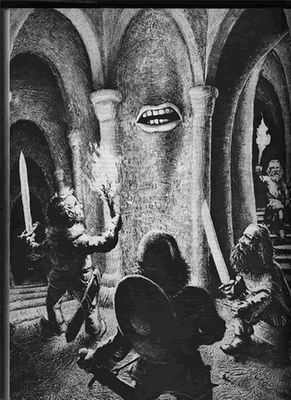
How important are Deities to your campaign?
I like to make the world seem as realistic as possible, so worship of deities and people and heroes trying to carry out their deity’s wishes is seen. Motivations come from dogma, especially since deific power is on display constantly. So I would say that deities are pretty important.
Tell us something about Shadowdark RPG. What made you choose that system, and what do you feel are its main benefits to your campaign?
I played D&D all my life, and when Shadowdark came about, I was skeptical (as I am with all new-fangled things). But this new-fangled thing was a new-fangled thing disguised as an old-fangled thing. Like, I blew my perception check against its deception check! I read the free guide and the random tables and the carousing really spoke to me. I also really enjoyed the idea of light playing a much bigger role, and if light is taken away, every creature around the players gets advantage on their attacks.
One of my campaigns (Miscreants from Meazeltown) has as its conceit that the players are some of the weaker monster races (kobolds, goblins, derro) trying to take back the stuff that humans, elves and dwarves have stolen from them. I wanted to make that campaign a Shadowdark game, but in Shadowdark, darkness and who has darkvision plays a major role and it didn’t make sense to have the players be the only underdark denizens NOT to have darkvision, so I kept it 5E.
Since this campaign uses a lot of older adventures as its basis, I felt Shadowdark would fit in well with that old school D&D deadliness. Plus, it’s so easy to run. When my group was at Gen Con last year and we played some 5e and even 3.5 D&D, I turned to one of my friends and said, “We could have had four full combats in the time it took us to get through this one combat.” Which is true. Combat is so fast. I typically over-plan in my games and we never get as far as I want to, but in the first session of The Final Reaping, we covered all that I planned for. It was both shocking and amazing.
How important are your Adventure Logs to the campaign?
To me, they are very important. To my players, less so. There is so much info in them – foreshadowing, clues and solutions, in addition to a summary of the sessions. In an ideal world, every one of my players would read the adventure logs, but we all know they don’t. It’s not really their fault. My gaming group is blessed with SIX DMs who want to run games, so it’s sometimes difficult to keep track of what is happening in which game. But like I said, the logs are very important because they include vital information, and they allow me to write the plot of the adventure in a narrative form, which I find fun and challenging.
As an aside, I really get annoyed with myself when I break tense in the logs or misspell a world. But that’s just me.
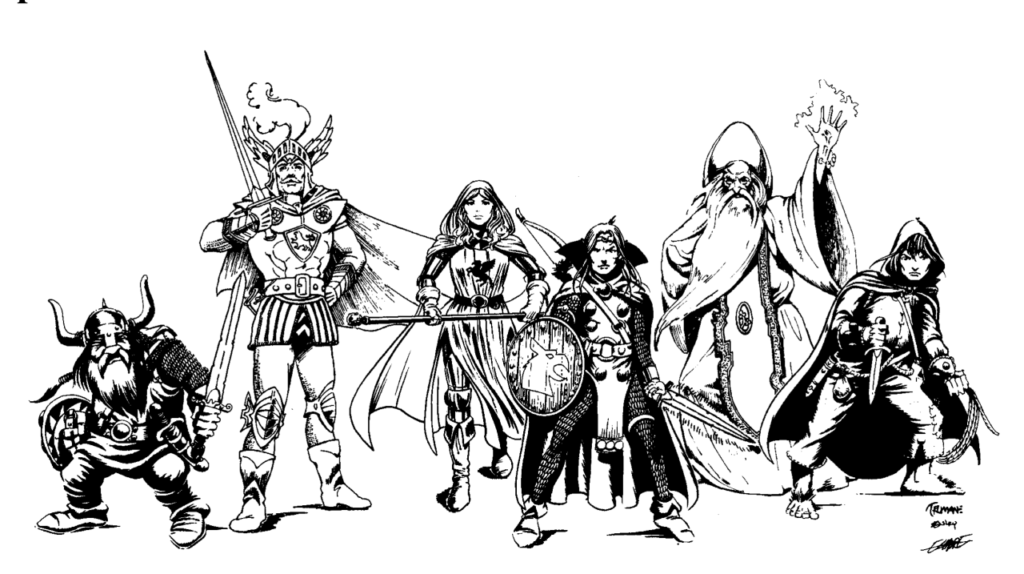
Without divulging any major secrets, what are your future plans for the Campaign?
As I said before, I wasn’t planning to run a Shadowdark campaign; it just came about because we had openings in our schedule and I just threw it in there. I got the idea for the campaign by reading through old Dungeon magazines. I found an interesting adventure (“The Dark Conventicle” from Dungeon #11) and came up with a way to modify it and expand it to cover an entire campaign. I didn’t want to write a whole campaign, so I also stumbled upon a repository of old Living Greyhawk modules that I decided to use to link the whole campaign together. It actually worked out really well, and the Living Greyhawk modules are all designed to run in a 4-5-hour session each, so it kind of fits in perfectly. Of course I had to modify them slightly to fit in with the theme and the plot of the campaign. I also found the use of Creighton Broadhurst and his Dread Thingonomicon invaluable.
So future plans. Well, the heroes have to get the diseased Zenobia to the port city of Scant. They also have the mystery of The Scythe and The Skull to worry about. There are many murders that have happened. They also encountered the boy Aaront with the dark spirit inside of him. Plus, the player Mick has a curse on his arm that he needs to either investigate or get removed. Will all these threads converge? It all seems too easy doesn’t it? Like it will all wrap up in a nice box with a bow on it.
There is currently only one Map on the system. Will you be adding more as time goes by, and have you ever thought of using the INTERACTIVE Mapping to list things or make further links to the main WIKI?
I haven’t used the maps because I don’t know how much my players would use them. I tend to put any maps on the pages that relate to them, but I could just link to the maps page. I will be adding more. Usually I include mainly maps of cities.
I had never thought of using interactive mapping. Maybe I will. That’s a cool idea.
The campaign seems to be in its early stages, but have there been any memorable sessions that stand out so far, for you or your players?
The second session with The Scythe and The Skull was memorable for the “Oh shit” reaction from the players. In the last session we played (which I haven’t uploaded yet), the players ventured into a kobold warren and right before one was about to attack, the light timer went off and the player was left in darkness as their torch went out right before they attacked. The session with Ulfar the Black and his compatriots was also amusing as there were two boats drifting down a river and one of the players, Lirien, fell into the water. But the wizard, Liorka Bonepickle, who had a background as a thatcher and carried a wooden ladder (tools of the trade), lowered the ladder down to allow Lirien to climb back up.
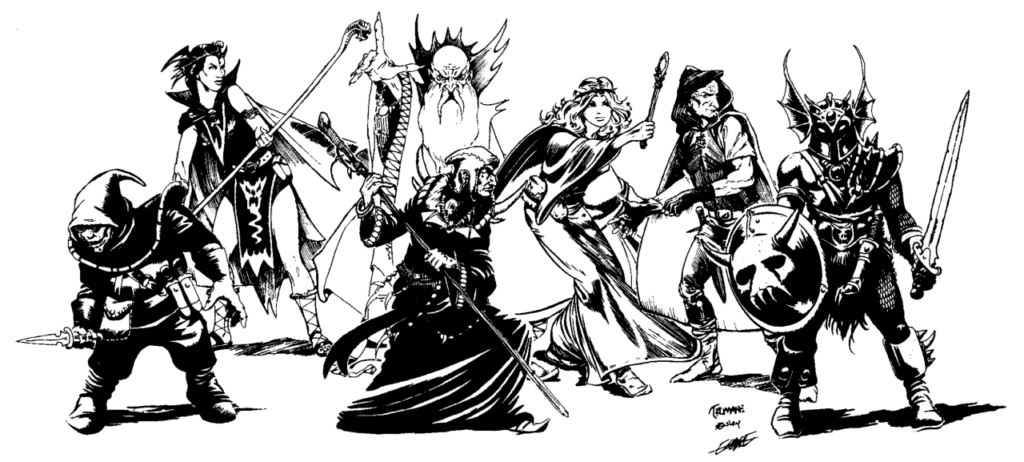
Okay, as a last question, we always ask for the GM’s “pearls of wisdom”. What GM insights can you offer the community this month?
First, I think it’s ok for characters to die, or at least, they should feel that they could die. Too many times I’ve played in games where there is no threat of mortal danger. Players just skate through the game, they never deplete their resources and they hardly get damaged and the BBEG is toast after two rounds of combat. There should be more than one encounter per long rest, with as many as five. Players should need to decide when to use their resources; not hoard them until the end baddie of the day. This causes an increased feeling of dread as the day goes on because players never know when they will need to tap their resources or when they might run out.
Bending the rules is ok as long as it fits in with the theme of the game. For example, in my Temple of Elemental Evil game, as written, for the players to destroy the Orb of Golden Death (an artifact in the game), as written, they needed to do the following: hit it with a wind of 50 or more mph force; then strike it with a maul made from a solid piece of granite; then burn it with a very hot flame (1,000 degrees F); and then immerse it in very cold water (32 degrees F.). Now, there is no way they would ever know this, save from a bunch of research (also they didn’t have a Legend Lore spell), but what they concocted was just as good:
“The next task at hand was destroying the Orb of Golden Death. The heroes had no idea how to do that, so they began looking through books and notes they had uncovered. The one book that seemed the most promising, Lost Gods, Ancient Pacts: The Vestigial Condition, was still unreadable to them. Ray thought maybe they should start using spells of the four elements to strike at the orb, since it was created for use by the Temple of Elemental Evil. He chose a spell from each element: ice knife or watery sphere for water, stoneskin for earth, and gust of wind for air. The group agreed to use Cindersteam for fire. When all of these were applied at once, the Orb seemed to become brittle, but then became whole again. They then decided to try them in a certain order, but which order? Someone suggested the order in which they attacked the Temple. It was decided that the order should come from the poem so long ago from Trym’s dream: water, flame, earth and sky. However, when applied in this way, these magicks seemed to further repair the cracks that had just been made. This made the party especially grumbly, until they concluded that a reverse order would work better. It did. The swirling winds stripped off much of the gold of the skull, while the stoneskinned strike of Ray cracked the orb into clearly visible, yet still connected pieces. Cindersteam severed these connections, breaking it into multiple pieces and the streams of flowing water washed away any remnants of the skull.”
So the players didn’t do what they were supposed to do, but really, it was a much more satisfying ending than having to go to a large city and do a bunch of research. I mean, what adventure story ends with the heroes and the Dewey decimal system?
Thank you to the community for making this campaign of the month possible! That’s all for now, join us on our next adventure November 1st, and don’t forget to nominate your favorite campaigns for our next Campaign of the Month!