Blog Archives
Obsidian Portal Campaign of the Month October 2024: Aloft!

Join the ranks of great literary heroes like Francis Grimm, Tristan Thorn and Darian Frey, fly aboard a merchant airship and explore the world from above! In this homebrew world (and system!), the heroes embark on a great journey that takes them high above the clouds. The characters are deeply entrenched in this medium-fantasy world, with their attachments and goals guiding them as they plan and prepare for their future. Detailed, layered maps, deep roleplay and memorable antagonists – all are waiting for you inside GM rus1001‘s adventure, Aloft!
First off, feel free to tell us about the person behind the GM screen. Where are you from? What do you do aside from gaming? Alter Egos? Life partners? Family? Where can we interact with you on the internet?
I’ve travelled the world and done many jobs – some of which most people only see on TV. I try to tell myself that it’s not just about bringing authenticity to my tabletop and live roleplaying games. Sadly, as a saggy 50-ish adult with a kid, I’m not likely to be making it into space anytime soon, but I’m content with what I’ve done and where I’ve been.
I try to match my fantasy life with some real-life adventure; thus wild-camp and Canadian canoe in Scotland – a dawn on a Scottish loch and watching sea-eagles hunt is as close as I’ll get to my game for real. If anyone wants tips on visiting Scotland, feel free to contact myself through Obsidian Portal.
Tell us about “Aloft” in a nutshell. How did you design the world? What was your inspiration?
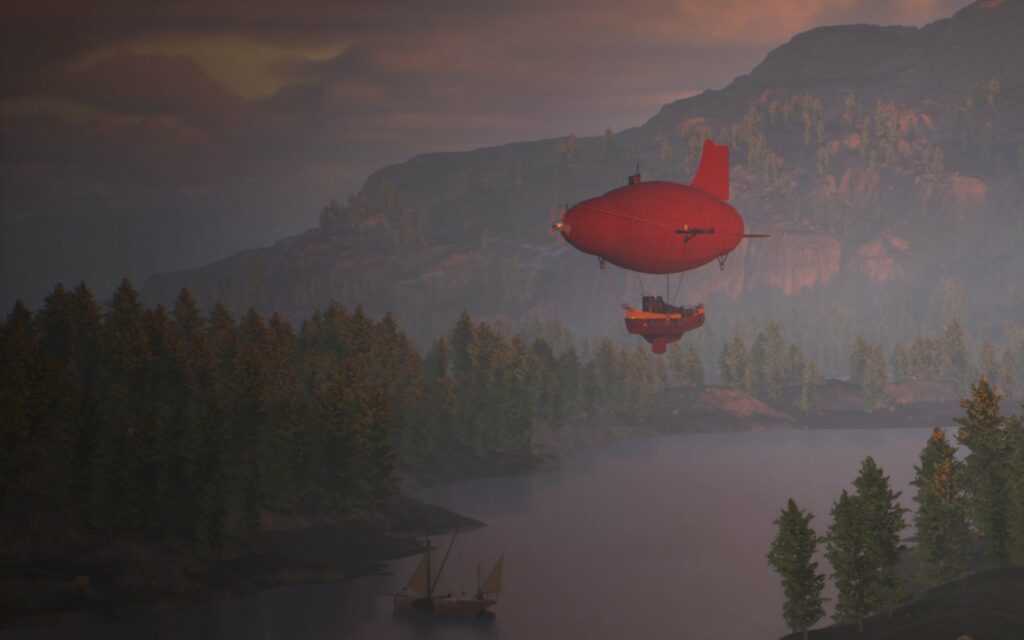
Aloft is a medium-fantasy game, where the players have decided to take a gift of a ridiculous airship and found a trading company.
In the last ten years, I’ve run some lengthy war-campaigns that stretched between players in two continents. They were exciting but quite serious games. I wanted something more whimsical. And I was inspired by the latest D&D movie – what fun!
Aloft takes me back to delivering great locations, great NPCs, complex and layered plots to the tunes of Led Zeppelin. Just like I did in the ‘good-old-days’. But with more adult themes than the teenage me would ever had dared.
How regularly do you play, and where do you play? Tell us about your current group of players.
I play online every two weeks, using Zoom. And four times a year in person for weekends, or a whole week on a small Scottish-island rocked by the Atlantic rollers.
The core of my players have been in my games for about 30 years. I play with great friends. But there is always opportunity to add new chums. I had a diverse and wonderful group after co-founding the Gulf Roleplaying Community (https://www.facebook.com/groups/gulfroleplayingcommunity/).
I interview rigorously for my games, as I know they are marmite. If you love them you’ll stay for years or decades; if not, you’ll be gone in three sessions. For people who know me they’ll compete to join the campaigns if a space comes up.
What game system are you using? What made you choose that system? How does that system complement your campaign?
I started life with AD&D 2nd ed. Stayed with that for years, and now run my own homebrew system. It has everything I need: narrative based PC build, and no initiative in combat.
The system allows me to run nerve-wracking combat, either at the personal level or to enact huge battles and campaigns at various levels. More importantly, the system allows me to bring the past 6,000 years of history of my campaign to reality through rules.
Your landing page puts a lot of emphasis on the flying ships, including propeller gifs. It gives a sense of exploration and wandering. Can you tell us what role exploration takes in your campaign? How do you handle it?
Exploration of ideas, themes and places is at the heart of any roleplay, and with my shift from a ‘serious’ campaign to something zestier I’ve given myself space to play as a ref. I also got used to travelling PCs with my sc-fi campaign.
With a whole world before them I rely on my players being the veterans they are. They have fully formed PCs with motivations and attachments to the world (baby dragons, family and businesses); therefore, they don’t just ‘fly off’ randomly. They are also adults, and know that I have a life too, and need a bit of planning to map out and deliver regions. Younger-in-service and more impulsive players are kept in check by the oldster’s social-norms.
And I’ve given myself the luxury of a long campaign. Aloft is likely to last for another 4-5 years. My players may think they have settled in the, Kingdom of The White, but they have much, much more exploration to enjoy and be challenged by.
In your maps section, you have several identical maps with different layers on them. Can you please tell us a little about your campaign setting and the use you make of the map section?
I have two brilliant players who manage the uploading and meta-tagging of OP. They also manage the maps. The maps are used extensively by players/PCs during the games. They are used for different levels of planning, understanding the world, and acting as a prompt and a reminder to the politics of the world. My players use them in and out of time frequently.
How much time is usually spent preparing your game sessions? Describe a typical session.
I must balance my sessions between those who want to swing a sword and roll dice, and those that want political and adult-themed intrigue.
With my DMing experience the more romantic, sexy, political, moving, and personal angles I usually sketch out when doing sport, and they will end up as three bullet points, written in twenty minutes and will last for about 12 hours playing.
Sadly, online roleplaying is much more demanding of a ref’s time. As soon as you want combat or dungeons, you cannot just draw them on a white board. It’s much easier to write for a week of face-to-face than it is for two months of online sessions.
And a lot of that is my fault. I want to make the world engaging and real for the players. I want them dreaming of it and lying awake after sessions obsessing about what has just happened. Therefore, I will construct my own maps in Fractal Worlds, Campaign Cartographer and Photoshop.
I do a lot of 3-d modelling as well. Most of my PCs I will render out in Daz3d, which despite its appalling misogyny, is still a great resource.
On the more creative side I will build very simple models and animations to illustrate a session, such as in Sketchup with a castle. If I have time I will render in Unreal Engine 5, which allows me to prepare videos such as ‘sneaking’ around Sturmburg or even to quickly render out on the fly when players choose a different route with the balloon. You’ll note I don’t do NPCs – UE5 is awesome, but I don’t have the time to master that – yet. I have managed to make one with a moving dinosaur, I’ll post the link here, but I cringe a bit as it’s only my third animation in UE5 and clunks – but it mesmerized my players.
What I do is to show my players my dungeons. These are quite rough and ready, I’ve often only a few evenings, say four, to build or buy models, learn how to use lighting, animation and texturing in Unreal and then pose and photograph them. The players love it and said ‘dungeons’ and the like utterly grip and involve them. My favorite is probably this, with this being a close second (for scale.)
With many of the zeppelins I will sometimes create ‘playable’ UE5 levels that my players can download and run around the interiors – as I said I want my players as immersed (and obsessed) as me.
In your wiki section, you link to several other campaigns. Can you please explain what these campaigns are and how they are connected to Aloft?
Aloft sits as one of my current campaigns in a world I have been reffing and creating since I was 12. I got ‘serious’ about the internal logic of my world at about the age of 21. Since then, no matter where I have lived, or whom I have reffed, I have played in that world. My campaigns tend to last for 4-12 years in real life, with PCs retiring into my stable of NPCs. My world has been shaped by my players and me for about 30 years.
It has great mapping and moons and its technology has evolved over the decades (out of game) and centuries and millennia (in game – I’m not that old).
I am currently running another campaign that is running concurrently with Aloft, which is set in a major city of the world.
How long have you been using Obsidian Portal? What brought you to the site and what keeps bringing you back?
I have been using OP for over 11 years, and I love it. It was the most prominent site like it at the time of joining, and it has weathered well.
If you had to pick just one thing, what would you say Obsidian Portal helps you with the most?
Helping old and new players explore, in their own time, or during time-ins the rich and decades old world we have been building.
What would you say is the biggest highlight of your game so far (please also provide images and links if possible)?
The biggest highlight of my game has been having the PCs have their own baby dragons for the first time in any of my campaigns. Watching my players get competitive and protective of them has been a joy to watch.
Okay, as a last question, we always ask for the GM’s “pearls of wisdom”. What GM insights can you offer the community this month?
Use great music. I have over 70GB of music that I use in my games. Get to know your music, make up playlists for general types of play (sneaking, battle, the tavern), and then run special sessions to the second using a soundtrack of your own making.
Thank you to the community for making this campaign of the month possible! That’s all for now, join us on our next adventure November 1st, and don’t forget to nominate your favorite campaigns for our next Campaign of the Month!
Obsidian Portal Campaign of the Month August 2024: Freeing Phandalin

Greetings, brave souls and seekers of tales untold! Today, we embark on a journey into the heart of a fantastical realm where dragons soar and heroes rise. Join us in talking with Bortas, the GM behind Freeing Phandalin, the winner of our Campaign of the Month for August 2024!
I want to jump straight into your setting. Phandalin is a location I am sure many folks are at least passingly familiar with, given that, what drew you to run your game here?
I’ve ran LMoP and really had a great time, and in reviewing the newer starter box, DoIP, I noted the questing system is more “West Marches” style, putting a lot of agency on the players to pick the sort of adventure they want, with far less railroading involved. The plot sort of develops out of ‘order,’ but it develops in a way the players pick.
Next, tell us a bit about yourself as a GM. How long have you been running games? I notice you have a few other games, some in the same system, some in Pathfinder, do you have a favorite system? Lastly on this topic, do you get a chance to play much or do you prefer to live behind the screen?
I started playing in 2011, and almost immediately started writing for my own campaign. I’ve done homebrew campaigns, and I’ve run prebuilts, both have differing appeals. I don’t get to be a player as much as I like (no one can relate, I’m sure!); every couple of years I get into a campaign, but I’ve never been in one that last longer than 6 or so sessions. I like systems that are sort of vanilla fantasy, they are flexible enough that we can add our own weirdness on top of, but universal enough that no one has to be a rules expert.
Switching gears for a moment here. Tell us a little about why you chose 5e for this game (as well as some of your others)? Do you have any homebrew you typically include in 5e games or anything special just for this one?
I’m fond of 5e, as it feels like you can ramp up or down the ‘crunchiness’ of it depending on player ability, even in the same game. My buddy can get really into utilizing complex mechanics for the fun/silly, but his daughter is likely to just move and blast 🙂 As for home brewing, I’m not great at developing a game world that comes out at the table, so I do less of that these days, and let basic settings handle the heavy lifting, let me focus on engaging encounters.
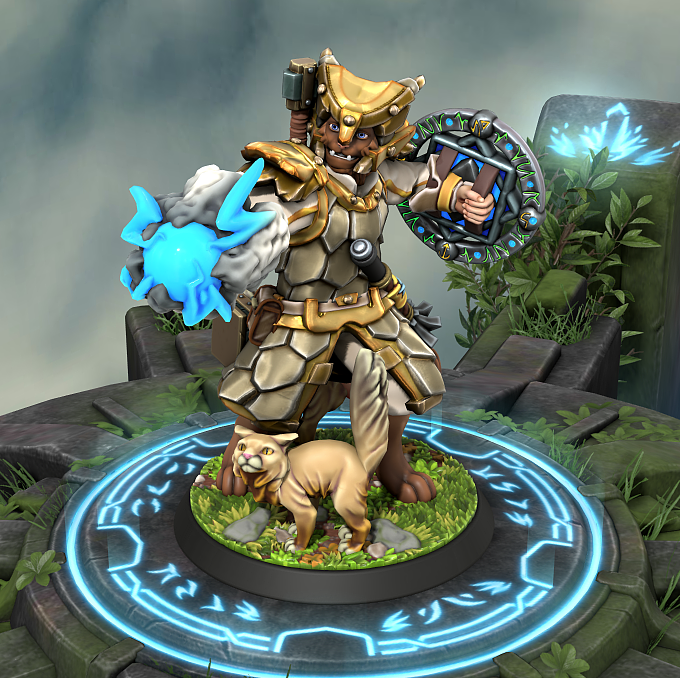
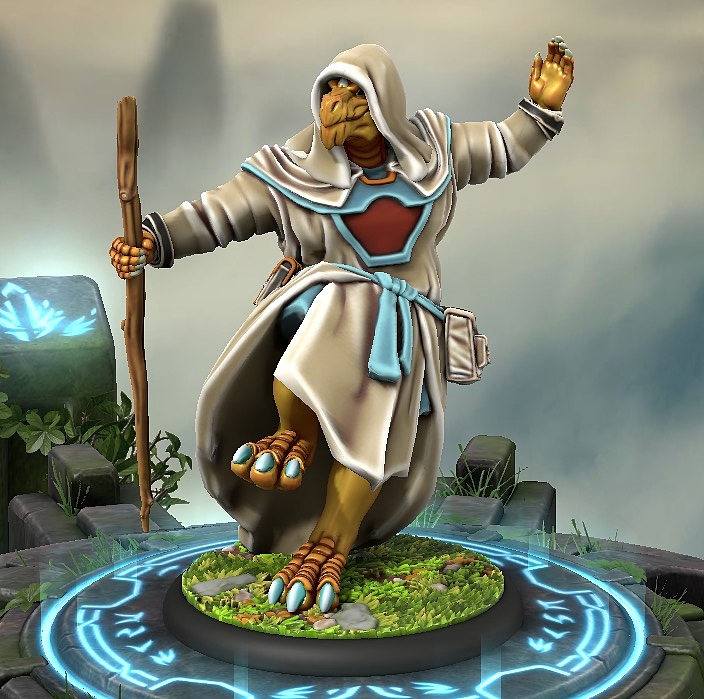
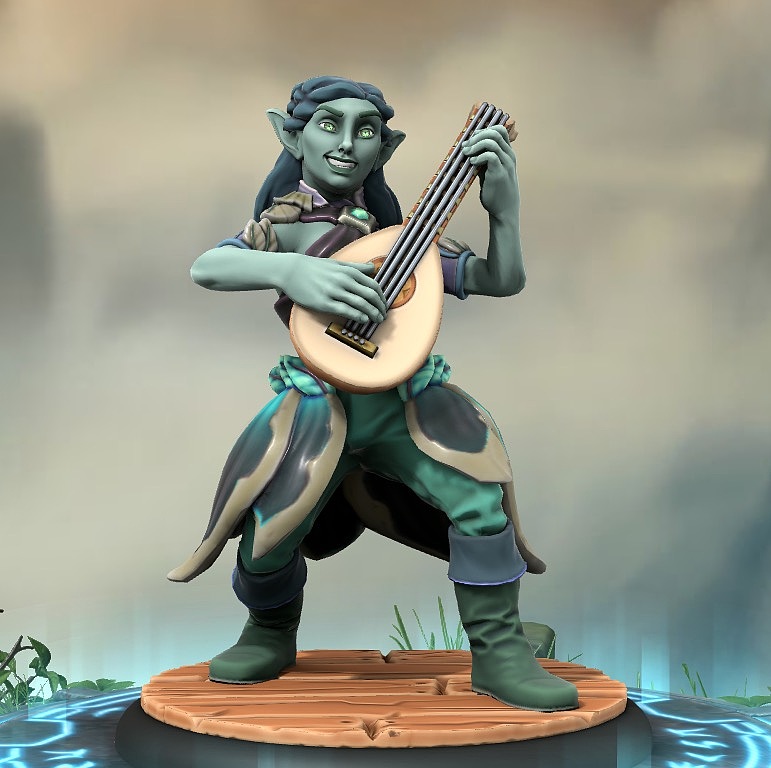
I love the mix of character art in this game, there is a very consistent feel to it yet the individual characters are quite distinct. How do you come by it? Made by yourself or a player, AI tools, borrowed from the internet?
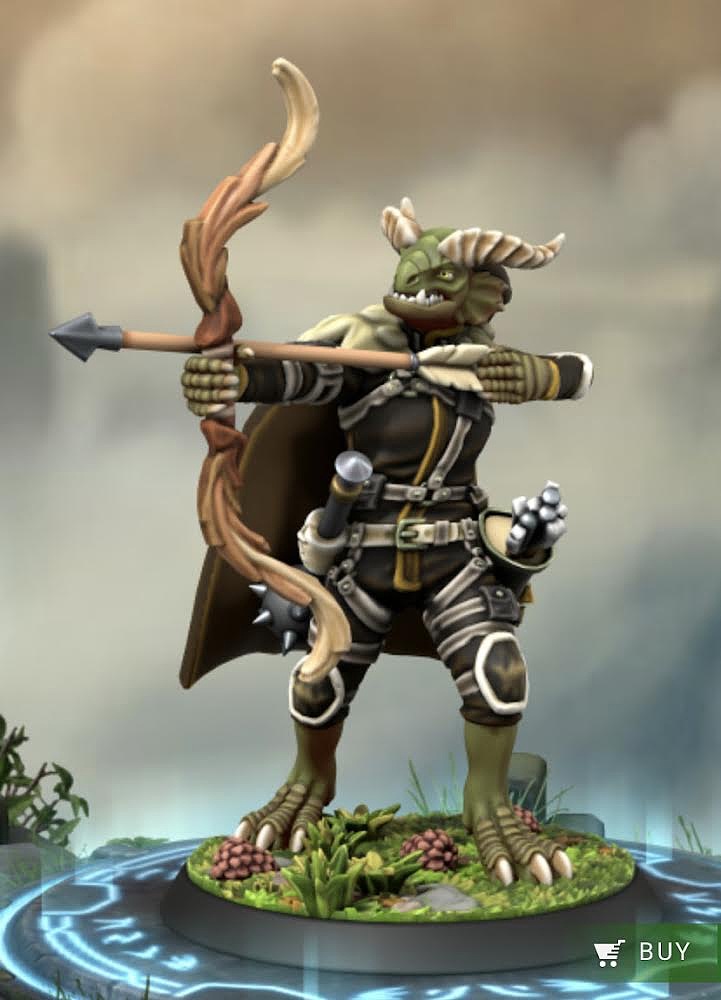
Artwork most of the basic graphics for the site I built with the community experts, but if it looks like a graphic, I probably just used google image search. I do tend to run it through the same filter and crop them similarly for consistency. The character artwork is using the HeroForge system to make minis, then just a screenshot :-). I find that you can take pretty different image art styles, but if they both have a sepia filter and similar contrast, it’ll work out.
What’s your group like and how do you play? In person, remote, a mixture? How did you assemble your party?
I’m fortunate enough to play in person. I’m even more fortunate, in that I only have to schedule with one other family. Our gaming group started as my partner inviting another couple, but almost immediately our oldest kids wanted in, and after a couple of months, the two younger kids wanted in. So….. I have too many players, 3 adults and 4 kids…. But they get along, and less adult scheduling disasters. As for summoning the crew, the adults get together and cry over our calendars for a while, before agreeing on a date way too far in the future. Adulting sucks.
The look and feel of your site is fantastic, seeing as you’ve been on Obsidian Portal for a while, I’d love to know how long it took you to nail this one down, also if you have any tips or tricks that might be useful to others when it comes to planning and execution of such a stellar site we’d love to hear them!
Re site design: I spent a lot of 2016-2018 in the community section of this site. My goal when I first started learning was simple: to resent a medieval feeling, while on a website – replace the feeling of ‘tech’ with ‘magic’. This sort of informed every design decision: the right is on parchment, character images expand when focused on, etc. OP really helped me discover CSS and what it could do. I worked really hard on my first OP site. But after that campaign concluded, I realized a bunch of my design work had been too specific for that campaign. I took that campaign’s CSS and whittled a bunch out, my goal updated to being able to take just the CSS and drop it into any campaign and have that campaign be transformed, without customization needed. My only advice to people learning: look at other people’s code. Look at your site at different browsers. Look at it with different browser widths. You can do it, AND we want to see it!
Shifting back to the game itself, do you or your players have any great, or terrible, moments you’d like to highlight?
The party had come upon an orc-infested shrine. At the start of the round, they rolled an escalating doom die (each round, add +1, bad things happen at high numbers), more orcs would spawn, a mini boss, an environmental disaster (collapse of some kind). Anyway, the orcs just keep coming and coming, and after a few rounds, they started trying new things. From my perspective, there was no exit condition. They tried new things and they worked. When they elevated above move smash move, the orcs spit out some bosses and that was the end.
Looking through the reports (Adventure Logs) for this game, I adore the use of elements like “(text missing)” as well as the odd image. Is that a collaborative effort or do you manage the chronicling all by yourself?
I’m glad you picked up on the “text missing” – i utilize that to cover a section where I could write a lengthy description… that doesn’t necessarily serve to advance the story, even if it would recap highlight. I do all of the cataloging, so partly it is about saving me effort. But I also review the last log with the crew before we play, and this is better done in a short, punchy way, so I try to write my logs as very dense highlights. The parts that were in our imagination when we did it, I try to leave in our imagination and instead remind us, rather than tell us.
Famous last question. What’s a bit of your GM secret sauce you think others should know about?
Secret GM Sauce: TTRPGs are not players vs DM. You celebrate their wins, feel mourn their defeats. Your job is to present tough problems, not solutions – present them a problem you don’t know how to solve and then lean into their creative genius. Remember your job in response Is very very simple: “that just works” “that could never work” “hmmm, I’m not sure, and if you failed, that could be bad – let the dice decide!” Don’t jump to the last option “roll dice” first – your world makes far more sense to people if the obvious failure points obviously fail. Or the trivial tasks don’t warrant dice. When we operate inside of set of rules (more so if we aren’t super familiar with the rules), it’s easy to say no: but your job is “yes, and!” And…. If you’re behind the screen, you’re a servant and hero to me <3
Thank you to the community for making this campaign of the month possible! That’s all for now, join us on our next adventure September 1st, and don’t forget to nominate your favorite campaigns for our next Campaign of the Month!
Obsidian Portal Campaign of the Month June 2024: The Planewalker’s Guild

After escaping the shattering sky, why not travel the multiverse with a group of Planewalkers as they move from Sigil to the Plane of Air in search of a notorious serial killer. Join up with previous “Campaign of the Year” winner, Dungeon_Master_Loki, and let him guide you through transitive planes, observing the “Rule of Three” and the “Unity of Rings, as part of The Planewalker’s Guild, in a pay-to-play campaign that has been in existence for a year and still has spaces for intrepid adventurers, as they travel to discover the Riven City of Bleurophil.

First off, feel free to tell us about the person behind the GM screen. Where are you from? What do you do aside from gaming? Alter Egos? Life partners? Family? Where can we interact with you on the internet?
Well, I’m an 8th generation French Creole from New Orleans and I’ve been gaming since the late 1970s. When Hurricane Ida hit I was an idiot and rode it out (NEVER try to ride out a Cat 4. Period). I relocated to Cincinnati, a city I had lived in for a few years about a decade ago when my ex wife was in school.
Professionally I work as a freelance game designer and copywriter, I run paid games online and at conventions, and I teach Introduction to Game Design at the University of Cincinnati. I also spent many years prior to that working in music and in online PR. I even worked through the pipe bombing at the Centennial Olympics in Atlanta.
When not gaming I am a huge media buff – music, books, film, etc – with a long standing love of science fiction, satire, and what my friends refer to as “the weird shit”. I have a huge love of alternate histories and time travel stories (I have every surviving episode of Doctor Who for instance). This obviously shines through in my game design work as well, much of it being planar strangeness. I also love to cook, although I must admit I rarely do so when it is just me.
Alter egos? Well, I got the nickname Loki about 25 years ago while working at the House of Blues and have used it as my byline since if that counts. I do have a long suffering girlfriend, who plays Lenata the cleric in The Spelljoined campaign. The vast majority of my family is in the New Orleans area back home, except for Puck and Gremlin, my atrocious felines and editorial assistants.
Find me online? While often in need of updates, Planejammer.com is my main home on the web. My most used channel is Discord (DungeonMasterLoki). If you want me to run a game for you or join one of my paid games / campaigns you can find me through my profile on Start Playing Games and on GRIPNR. I’m on Facebook, but don’t often friend people I have not met in person or had extensive interactions with. (This is especially true with the combination of election season and use of AI rising as the year progresses.) 36 of my titles, books I’ve authored or contributed to, are here on DriveThruRPG and I am deeply thankful for every sale and review!
Please explain the basic concept of your game plan for The Planewalker’s Guild. The game seems to have been running for a year. Give us a few hints about the Planescape scenario.
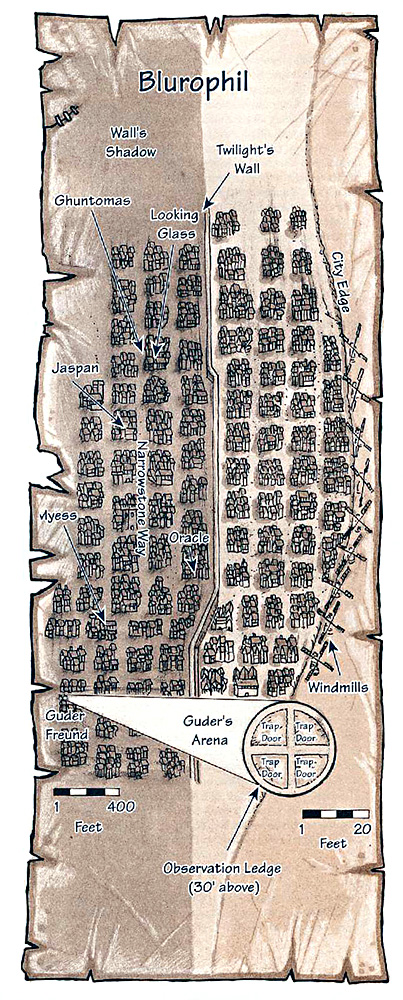
Most of the games I run take place in a shared multiverse, usually centered around Spelljammer and Planescape. The Guild game is one of those. Massive changes are afoot across the planes, extremely destructive (one might even say apocalyptic) changes.
The past year of play started our heroes out as new initiates of the Guild in the wake of Planescape’s Faction War. One of their early missions had them become eyewitnesses to an interplanar incursions that “shattered the sky”. They are currently in the city of Bluerophil on the Plane of Air tracking down a serial killer during the equivalent of Maridi Gras. They have to stop him from completing a cycle of ritualistic murders that will call down the Planebreaker. Future adventures will vary thematically as the [lot of this game and the overall metaplot evolve. I predict between two and four more years for the campaign if we maintain a twice a month schedule bringing any PCs that make it to a solid 20th level.
While there are missions for the Guild I essentially run sandbox style player driven games. RPGs are collaborative storytelling when at their best, so the contributions of my players not only determine the overall direction but also create lasting effects on the in-game universe.
The opening page of your campaign says “Contact Dungeon Master Loki to book your game today,” with the link leading to a professional Game Master page under the “StartPlaying” banner. Please share with us how all of this works.
Well, like many freelancers, income is sparse and times are more often tight than not. Running paid games for companies at Cons and online games through Start Playing Games and GRIPNR helps keep the list on in the design mines. Since the game takes place in my ongoing shared multiverse that means I have hundreds of pages of background info, NPCs, etc available instantly on Obsidian Portal when I need them. All my players share the trait of zigging when I expect them to zag, so being able to pull up everything when they do is invaluable.
As to how it works, I post games online as I create them and those people looking for DMs contact me directly through the site. Cost per session is up front as are reviews of the DM by former players and a capsule review of what the game or campaign is. I run a safe table – LGBTQIA friendly and accepting of all and I require my players to abide by that. Both of the online platforms mentioned above also take care of billing and payment, allowing me to focus on creating something worthy of said payment.
When a new player joins the game I start with the player’s concept, and I encourage people to go big with ideas, which I then help them translate into an effective build. I then get them to write of a background which I then tweak in order to root them more firmly in my setting and provide hooks for personalized subplots down the line. Using Obsidian Portal we have a central place for character sheets and a wiki for the “in use” house rules.
I know there are some that find the idea of paying for a DM to be anathema, but there are a LOT of folks out there who cannot find one, have no one nearby, or other valid reasons. Besides when paying they can demand a certain level of expertise on the DM side of the screen.
Presumably, your games are all run ONLINE. You mention that you primarily use a “Theatre of the Mind” approach, but that you also use battle maps and tokens. You have listed platforms like Discord, Skype and Zoom. You also have “Owlbear Rodeo” listed. How much do you use a platform like Owlbear Rodeo, and how useful is it to your team?
I started playing in the late 70s and Theater of the Mind is the old school way. If you do it right it makes for fantastic immersion. I usually only pull out battle maps on Owlbear Radio when it is an extremely complex combat or a massive narrative moment. I personally find it to be my favorite of the online table top options due to its simplicity. While it has none of the bells and whistles of things like Roll20 it also does not require extensive learning to use. Players can log into your map from a link that you generate and immediately have control of their token. I find that with online games it is especially important to minimize dead time, even more so when being paid for the session. What you lose in bells and whistles you get back in the speed of play that you gain.
Your current player list comprises 6 players. Did they all start at the same time? I note on your StartPlaying page, you still have space for 2 players. Would 2 new players just slot in to the current game, or how would you go about that sort of integration?
Most started at the same time, two started later, and one left due to health issues and has just returned to the table. At the time I’m writing this I do still have two slots open.
When a prospective player contacts me I help them to develop their character concept and bring them in at an equivalent level. (That is why the guild membership is the baseline, it makes it more logical as faces come and go.) I use a good bit of third party material so I can usually find acceptable rules for implementing most ideas.
Your campaign “Planejammer: The Spelljoined” won Obsidian Portal Campaign of the Year in 2011, and it is still running. How busy are you with your various campaigns? Do you have any player crossover between the campaigns? In what ways does the new campaign differ from the old one?
The Spelljoined is my main personal game and the baseline of the shared multiverse all my games inhabit.. It’s on its 8th generation of players and has been running almost non stop since 1979 (there was a gap of about three years in the early 90s). That is the umbrella setting I mentioned before. While the Planewalker’s Guild are facing one aspect of the great multiversal disasters, the Spelljoined are currently in an alternate universe (Gamma World) trying to stop a massive mind flayer plot. Characters cross over between games fairly frequently, and events in one game do influence the others. I’ve also had the distinct pleasure of having a number of guests from the industry sit in on sessions. For instance in one game I not only had X-Crawl creator Brendan LaSalle join us for a session set in X-Crawl, but also M. Nystul joined us playing his Nystul the wizard character (which he played at Gary Gygax’s table) for an epic evening on Greyhawk.
The Spelljoined are 16th level characters with Mythic Ranks doing the crazy, gonzo, multiverse hopping stuff. Bouncing through the alternate realities when not in Sigil or the Rock of Bral. The Planewalker’s Guild is 6th level and operating in the Planescape/Spelljammer setting where evidence of the big battles of the Spelljoined are starting to manifest. The Dept 7 game is set in a variant of Dark Matter where the effects of these conflicts are bleeding through the multiversal barrier, etc. Each group is seeing and fighting different aspects of the Really Big Picture(™).

One of your Player Reviews in “StartPlaying” says that you often reward players for work “outside of the game”. Is this reward given in Experience Points, or do you have other rewards? How much “outside of the game” stuff does the current group engage in?
Work outside of the game includes things like journals and art, in character stuff that contributes to the world. These rewards are usually in the form of bonus Mythic Points or story driven rewards. It is NOT required. If I used XP that would also be on the table as reward, but I use milestone levelling. I find that removing combat xp from the equation encourages non-combat solutions. I don’t get much in the way of submissions from the paid gamers, but in my home game there are a number of players who keep journals and contribute art. We even have a full tarot deck that uses PCs and NPCs from throughout the years that one player made over Covid lockdown.
You have been with Obsidian Portal for some time now, so how would you say it has changed over the years, and why is it still a useful site for someone like yourself?
Over the past decade plus I have seen it evolve a good bit. The Reforge was an exciting time that ended with dashed hopes as things deteriorated for quite some time. When the current team took over and things became more responsive to the community and its needs I was thrilled. I had stopped using it and when I checked back looking at an old wiki I discovered my favorite organizational tool had been resurrected. The current team has my thanks for making my favorite organizational tool viable once more!
Most mission critical parts of Op? The wiki, the ability to keep secrets between players and DM, and the Adventure Logs are all endlessly useful to me as a DM. Especially juggling notes and details, not to mention conversions, that have accumulated over the decades of play.
After all these years of being a member, If you had to pick just one thing, what would you say Obsidian Portal currently helps you with the most?
The Wiki and privacy controls, hands down.
I note from your Adventure Logs, that your group has currently entered “The Riven City of Bleurophil”. Tell us something about that. How did they get there, and what do you think lies in store for them.
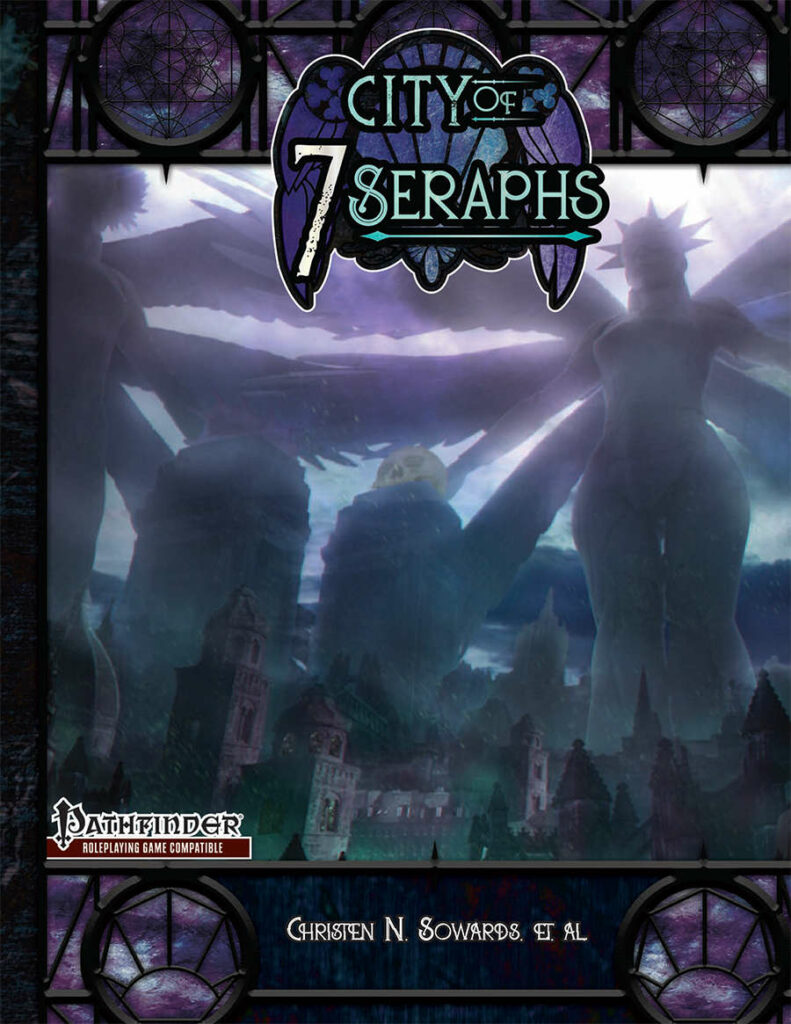
This adventure is a follow up to one I ran for a prior group. It came from Tales from the Infinite Staircase and presented the Riven City and the original serial killer. The Guild players are operating 25 years later when a new killer is trying to complete the ritual slayings, and the history of the prior crimes was established by the prior group’s actions. It is my own follow up and recontextualizing of the original adventure.
The players were sent there by the Master of the Docks in the City of 7 Seraphs (one of my creations in that book) and their Planewalker’s Guild superiors to do recon. As some of the only eyewitnesses to the Planebreaker’s transition through Elysium they are considered the closest thing to experts available. Now they’re discovering some of the bigger picture. As for what awaits them? That depends on their actions. Will they stop the Gasping Strangler’s successor from completing the dark ritual? Will they see the Planebreaker shatter the sky again? Will Geeta ever stop complaining? A lot can happen, and the stakes are rising rapidly. Let’s just say that there is potential to gain Mythic Ranks in their not too distant future.
The whole “Planescape” scenario was created in Dungeons and Dragons, and yet you are using Pathfinder for your campaign. What were your motivations for this, and did that mean you had to do a whole lot of stat converting?
I’m used to it. I’ve written professionally doing work in Pathfinder 1e, Starfinder, Dungeon Crawl Classics, and Cypher System. I also grew up hacking my RPGs in order to do crossovers back in the 80s. The meta campaign began in the late 70s and has evolved with the times. It started in White Box D&D, quickly shifted to AD&D as the hardcovers were published. The 3.x era was the sweet spot for us in many ways. When 4e hit it did not fit our playstyle so we bounced over to Pathfinder 1e which is what I run them under currently. I’m seriously considering using Rob Schwalb’s fantastic Shadow of the Demon Lord rules for the next generation.
I have an entire wiki of conversions I keep private since it is a lot of IP from various source materials that I do not own (i.e. Greyhawk, Spelljammer, etc.)
Okay, as a last question, we always ask for the GM’s “pearls of wisdom”. What GM insights can you offer the community this month?
Don’t be afraid to improvise, just take notes as you do because you’ll probably need them later. Yes, even the throwaway NPCs. Don’t say no, say “you may try”. Give everybody spotlight time. Be kind to your players and an evil bastard to their PCs. Most importantly: KEEP IT FUN!
May your 20s be both frequent and natural. Loki out.
Thank you to the community for making this campaign of the month possible! That’s all for now, join us on our next adventure July 1st, and don’t forget to nominate your favorite campaigns for our next Campaign of the Month!
Obsidian Portal Campaign of the Month April 2024: Season of Strife

Twenty years after the fall of Utugash’s kingdom, a group of adventurers sail into Celestine and into their new destiny. Villains and allies of every faction eagerly await to use the newcomers for their own purposes, while even more sinister forces lurk in the shadows… Join us in talking with GM EdgarS as we explore the Season of Strife!
First off, feel free to tell us about the person behind the GM screen. Where are you from? What do you do aside from gaming? Alter Egos? Life partners? Family? Where can we interact with you on the internet?
Heya, I’m Edgar, I’m from the Netherlands, and I’ve been playing D&D for about 15 years now since I was invited to join a campaign for the first time. I really got into Critical Role around 2018 and watching it helped elevate my gaming and give me a way bigger sense of the possibilities the medium held to tell a story beyond ‘there’s a monster in the next room of the dungeon, go hit it.’ I also started DMing in 2018 and have or are running a couple of campaigns at the same time.
Before D&D I came from the world of tabletop gaming: building, painting and playing Warhammer Fantasy and 40K mostly, which really helped me get out of my shell as a teen (you gotta play with/against other people physically present on the other side of the table after all). From there it was a hop and a skip to D&D. I’ve been lucky to have had a pretty stable and dull life. The most I have in terms of baggage is experiencing bullying in high school because, well, huge giant nerd, but it’s precisely due to things like tabletop gaming and DMing I’ve gotten over that and grew to be a version of myself I enjoy, and being way more extrovert and bringing the sorely needed levity at office meetings. But yeah aside from that, I grew up in a fairly affluent household with loving parents, went to college (studied history and international relations), and after maybe a couple of years in the wilderness got a proper job recently working for the government. I even bought my first apartment a few months ago, which gave me the opportunity to set up a purposely-built storage room for all of my D&D terrain!

As for online, I used to be more active in various places such as tabletop gaming forums, but now I mostly lurk in peace and quiet, stay in my lane, and occasionally tweet out some art or dnd pics on my twitter (no I’m not calling it X) at @DCabbagefarm. That refers to Emperor Diocletian’s cabbages by the way. I’m a historian. Hi.
Tell us about “Season of Strife” in a nutshell. How did you design the world? What was your inspiration?
So the Season of Strife was born when one of the players put out a ‘looking for group’ call on Tumblr for an online d&d campaign, and I decided to take the plunge and offered to DM, back in late 2020. Not quite knowing whether this’d end up being a massive campaign or would bleed out early I decided to use the same homebrew setting I was using for my weekly campaign, the Twilight of the Spheres (and by the way, that one’s got its own Obsidian wiki too, probably even more expansive than the Strife one), but simply designing a new area for the world like it was some kind of Warcraft expansion. Exactly how many hidden continents are there?!
After this I expanded the map further, filling it out as I went until it reached its current state of completion, with enough space for a few more fresh campaigns. Here’s the full map, and be warned it’s a big boy

The first Twilight of the Spheres campaign (2019-2022) took place in the north-eastern region of the world, Eos, dominated by the Coalition (a pretty standard late-medieval European fantasy society consisting of a union of city states) and the Kyshtar Dominion (a majority dragonborn proto-industrial semi-Babylonian hodgepodge). That quarter of the map was all that existed of the setting, with no more than vague allusions to other stuff being beyond the boundaries. The new area I added specially for the Season of Strife was far to the south of it, an island chain called the Teylu Archipelago, inhabited by the Teylu eladrin & water genasi people who mix inspiration from both Polynesian culture and aesthetic, and Scandinavian and celtic. Two of the players are Scandinavian so that’s how that got included into the mix, plus the traditional celtic influences of the Feywild re: the eladrin. As a historian I like to draw heavily on history as inspiration for my worldbuilding, and regions in my setting often have some kind of ethnic or socio-political conflict. In this case it’s the colonial settlers who arrived from the Coalition and Kyshtar Dominion (collectively called ‘the Elyzians’) in the wake of a devastating flood that hit the Archipelago, and whose presence is pushing the Teylu to the margins. This conflict operates as a backdrop to everything going on in the campaign and it’s been very fortuitous that the players themselves chose to have a party consisting of two Elyzian characters and one from the Teylu, so that they could RP through these clashing perspectives and get a multifaceted view of the situation. Settler politics. Fun!
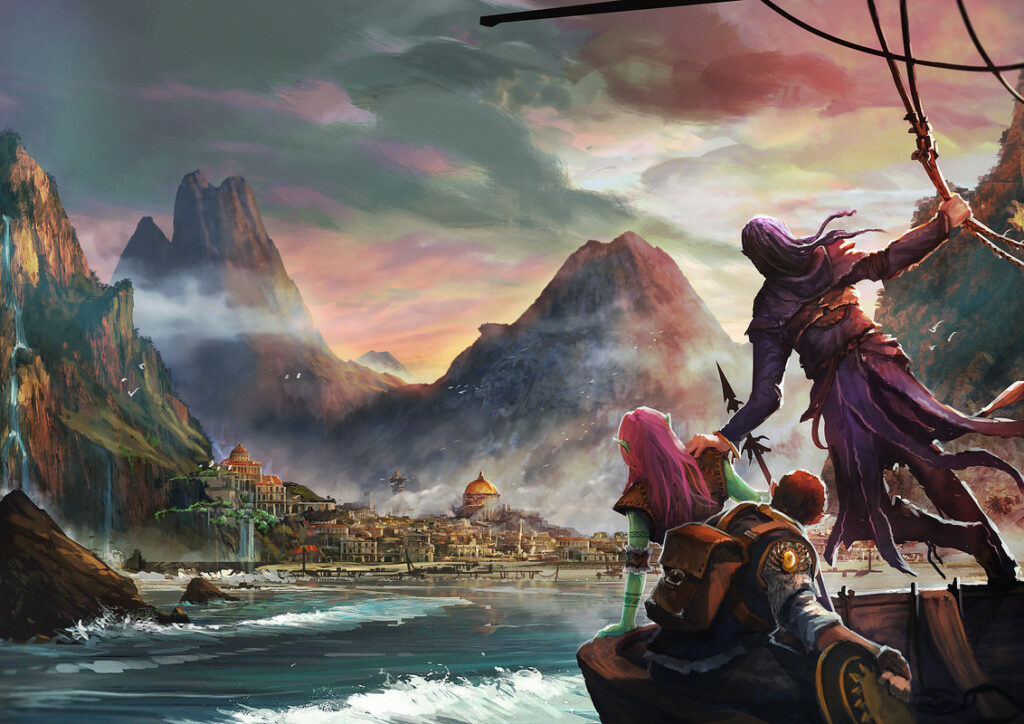
As for the outline of the campaign’s plot, in ancient times the Spring Court of the Feywild was cursed by the other season courts to slumber, and left behind buried in the material plane. However now a radical Teylu cult, the Teyhua, are seeking to awaken Spring and use its power to expel the settlers from the Archipelago. To do this a number of seals first need to be removed, which can each only be done by the Summer, Autumn, Winter and Spring knight (mortals in the employ of the courts as their champion, because they’re able to break Fey rules such as crossing running water and being able to lie), and the player characters find themselves entangled within this storied web and – mostly by accident – becoming knights for the fey courts.

I’m an avid worldbuilder, drawing heavily on historical minutiae, so in order to scratch that itch and build up a corpus of material I also write a “worldbuilder gazette” article every few months, dealing with info about the world that might not naturally pop up during sessions, such as how the different regional calendars work, lunar orbits, holidays, the economy, and nations the players haven’t visited yet. For every other worldbuilding-obsessed DM out there: I see you, I hear you.
How regularly do you play, and where do you play? Tell us about your current group of players.
The campaign is played online, using roll20 and Zoom, and we play about once every two to three weeks. With me included we’re a group of four from across the UK and west-central Europe. I’m gonna refrain from telling you too many personal details, but I’ll just say they’re some of the goshdarndamndest best RP’ers – nay, actors! – I’ve ever seen at any D&D table. They’re so insanely good. Sometimes I just shut up and listen for 30 minutes while they RP amongst themselves.
You put a lot of emphasis on the factions in your game, enough to place them on the front page. Can you tell us how important they are in your game?
As mentioned previously, I draw a great deal from history when worldbuilding, and if anything history is a revolving door of peoples, polities and cultures clashing with each other. The factions on the wiki’s home page are for the most part the main cultural groupings; what background an npc is from can inform a massive amount about their character, customs and perspective on things, especially how they relate to the local background conflict and what that means for their relationship with the player characters. I don’t want to have my game world populated by unattached caricatures, I want the npcs to have allegiances of their own – be they culture, country, ethnicity, etcetera. In my opinion they make characters richer and more vibrant, and give the players an additional set of approaches to relate to them (are they from a rival faction? Are they both foreigners away from home? Do they have certain proclivities or interests relating to their culture that might be used to sway them?)
I don’t want every country to be contained in its own cordoned-off little box either, like they’re in their own stasis bubble: People move! Countries do war, trade, diplomacy, propaganda, cultural exchanges, religious exchanges, espionage, migration and more! Interactions between the different factions are the building blocks of my world, and the quest design flows organically from that. Part of having a reusable setting is having background conflicts that continue to passively generate animosity that can be leveraged into new quests. In the season of strife campaign the main plot is almost entirely motivated and impacted by the background conflict of the indigenous Teylu being squeezed by the Elyzian settlers, and most quests and npcs are at the very least tangentially related to that. Most recently the players were sent on a little sidequest to solve a dispute on some Teylu islands where wealthy Elyzian settlers had built… well… the Hamptons, basically, and their mayor was secretly throwing meat into the bay to lure sharkfolk to the local Teylu water genasi village’s spiritual site to disrupt their traditional links to the land.
I’ve also been working with a couple of artists whom I have commissioned many times. One of them is designing the factions icons for me. Those icons are all unique and purpose-made for my setting, not just plucked from the web! The faction icons there are the ones that are currently done, but in the end there will be two to three times as many! I’ve currently got a plan in the works to start a project with these artists, in order to make an illustration of one or two “average joe”’s from each main culture, to create a kind of setting sourcebook and give an idea of what the regular person in the street of each nation would look like.
Your WIKI section is very detailed and quite comprehensive. Who is responsible for adding the information and organizing it? How much time do you spend updating it as the campaign progresses?

Your WIKI section is very detailed and quite comprehensive. Who is responsible for adding the information and organizing it? How much time do you spend updating it as the campaign progresses?
L’wiki, c’est moi. It’s all done by me and I’ll conservatively estimate “a metric ton of time”. It’s a good thing I enjoy wiki-building (I read aloud from my hostage note) and I’m a glutton for punishment if nothing else. My players do help me out every so often with writing sections of the summaries if I don’t have enough time to finish them, and one of my players performs vitally important recording wizardry, making video recordings of the session and uploading them to a private youtube playlist so we can watch them back and use them to make summaries. And she also makes thumbnails for each session! Recently we also redistributed some tasks so that another player would help me out with writing the short synopses.
Your campaign has many items and makes great use of Obsidian Portal’s Items section. How do you feel the extra work it takes to implement this benefits you and/or your players?
It’s always good to have a central place to store data as a master reference. Handing out item cards or putting them into word documents or reading out the item descriptions is all well and good but you can almost guarantee that stuff’s gonna get lost or misplaced at some point. Much better to have somewhere you can always refer back to. We also have a few items that have become real staples of the characters’ iconic look, such as the sword Spring’s Edge, one of the first items the group acquired in the first ten sessions, and it’s nice to be able to give these items an image to represent them.
What made you choose D&D 5e as your gaming system? Have you played other gaming systems, or earlier editions? How do you feel it compares?
I played 3.5th edition in the first campaign I joined (playing for a good 13-14 years) and DM’ed it for a while, and gods above and below in hindsight I found it so cumbersome and bloated, with hundreds of sourcebooks and a level of stat block number crunching I was simply never going to be able to get a proper grip on; After a while you get monsters on the field with modifiers of +20 to hit, and if you overshot the challenge rating you were supposed to give the players by a bit you could quickly end up with foes the characters could literally do barely more than single digit damage to. And worse, I disliked how lower level spells became exponentially useless as time wore on, because both the DCs and effects of those spells remained as low as a low level character casting them, encouraging you to only throw your highest level stuff. I could probably go on for a while but I’ll save the internet the byte space.
In comparison the 5th edition rules are easy enough to follow that I learned them simply through watching/listening to Critical Role, picking up most of the game (and learning answers to some of the baked-in rules conflicts or less commonly understood features) before ever even opening the Player’s Handbook. The familiarity I now have with the system appeals to me, the basics are pretty easy to follow, flexible enough to homebrew off of, and combat can be balanced quite decently on sheer ‘vibes’ alone, while fixing a lot of the annoyances I had with 3.5 (I don’t think any annoyed me more than being unable to move more than 5ft and make more than one melee attack, turning most battles into stationary ones because it was actively detrimental to move). The system is also robust enough that you can overshoot and make monsters too strong, without instantly signing the players’ death warrant.
How much time is usually spent preparing your game sessions? Describe a typical session.
Most sessions take me a couple hours of prep, often about equal or slightly less than total playtime… except when I need to build a battlemap in Roll20, which can eat up hours of my time while I finetune tiny details. Regardless, my prep can often be described as “leapfrogging.” Whenever I prep a session I will inevitably have enough material that we end up covering (nearly) two sessions with it. Plus if I need to buy time, I’ll just let the player characters talk to one another. Bam, there’s half an hour filled, easy peasy. In our very latest session the players started right after having been portalled to the gates of a Feywild city. They were right in front of the gates! It took 30 minutes before they even walked up to the guards! It’s a miracle we get anywhere at all.
Can you please explain the difference between your session summaries and your miniature session summaries? What is the difference between the two types of sessions?
Those both relate to the same sessions. The ‘session summaries’ are the long versions – which are probably a little too long at times, sometimes reaching more than 10 pages and rarely less than 4 – and the ‘miniature session summaries’ are brief synopses about one paragraph long. It’s a practice I picked up in the first campaign that I ran, where I noticed players had difficulty recalling the basic outline of the few sessions before it (especially because that campaign only played once every 6-7 weeks or so), so the mini summary contains a very basic outline of the main events/facts of the session, just so you can more easily search back for when something happened and so you can recall the basics at a single glance, rather than walls and walls of text. The mini summary section on our wiki then links to the long-form summary of that particular session.

I’m a bit of a fanatic about chronicling everything in massive detail because:
A) I’m a historian and work with archival departments at a government ministry. It’s kinda in my blood at this point.
B) The first campaign I ever joined as a player ran for like 12-13 years and we had basically zero documentation, so halfway through there were just complete year-long arcs of the campaign I had no recollection of or where I didn’t know the order of events anymore, so a lot of plot stuff inadvertently flew over our heads half the time because we didn’t remember anything.
C) I just can’t stop myself. Help.
How long have you been using Obsidian Portal? What brought you to the site and what keeps bringing you back?
I had an account before then but I’ve actively used Obsidian Portal since about 2018, when I first started DM’ing my own campaigns. There might be shinier things out there, with widgets and gadgets and holograms, but I like the easy legibility Obsidian Portal’s format provides if you wanna put up big blocks of text. With some pretty basic coding you can do a fair amount to make it look nice, formatting it like it’s a Wikipedia article. And of course being able to hyperlink back and forth between different pages makes navigating through the wiki a breeze.
If you had to pick just one thing, what would you say Obsidian Portal helps you with the most?
I put up stupid amounts of text, and like I said above I like the legibility Obsidian provides. As a history enthusiast my favored terrain is wikipedia pages (I get a +2 to hit modifier against other historians), so that’s the model I like to copy. I’m also happy with the pre-defined sections for characters, game logs and items, rather than needing to build custom wiki pages for each of them and it becoming a right old mess. If there’s anything else I might want to see from Obsidian Portal it’s one or two more sections like that, such as a bestiary section for common creatures/creature types found in your setting.
What would you say is the biggest highlight of your game so far?

Oh gosh, oh golly, oh jeepers, I had such a tough time answering this question!! We’ve played 74 sessions up to this point, and so many exciting things have happened! Should I pick the time the cleric held an impassioned speech before the church to denounce the bigoted high priestess? Or the victory in the Autumn Tournament when the rogue defeated the other candidates to become the new Autumn Knight? Perhaps I ought to pick that time the party were surrounded by enemies on all sides and opened up the Iron Flask they’d carried with them for nearly 30 sessions without knowing what was inside, summoning a succubus to their aid? That time the ranger/druid had a romantic ride across the meadows of the Feywild on the back of a stag with one of the main villains (he’s hot so it’s okay), or simply when two players were wasted drunk and trying to escape across the rooftops from some bandits, with the air genasi rogue floating away from danger like a balloon?
This artist has done a huge series of illustrations for our campaign, all of which can be found here
I guess if there is one moment I had to pick it would be in the earlier stages of the campaign when the players were at a fancy gala, and the rogue suddenly ran into the crime boss (and secret weretiger) on the dancefloor whom she’d been romancing at the start of the campaign before getting cold feet and breaking it off. I cannot describe the utter mic drop moment when that French accent suddenly returned and I showed off the art I had commissioned for the occasion:

As an aside I also want to add that for me the personal highlight of any game is when the ranger/druid communicates with any flora or fauna. I never know what voice will come out of my mouth but let’s just say the interactions don’t really live up to the wise, sage druid image. Pigeons hate her, seagulls have died for her, trees want to practice their stand-up comedy routines on her.
Okay, as a last question, we always ask for the GM’s “pearls of wisdom”. What GM insights can you offer the community this month?
I mean you’re gonna hear this one repeated ad nauseam, but communication really is key in playing a game like this. You gotta have some people at your table you can trust you can talk with like adults, make sure you’re on the same wavelength as to what kind of game you’d like to play, and make the players feel you’re playing with them not against them. Though as a DM I feel you should always reserve the right to not acquiesce to every single thing the players might ask for; sometimes mother knows best.
However, apart from slam-dunking that low-hanging fruit into Tantalus’ head, there’s a couple more things I’d like to add: First off, the success or failure of your campaign can lean very heavily on what the players are like, irrespective of your quality as a DM. There’s something Brennan Lee Mulligan said at a DM roundtable a couple years back that’s always stuck with me, namely “there’s nothing you can do if the players don’t care.” You can be the best DM in the world with the coolest party tricks and goblin voices but if there are sacks of potatoes sitting opposite your screen it’s gonna be a bad time (and I don’t mean people who are simply shy or withdrawn, I mean people actively unwilling to engage or care). And conversely if you’ve got some people who come to the table with a good attitude, are willing to engage and have a good time, you can elevate any game to beyond what it is on paper. I’ve had about half a dozen campaigns in my DMing career and I’ll earnestly admit some are running better than others (but on the whole I’m very happy with them all), but there’s one that thankfully bled to death where I was straight-up not having a fun time, because of a complete unwillingness from half of the table to engage, like they were forced to participate against their wishes. I didn’t DM that game any differently from my other campaigns, but it was a rotten experience while my other campaigns give me a surge of energy at the end of the night. You’re playing a collaborative game and that collaboration is what makes or breaks a campaign.
Secondly, being behind the DM screen gives you certain insights into how the game functions, and you can try to transfer some of that wisdom to your players to help them get better/get more out of the game. If you have players at your table who are DMs themselves you’ll often quickly notice they play a little bit differently that other players, and in my experience they tend to be a bit better with spotting plot hooks, unearthing crucial info buried in a piece of dialogue, and jumping on opportunities to give the scenario a different twist. With a little encouragement and advice I’ve seen the folks in one long-running campaign in particular transform from ‘enthusiastic amateurs’ into model players. If you wanna give your players any insights to help their play, I’ll offer you this one: “If you don’t do anything, nothing happens.” This applies to every aspect of the game. If you don’t respond (promptly) when the DM asks you about scheduling, the game doesn’t happen. If you don’t go talk to that npc who seems to hold a potential plot hook, then that quest doesn’t occur and you don’t do anything during the session. If the rest of the party is chasing the undead who just attacked the village and kidnapped someone but your character doesn’t want to leave their bed (this happened once), you won’t be able to do anything in the game for the next hour or more. If your character is getting distorted visions about their personal quest but is informed they first need to consume the waters of life to see them more clearly but you make no move to acquire said waters of life, nothing happens. If you never take the initiative to turn to your fellow players and go “hey I think we should plan a heist to steal the plot item”, then no fun shenanigans-filled heist happens. If you play the game super safely and cautiously, none of the fun stuff happens. D&D is an immensely malleable game, where your efforts as a player can and will shape the contours of what the session is gonna be like: Make your players aware they have that power and co-opt them into making the game more fun and to try and get them to engage with what you’re putting out for them.
Thirdly, based on my own campaigns so far and the ones I’ve participated in as a player I’ve picked up a way to structure my campaigns that I’m quite happy with, and that I’m using for the second Twilight campaign. If I could do Strife again from the start I’d have liked to use this approach there too. I like to start by taking my time with the lower levels – giving players enough time to fully explore all their spells and class features and ways to use them creatively, and making them appreciate their new abilities more when they finally get to level 5 and beyond – and giving them a pure sandbox game. They’re set loose in the world and allowed to do generic low-level quests: Root out the goblins blocking the local road, escort the archeologists to the nearby excavation site, find out who’s stealing from the warehouse, etcetera. They get the sense of fulfillment of completing quests (rather than just subsections of a long-running main plot), get to explore your world and setting, get to build a network of NPC contacts, and have complete freedom to pick and choose for themselves what to do. This also puts them at liberty to fail or abandon quests without the stakes being too high and introduces the players to the idea that “if you mess up, you make a mess”, because at a certain point in a high-level plot the party can’t really be allowed to fail that much anymore without endangering the entire setting… and DMs put a lot of work in their settings! They don’t wanna toss it out on a whim! So this early sandbox stage both gives the party freedom and gives the DM freedom not to have to plot-armor the party. In the Season of Strife the party spent their first ten sessions in the starter-town, Celestine, engaging with a local crime boss (slash love interest), and then hitching a ride on an archeological expedition to another part of the island for a while and doing a bit of dungeon delving, before they got involved in the bigger plotlines. You can also start throwing in subtle foreshadowing to the campaign’s eventual BBEG… A namedrop here and there, a whispered rumor, mysterious graffiti appearing in the cities, and so forth. After the sandbox stage you’ll start reaching levels 6, 7, 8 or so, which in my opinion is the game’s sweetspot. This is the part where the format becomes more plot-driven, your players may encounter recurring villains (possibly lieutenants to the campaign’s BBEG), and the stakes start increasing. Perhaps this stage results in a kind of mid-campaign climax. A big victory for the players to revel in at the end of the second act. Maybe you’ll even return them to the sandbox stage for a while to do sidequests or loose ends, before the plot and stakes start dramatically ramping up again as the BBEG starts coming to the fore and you get to the big, epic, dramatic battles as you work your way to the final confrontation. Players generally don’t like losing more than once (in a row), so my recommendation is to always split up your plot into separate portions which can be won piecemeal.Also, get theater kids to join your game. They are good at roleplay and drama. It’s… it’s in the name.
Thank you to the community for making this campaign of the month possible! That’s all for now, join us on our next adventure May 1st, and don’t forget to nominate your favorite campaigns for our next Campaign of the Month!
Obsidian Portal Campaign of the Month February 2024: Cyberpunk 2077 Fate Accelerated
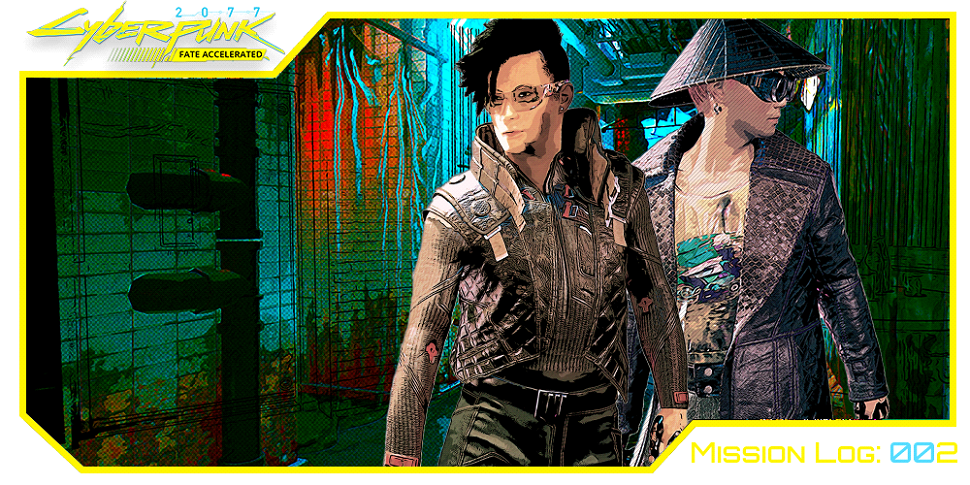
Welcome to a futuristic world where corporations control everything from their skyscraper fortresses, enforcing their rule with armies of Cyborg assassins. Gape in wonder as the player characters track down a Combat Cabb in Dog Town, using cyberenhancement and cutting edge technology in HumAnnoyd’s latest High Tech site, Cyberpunk 2077 Fate Accelerated!
You are no newcomer to this forum, having won several times before. Some people may know you already, but for those who don’t, how would you like to introduce yourself? Anything new going on?
I am an artist, designer and animator who has made a living in video games, tech, education, and marketing. Inspired by Tolkien and Star Wars I started playing RPGs in the late 70s with the Holmes Edition of D&D and ran my first game using Traveller’s “little black books”. In the 80s I picked up Cyberpunk 2013 and ran a seven-year campaign using it and CP2020. This year has been trying due to an intense battle with cancer, but it looks like I am on the mend and may just beat it yet.
What new approaches did you take when designing your site for this new game? Did you adapt old templates or start with an “empty page”?
This website was a little different than my others. During the pandemic I was put on furlough, so I started working on writing rules for a Fate Accelerated version of the video game based on the Dresden Files Accelerated rules. To prevent losing my mind in boredom and to keep my design skills sharp I decided to lay it out in InDesign, using an aesthetic inspired by the amazing artists of the video game. I built the OP Site after that, trying to recreate that aesthetic online.
Are your players new, or have you stuck with players who have been with you in previous games? How often do you play? What are your sessions like?
My roommate and his cousin both expressed interest in playing CP2077A and have little experience with RPGs and none with Cyberpunk. We have played the first two sessions in person but, due to busy schedules will be using Discord and Roll20 going forward.
The sessions have been quite fun so far, with both of my players being creative and clever. I cannot wait to see how the campaign develops as they gain more confidence and experience! We also have a couple of people who may join the game soon.
You are obviously a big fan of the Fate Accelerated Game. What do you like most about it, and in what ways does Cyberpunk 2077 differ from Emerald City: Requiem, which won Campaign of the Year in 2022?
I think the primary difference is that DFA is a full game with rules out of the box. I had to write and create rules for the CP2077A game which required a lot of picking and choosing from Fate’s vast tool sets and games as well as innovating my own ideas. The Emerald City is also set in a city that the players all participated in creating while Cyberpunk is the creation of Mike Pondsmith and the amazing team at CD Projekt Red. What I love about Fate Accelerated is that is such an easy system to hack and for new players to grasp. It also gives players agency to flourish narratively and with much more freedom compared to many other RPGs.
Your choice of artwork throughout the site is great, but it looks like you manipulate each image to give it your own particular flavour. Can you share how you go about this, and what sort of tools you use in your “touch up” palette.
The images are all taken from a mix of screenshots from the video game and photographs blended in a long and involved process in Photoshop that I have been honing for over a decade now. I use an arcane mix of smart objects, filters, actions, blending modes, layer styles with some painting for the final touches that results in massive file sizes of 3 Gigs or more. I am constantly changing and adapting my process as I learn new things.
Tell us a bit about the Cyberpunk world. Boostergangs, techies, outriders, Maelstrom gangers, roadwarriors! How do your cyberenhanced players interact with these characters? Where are they heading?
My players are involved with the 6th Street Gang whose leader just died under mysterious circumstances. The heir apparent of the gang asked them to quietly track down one of his missing friends who went missing along with his expensive Combat Cabb™ in Dog Town, the walled-off combat zone on the edge of Night City that is run like a fiefdom by an ex-soldier who betrayed his masters. The PCs have managed to use some impressive cybernetic implants to infiltrate a business and track down the Cab’s GPS signal to a garage held by the hated Scavs gang. I cannot wait to see how they will carry out the contract and the repercussions that will arise from their actions.
Do you get help from your players in adding to the site content? Or do you do most of the “heavy lifting”?
For now, I am doing all the writing and art and creating for the game. I am hoping that, as my players become more adept at the game, they will help with that “burden”.
You have obviously been with Obsidian Portal for some years. In recent years, many gaming platforms have come onto the scene. What keeps you “sticking with” Obsidian Portal.
I love Obsidian Portal’s ease of use and adaptability with CSS. I am constantly pushing myself to do something new and better with my sites and OP has always risen to that challenge for me. I also enjoy the community who are all a great help when I run into a snag with CSS or provide feedback on a design choice.
If you had to pick just one thing, what would you say Obsidian Portal helps you with the most?
Organization. Having written my own rules for this game OP has proved invaluable for keeping them organized and easy to access for my players. As the game develops there will be more and more NPCs to track and that is so easy using OP.
What would you say is the biggest highlight of your new game so far (please also provide images and links if possible)?
I think the best part of the game so far is when my players started realizing how much freedom they had in the game. They were wanting to infiltrate the Combat Cabb™ garage and came up with a good plan to do so with little to no prompting from me. The infiltrator had to improvise and role-play a fair amount to make it all work and my players did so despite having had little experience with RPGs in the past.
Okay, as a last question, we always ask for the GM’s “pearls of wisdom”. What GM insights can you offer the community this month?
I strive to always stay flexible enough to be able to react nimbly to my players’ choices and plans while at the same time providing enough narrative structure to keep the story interesting and fun for us all. It is a very delicate balance that benefits from trying to never say “no” to my players. This gives the players a greater sense of ownership of the game and agency to be truly creative. I admit that I sometimes struggle with it when I get too attached to certain ideas or storylines, but it is always my goal.
END
OBSIDIAN PORTAL CAMPAIGN OF THE YEAR 2023!

WINNERS FOR 2023:
First Place: Elvathadrin with Torg: Rise of the Storm Knights
Runner Up: Lord_Sam with Esomor Prime
It’s that time of year again- you guessed it, it’s Obsidian Portal’s Campaign of the Year 2023! It’s the ultimate showdown between some of the best of the best Obsidian Portal has to offer: The winners of our Campaign of the Month 2023! Voting is open to anyone who wishes to contribute- be sure to keep an eye out on the OP Community Forums, the OP BLOG, Facebook and Twitter for more information!
We have some great prizes in store for both the first place winner and our first runner up! In addition to winning Free Ascendant membership time, this year we have some AMAZING prizes generously donated from some of the best in the industry, including Paizo, Frog God Games, Limitless Adventures, Crit Academy and Mongoose Publishing!
FIRST PRIZE includes:
– Digital copies of both Starfinder and Pathfinder Second Edition Beginner Boxes and/or Core Rulebooks from Paizo,
– Physical copies of Traveller Core Rulebook and the Paranoia Core Book from Mongoose Publishing,
– Digital copies of Limitless Encounters 1, Limitless NPCs 1 and Limitless Monsters 1 from Limitless Adventures,
– A gift certificate worth $200 to select any digital items in store from Frog God Games,
– Physical copies of Bountiful Bounties and Aelx’s Bombastic Oddities from Crit Academy,
– 1 Year Ascendant Membership from Obsidian Portal
RUNNER UP PRIZE includes:
– A gift certificate worth $100 to select any digital items in store from Frog God Games
– 1 Year Ascendant Membership from Obsidian Portal
A huge thank you to our sponsors for this years prizes!: