Tag Archives: campaign of the month
Campaign of the Month August 2026: Star Trek: Excalibur

Read on to discover how a group of roleplayers from “Down Under” become the officers on the last voyage of the USS Excalibur on her final mission into the “Shackleton Expanse”, encountering new life and civilizations, including Romulans and Bluegill, in the seemingly endless quest into outer space. Let GM IanHoulihan and his crew guide you to boldly go where the Federation has never gone before in STAR TREK: Excalibur…
First off, feel free to tell us about the person behind the GM screen. Where are you from? What do you do aside from gaming? Alter Egos? Life partners? Family? Where can we interact with you on the internet?
Firstly, it’s an absolute honour just to be considered for this award. I’ve been part of the Obsidian Portal community for many years and being recognised alongside so many talented GMs is genuinely humbling.
Away from the GM screen, I’m a proud dad to five boys (all now 16 or older), partner to the incredibly patient Kerry, and human servant to two Cavoodle fur babies. We call Brisbane, Australia home, and life is usually a balancing act between family, work, gaming, and finding the occasional moment to breathe!
My tabletop journey began back in 1984 when someone introduced me to Top Secret. That one game opened the floodgates. Before long I was exploring Basic D&D, Rolemaster, and eventually the Star Wars Roleplaying Game by West End Games—a game that sparked a lifelong love affair with RPGs. Since then, I’ve played more systems than I can count, including Star Trek Adventures, and was fortunate enough to contribute professionally by writing for Legend of the Five Rings and Genesys under both Fantasy Flight Games and Edge Studio.
Gaming has also taken me beyond the table. I had the privilege of serving as Event Manager for the very first PAX Australia and later running Gen Con Australia in 2008 and 2009—experiences that gave me an even greater appreciation for the incredible gaming community.
When I’m not rolling dice or writing adventures, you’ll probably find me spending time with my family or out on the water paddling Waka Ama—traditional Polynesian outrigger canoeing—which is a fantastic way to clear the mind after plotting the latest campaign twist.
If you’d like to chat RPGs, worldbuilding, or just say hello, you can find me on most social media as @gmhooly. I also hosted The Forge: A Genesys RPG Podcast. While the show is currently on permanent hiatus, I’m always happy to talk shop with fellow gamers online.
The whole design aspect of your campaign is immediately obvious from the introduction to it on the landing page, so let’s start with that. What inspired the design aesthetic, and how did you go about setting it up. What tools did you use, etc.
The design was inspired almost entirely by Star Trek: The Next Generation. Since my Star Trek Adventures campaign is set during that era, I wanted visitors to feel like they’d just stepped onto the bridge of a Galaxy-class starship. The LCARS interface is instantly recognisable to Star Trek fans, so it felt like the perfect way to present information. Rather than simply decorate the page, I wanted the interface itself to become part of the experience, making players feel like they were accessing a Starfleet computer.
To build everything, I use the Adobe Creative Cloud suite almost exclusively. Every panel, button, icon, and graphic element is custom-designed to fit the campaign. Once the artwork is finished, it’s a matter of figuring out how to make it all work inside Obsidian Portal.
The funny thing is that I’m far from being a web developer. My HTML and CSS knowledge is almost entirely self-taught, learned through countless hours of experimentation, breaking things, fixing them, and occasionally celebrating when something finally worked! Whenever I hit a wall, the amazing Obsidian Portal community on the forums and Discord has always been there with advice, ideas, and encouragement.
In many ways, the page has evolved just like the campaign itself. Every new feature taught me a new trick, and every challenge pushed me to learn something new. It’s been a wonderful creative journey that’s still evolving every time I update the site.
Tell us a bit about your players. How long have you been playing together. Describe your typical gaming session. Online or In Person?
One of the things I love most about this campaign is the people around the table. While I have a bit of a rotating roster, there are six core players who have been with me since the beginning. They range in age from 19 all the way up to… me, at 55! It’s a fantastic mix of personalities and gaming experience, from complete newcomers to seasoned veterans, and we have a great balance of genders at the table as well.
We first came together just over a year ago through the Northside Adventure Gamers Association here in Brisbane—a club I helped establish to bring tabletop gamers together. While our regular games happen at the club, we also run additional sessions outside of club nights. Partly that’s because I’m a shift worker and can’t always make Thursdays, but mostly it’s because my players keep asking when the next mission is!
Our regular sessions are played in person every Thursday evening from 6:00 pm until around 10:00 pm. I deliberately structure the campaign like a modern Star Trek television series rather than a collection of standalone adventures. Each “season” consists of around eight to ten interconnected missions, with individual adventures usually unfolding over one to three sessions. That approach lets us tell bigger stories, develop the characters over time, and sprinkle in mysteries and plot threads that might not pay off until much later.
The best compliment I can give my players is that they’re completely invested. They laugh, debate impossible moral dilemmas, celebrate every victory, and occasionally surprise me by solving problems in ways I never expected. As a Game Master, that’s exactly the kind of table you hope to have.
Your BIO page on Obsidian Portal indicates that you are involved in both STAR TREK and PATHFINDER games. Do you have any thoughts on the differences between role playing in Fantasy and SciFi scenarios? Are there any differences in designing your page/campaign? Do you notice any differences in the way people play these two types of game?
I think the first difference people notice is the visual style. I like every Obsidian Portal campaign to have its own identity, so I design each page to reflect the genre and tone of the game. A Pathfinder campaign should feel like opening an ancient tome or a weathered map, while my Star Trek campaign is built around the clean, futuristic LCARS interface from The Next Generation. The campaign page is really an extension of the world the players are stepping into.
From a Game Master’s perspective, though, the biggest difference is scale. Fantasy campaigns tend to be geographically focused. Even if the world is enormous, the adventure usually unfolds within a kingdom, a continent, or a well-defined region. Science fiction opens the door to an almost limitless playground. Every star system can have its own culture, politics, technology, and environment, so worldbuilding becomes galaxy-building. Instead of detailed regional maps, I spend more time creating planetary overviews, sector maps, and notes that help each world feel unique.
I also think the two genres encourage different kinds of roleplaying. Fantasy is familiar—castles, dragons, taverns, and magic are concepts most players can picture immediately. Science fiction often asks players to buy into a specific vision of the future. Even franchises within the genre can feel worlds apart. Star Wars embraces mythic fantasy wrapped in science-fiction aesthetics, while Star Trek leans into exploration, diplomacy, and at least the appearance of scientific plausibility. As a result, Star Trek players often find themselves solving problems through teamwork, ethics, and creative applications of technology rather than simply drawing their weapons.
One of my favourite moments at the table is when the players start throwing around technobabble. They don’t need to be real engineers—they just need enough confidence to say something like, “If we reverse the ocular focus of the tachyon emitter…” and suddenly everyone buys into the moment. Those are the scenes that make Star Trek feel like Star Trek.
System-wise, I enjoy both Pathfinder and Star Trek Adventures immensely, but I’ve found my tastes have evolved over the years. These days I’m drawn to games with lighter mechanics that get out of the way of the story. I still love tactical depth, but I value systems that give players the freedom to be creative and give me the flexibility to say “yes” more often than “check the rulebook.”
Please outline the basic mission of your game aboard the U.S.S Excalibur. Where are you taking your players? What are they experiencing? Are you just travelling and discovering, or is there a firm goal/destination in mind?
At its heart, the campaign is about exploration. The players are the senior officers aboard the USS Excalibur, an aging Constitution-class starship embarking on one final mission before retirement. That premise gives us everything that makes Star Trek special: exploring strange new worlds, making first contact with new civilizations, solving scientific mysteries, and occasionally saving the Federation from threats nobody saw coming.
The campaign is set at the beginning of Star Trek: The Next Generation Season 4, using the Shackleton Expanse as our playground. It’s a fantastic setting because it’s largely unexplored, giving me the freedom to blend established Star Trek canon with original worlds, species, and mysteries while still feeling true to the universe.
Although every mission tells a complete story, there’s always a larger narrative unfolding beneath the surface. Our first season centered on the return of the neural parasites from the infamous Season 1 episode, “Conspiracy.” It began as a series of seemingly unrelated adventures while everyone learned the system, but the clues gradually revealed a conspiracy that had spread throughout the Romulan Star Empire. The season culminated in a classic Star Trek moral dilemma: should the crew forge an uneasy alliance that would leave the Romulan Empire enslaved, or commit genocide against the last surviving members of the Bluegill species to end the threat forever? Watching the players wrestle with that decision was one of the most rewarding moments I’ve ever had as a Game Master.
Now we’re in our second season, and the stakes have become even greater. The crew has uncovered evidence of an ancient race of world-builders whose descendants believe they are the rightful inheritors of the galaxy. Their ambition is nothing less than to rebuild their lost empire and subjugate every civilization across the Alpha and Beta Quadrants. It has become a story of exploration, archaeology, diplomacy, political intrigue, and the occasional starship battle, while still leaving room for those wonderfully strange Star Trek episodes where the crew encounters something no one could possibly have predicted.
That’s really the philosophy behind the campaign. The destination is never just the next planet—it’s the next mystery. Every mission should leave the players asking the same question that has driven Star Trek for nearly sixty years: What’s waiting beyond the next star?
How do you deal with combat situations? You would obviously have ship to ship contact, but I presume you have person to person contact on planet surfaces, etc. Does the STAR TREK game offer different combat systems for each type of contact? Do you use any homegrown systems?
One of the things I really enjoy about Star Trek Adventures is that combat isn’t the centrepiece of the game—it’s simply another tool for telling the story. The system supports both personal combat and starship combat, but both use the same underlying mechanics, making it easy for players to move between away missions, diplomatic encounters, and ship-to-ship engagements without feeling like they’re learning a new game each time.
Compared to many tactical RPGs, combat is intentionally more abstract. Characters move through narrative “Zones” rather than counting squares on a grid, which keeps the action flowing and encourages cinematic thinking over precise positioning. That feels very true to Star Trek. The best moments aren’t usually about eliminating every opponent—they’re about buying enough time to rescue civilians, disabling an enemy ship without destroying it, or finding a creative solution that avoids a firefight altogether.
I haven’t found much need to introduce homebrew combat rules because the system already does a great job of supporting the kinds of stories I want to tell. Instead, I focus on bringing the scenes to life. I design and 3D-print many of our miniatures after creating the characters in Hero Forge, and I’ll often create maps when the scene benefits from a physical representation. While I’m perfectly happy running theatre of the mind, I know some players engage more deeply when they can see the environment and where everyone is standing.
Ultimately, like everything else in the campaign, combat serves the story. If the players can talk their way out of a battle, outwit their opponent with science, or negotiate a peaceful solution, that’s often a far more satisfying outcome than simply winning a firefight. After all, that’s the Star Trek way.
All of your characters seem to have a distinct type of image? Where do you get these from? Are the pictures original artworks? Tell us more.
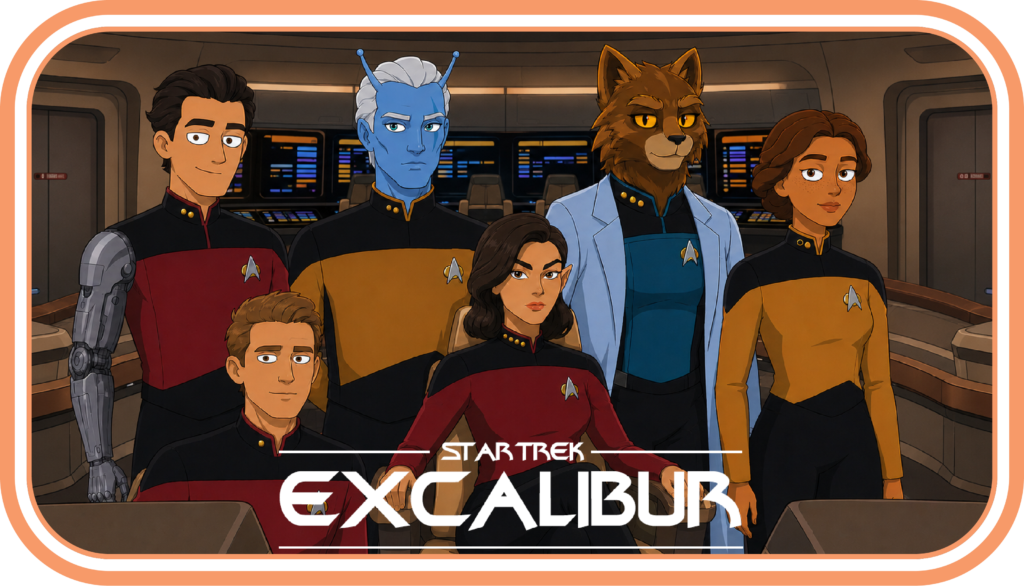
The artwork has evolved alongside the campaign. In the early days, I used Hero Forge to create sample characters and used those renders as their portraits. They did the job well and helped give every NPC a distinct identity. More recently, however, I’ve switched to AI-generated artwork to create portraits inspired by the style of Star Trek: Lower Decks. (I can almost hear your readers collectively groan at the mention of AI!) For me, though, it’s been an incredibly useful tool. With a campaign featuring hundreds of characters across multiple species, it simply wouldn’t be practical—or affordable—to commission original artwork for every single one.
The important thing is that the portraits aren’t there to replace artists; they’re there to help my players instantly recognise a character and make the world feel more alive. Having a consistent visual style across the entire campaign makes a huge difference to immersion, and AI has made that achievable in a way that wasn’t possible for me before.
That said, if this were a commercial project, I’d absolutely want to work with an artist. There’s no substitute for collaborating with someone who can take your ideas and bring them to life in a truly unique way. But for a private home campaign, AI has allowed me to create a cohesive visual identity that enhances the experience for my players without putting an impossible strain on my wallet.
At the end of the day, whether it’s a Hero Forge miniature, an AI portrait, or a commissioned illustration, the image is there to serve the same purpose: to help the players remember the characters they’ve met and make the universe feel like a living, breathing place.
The campaign seems to have been running for over a year. Have the players/characters remained basically the same throughout or have things changed a lot? How do you feel they (and you) have developed along with the Campaign?
Like many club games, the first few months were a little fluid. The Northside Adventure Gamers Association offers a wide variety of games, so it’s only natural that players occasionally try something different when another campaign catches their eye. By the end of our second mission, though, we’d found our core crew, and they’ve been together ever since.
Looking back, the biggest change hasn’t been the roster—it’s been everyone’s confidence. We were all learning Star Trek Adventures at the beginning, and like any new system there were plenty of moments spent checking rules or looking things up. Now the mechanics have become second nature, which means they rarely interrupt the story. The rules have faded into the background, exactly where I think they belong.
As the Game Master, I’ve evolved as well. Along the way I’ve created player aids, reference cards, and quick-action guides to make the game flow more smoothly. Those little quality-of-life improvements have helped keep the focus on the narrative rather than the rulebook, and I think they’ve made everyone more comfortable trying creative solutions.
The characters themselves have also grown in ways I hadn’t anticipated. Star Trek Adventures encourages players to reflect on their experiences through personal character logs, and those stories become part of their ongoing development. Rather than simply gaining new abilities, the characters evolve because of the choices they’ve made, the people they’ve saved, and the impossible decisions they’ve faced. Their Values change, their priorities shift, and they become more rounded officers because of what they’ve experienced.
For me, that’s been the most rewarding part of the campaign. We started as a group of people learning a new game. Over the past year the players have become the senior staff of the Excalibur, and I think everyone around the table feels that difference.
Who updates your Adventure Logs? Do you all engage in this activity?
I handle the main Adventure Logs, but they’re only half the story.
Before each mission, I’ll write the official mission log in the style of a Starfleet Captain’s Log or senior officer’s report, complete with custom graphics and a portrait of whichever character is narrating that entry. It’s my way of presenting the episode as though it had just aired.
The players then add their own Character Logs as comments beneath the main entry. I absolutely love reading these because they’re written from each character’s perspective. One officer might focus on the ethical dilemma they faced, another on the scientific discovery, while someone else is still annoyed that there wasn’t a Romulan conspiracy facing the crew this episode! Seeing the same events through different eyes adds another layer to the story and often reminds me of moments I’d forgotten had such an impact.
The best part is that Star Trek Adventures actively encourages this style of play. Character Logs aren’t just flavour text—they tie directly into character growth. Players can reflect on how events have changed their characters, revisit or challenge their Values, and connect those moments to their ongoing development. The Adventure Log becomes more than just a session recap; it becomes part of the characters’ personal histories.
It’s one of my favourite features of the campaign because it keeps the story alive between sessions. By the time we sit down for the next game, everyone has already had a chance to step back into character, reflect on what happened, and think about where their officer is headed next.
Have there been any particularly memorable sessions? What happened? Why was it memorable? In what way? Feel free to include comments from your fellow players in this description.
When I asked my players this question, the overwhelming response was simply, “All of it.” As flattering as that was, however, I insisted they give me something a little more specific!
One moment that came up repeatedly was a confrontation deep in the Engineering Section of a derelict Federation Starship with a Romulan officer who had fallen under the control of one of the neural parasites—the Bluegills, for those who remember the Next Generation episode “Conspiracy.” The encounter became a frantic balancing act, with half the crew desperately trying to shut down the warp core while the rest fought the possessed Romulan in brutal hand-to-hand combat. It perfectly captured Star Trek at its best: solving a scientific crisis while trying to survive an impossible situation.
Another favourite was the climax of our first season. The crew discovered a hidden Bluegill stronghold built around an ancient Arconian Gate—a canon piece of Star Trek lore that’s essentially a Stargate. It was there they confronted the Mother, leader of the Bluegills, in a spectacular final showdown. One of the players jokingly suggested that the insect swarms should suddenly have wings. Rather than saying no, I spent some Threat—the Game Master’s narrative currency—to make exactly that happen. The laughter quickly turned into panic, and it’s become one of those legendary “You remember when…” stories that still gets brought up around the table.
Several players also mentioned their first meeting with Morgana, an enigmatic being with powers reminiscent of Q. She has become one of those villains that players love to hate: always manipulating events from the shadows, always seeming to know more than she’s willing to reveal. She’s woven deeply into the mythology of the campaign, and every appearance leaves the crew with more questions than answers.
For me, though, the most memorable session happened only recently. The crew discovered an ancient alien data archive connected to the same civilisation as Morgana and unknowingly activated it aboard a Federation starbase. As the station’s computer systems were slowly taken over, a fragment of the archive infiltrated the Excalibur itself. Suddenly the party was split between two simultaneous crises—half trying to save the starbase while the other half fought to regain control of their own ship.
As a Game Master, those sessions can be terrifying. You’re constantly cutting back and forth between two groups, trying to make sure everyone stays engaged and gets their moment to shine. But that night, everything clicked. Every player had a chance to be the hero, nobody dominated the spotlight, everyone built on each other’s ideas, and the whole table felt completely invested from beginning to end.
Those are the sessions I remember most—not necessarily because of the explosions or the villains, but because everyone around the table was telling the story together. When your players are still talking about those moments several months later, you know you’ve created something special.
Okay, as a last question, we always ask for the GM’s “pearls of wisdom”. What GM insights can you offer the community this month?
If I could leave GMs with just two pieces of advice, they’d be these.
The first is simple: be your player characters’ biggest fan.
That doesn’t mean making things easy. It doesn’t mean pulling punches or handing out victories. It means genuinely wanting the heroes to succeed because their success creates the most memorable stories. I think too many Game Masters still fall into the trap of treating the game as “GM versus the players.” I’ve never found that particularly satisfying.
Instead, I try to say “yes” as often as possible. Sometimes it’s “Yes, and…” Sometimes it’s “Yes, but…” The important part is that I’m looking for ways to reward creativity rather than shut it down. My job isn’t to beat the players—it’s to create situations where they get to do something extraordinary. I want my players to walk away feeling like they just watched the best episode of their favourite TV show, and they happened to be the stars.
The second piece of advice is about preparation.People often ask how I can improvise so much or adapt when the players head off in a completely unexpected direction. The truth is, I rarely prepare locations—I prepare scenes.
A scene doesn’t care whether it happens in a starship corridor, an old Scottish tavern, or an abandoned mining colony. It’s simply an interesting situation with interesting people, a conflict, and a purpose. Once the players decide where they’re going, I look at my toolbox of scenes and ask, “Which one belongs here?”
That approach has two huge advantages. First, the players feel like they’re driving the story because they genuinely are choosing where to go. Second, I get to be surprised as well. Instead of forcing my ideas into a predetermined sequence, I get to discover the story alongside my players. After more than forty years behind the screen, that’s still one of my favourite parts of being a Game Master.
At the end of the day, that’s what tabletop roleplaying is all about. The players don’t remember perfectly balanced encounters or beautifully organised notes. They remember the moments when everyone at the table looked at each other and said, “Did that really just happen?” If you can create those moments, you’re doing it right.
Thank you to the community for making this campaign of the month possible! That’s all for now, join us on our next adventure September 1st, and don’t forget to nominate your favorite campaigns for our next Campaign of the Month!
Campaign of the Month April 2026: Alien

My mommy always said that there were no monsters – no real ones – but there are. It only took us a little over two thousand years to find them in the cold dark of space, where no one can hear you scream.
Our Campaign of the Month for April pushes us down the frightening and lonely space lanes of 2189 through the eyes of the crew of the USCSS Sherwood as they encounter MU/TH/UR, Weyland-Yutani’s better worlds, and, of course, the iconic Xenomorphs in Adoraith’s awesome Alien Evolved campaign setting.

First off, please tell us about the person behind the GM screen. Where are you from? What do you do aside from gaming? Alter Egos? Life partners? Family? Where can we interact with you on the internet?
My wife and I live in New Orleans with our dog Maggie. We have 4 kids, but they have all grown and moved on to bigger and better things. Aside from gaming, most of my free time is spent indulging in everything that New Orleans has to offer. Music, food, art, and festivals are a constant in the Big Easy.
I do have a couple of “professional” social media accounts that I used to peddle my 5e adventures and supplements. They can be found on Instagram and Youtube as The Pickled Dragon. I still pop on weekly but don’t post nearly as much as I used to. I had a few bestselling 5e books that can be found on Amazon, Drive Thru RPG, and the DMs Guild. Kelsey Dionne (of Shadowdark fame) and I wrote a monster manual together called the Monstrous Lexicon. The Days of Blight trilogy (DMs Guild) was another series that I was particularly proud of. Around 2021 I took a step back from publishing to focus on my home game and the things that made me happy.
Your campaign is set in the Alien Universe. What was it that fascinated you with this setting enough to create and run a campaign in it? Was it the roleplaying game from Free League itself, or is there a deeper underlying fascination with the expanded franchise? What’s your favorite movie from the franchise that inspires you the most?
Alien was one of the first movies I remember seeing when my dad took the family to a drive-in double feature. The body horror of a parasitic creature smothering the victim but keeping them alive to incubate its young, still shakes me to the core. Follow that up with the horrific birth of the alien and you have the literal stuff of nightmares for years to come.
I have tried to recreate the alien experience several times starting with Star Frontiers in the mid 80s. I took a stab at designing the xenomorph for DnD in the 90s with AD&D 2e. It wasn’t until DnD 3.5e that the design really coalesced into something that was inspired by rather than pure rip off of the xenomorph. By the time 5e rolled around, I was happy enough with the design of the hive demon to include it in the Monstrous Lexicon.
Free League’s Alien RPG perfectly captures the experience in gruesome detail. They have created one of my top 3 favorite games of all time. I love that the system is fairly rules light and easy to learn. The rules are elegant and can facilitate a faster pace of play (Aliens) or be used to create an atmospheric horror experience (Alien). My absolute favorite mechanic is the stress dice. What a stroke of genius.
My favorite film of the franchise really depends on my mood. The first two films are far and away, the best of the collection. However, Alien and Aliens are very different movies. For a slow burn suspenseful sci-fi horror experience I go to Alien. Aliens scratches that itch for the sci-fi blockbuster action film with a dash of body horror.
Tell us about your players and your typical gaming sessions. How often do you play? Online? Tabletop? Who does what in any typical session?
My players and I meet at my place every Sunday from 1 to 6. I have tried online gaming a couple times and just couldn’t get into it. In my opinion, the essence of the roleplaying game experience is human interaction which goes beyond simple conversation. There is no substitution for the tactile feel of dice, miniatures, a hug, handshake, the celebratory high five, and the all-important breaking of bread together.
I will let my players speak for themselves.
Scott – I’ve really enjoyed getting to play Alien RPG with Matt and the
rest of the crew. I usually play fantasy RPG’s so this game was brand
new in a lot of ways for me as I journey into space. One thing I love
the most is the “panic” dice. Your stress response can either fuel you
or have you fall apart under pressure, masterfully mimicking fight or
flight. Space travel was really interesting and had me thinking about it
in the real world. Distances are vast and injuries are real; there’s no
magic and death is always around the corner. Alien is a top tier RPG and
I’d definitely recommend it for a thrilling Sci fi game.
Courtney – I’ve enjoyed jumping into a new system between longer
campaigns. I was initially concerned that I’d be a bit lost since I was
not well versed in the lore, but most of the events from the movies are
classified or only rumored. We watched the first two films as a group
which also got us into the world with the right lingo and vibes. I’ve
been playing Dr. Beatrice Mott, a young xenobiologist straight out of
university. I wanted a palate cleanser from playing a barbarian, but I
didn’t know how lucky I would be with shooting my service pistol after a
short training session with one of the marines. ‘One Shot Mott’ is
racking up kills at a faster rate than my barbarian ever did. Another
surprise is how much fun it is to be tech savvy, even if it’s just
make-believe. I can’t wait to see if any of our characters survive this
campaign. I tend to get attached to my PC’s over time, but we knew how
likely a TPK would be this time around. If she must go, I hope Dr. Mott
has a glorious end.
Jeremy – I’ve never played Alien before and to be honest, I tend to not
really get into Table Top games where the PCs are closer to real life
humans than not and get pitted against entities that can easily squish
them. I went into the game expecting we had good potential to TPK in any
given encounter much like people got squished and tossed around in the
movies. I settled on trying to be a space mechanic that enjoyed
conspiracies and had his own literal tin foil hat just in case. I tried
to be a coward in the beginning for survival while also aspiring to be a
Colonial Marine. Events eventually led my character to mentally just
being done with anything alien or alien-involved scientist related (saw
his in-game ‘Buddy’ die to a face hugger and then survived an alien grab
by punching and screaming until the team arrived).
Alien’s Stress/Panic system has been enjoyable for me in helping to
shape my character and add to roleplay overall. Out of character, I
accepted Stress Dice as super powers all the way up to my character
panic freezing every action. It was fulfilling to test limits in a new
system and see how things would develop or occur. Even started offering
Coffee in game to party members that pushed their own stress (it adds
more stress heh).
Despite my initial expectations of easily squishable, the Alien system
does a good job with character options (given you survive a few sessions
for EXP) to build into enhancing one’s survivability and/or
intractability with the world around them.
Tell us more about the crew of the USCSS Sherwood! What roles do they play, and how do each of the players contribute to their game personalities.
I do love the assortment of characters the players have brought together. My group has always been excellent at filling in the gaps of their party composition without sacrificing roleplaying. Just as an example, our last DnD campaign ran four years without a dedicated healer. Anyway, the crew of the Sherwood.
The captain (Gordi Boudreaux) and lead engineer (Hooper) were both NPCs which actually gave me a ton of flexibility when orchestrating the storyline.
Courtney plays Dr. Beatrice Mott, a fresh out of college xenobiologist looking to kick start her career. Ms Mott was a little shy to start but her confidence quickly grew as the Sherwood was plunged into corporate intrigue and sabotage. Her nickname, One Shot Mott, was earned when she managed to shoot and kill a facehugger as it was hurdling through the air at her captains head.
Scott plays Phil Baxton, a colonial marine gunner with a heart of gold. His strong belief in the general good in people has been challenged but remains strong after witnessing what corporate strongmen are capable of doing in the name of the bottom line. Perhaps, his faith was bolstered by the terribly grouchy Hooper sacrificed his life to save Phil.
Joe plays Kipp Sanchez, a true believer in the Colonial Marine ethos. That was until he learned that Weyland Yutani was the de facto commander of the corps. After learning of Captain Demien Brackett’s splinter group of marines actively working against WY’s effort to weaponize the xenomorph, he ceased sending colonial marine command covert messages on the activities of the crew.
Jeremy plays Rufus Barker, the assistant engineer (roughneck), coffee aficionado, and stress magnet. Hooper and Rufus were best buddies who were both avid conspiracy theorists. Of particular interest was Robert Morse’s account of the Space Beast and his encounter with a woman named Ellen Ripley. To say that there is not enough tin foil for his hat would be an understatement, but he might just be onto something!
Amariah plays Amber, professional stowaway and kid with no home. Amber has lived a very tough 10 years but finds joy in the small things. Her rainbow bright doll is among her favorite possessions and believes that the 20th century doll will make her rich if she can find the right buyer. In the meantime, she is content to chain smoke her Pall Malls and offer sarcastic barbs at the worst possible time.
How closely does your game adhere to the canon of the movies and ttrpg? What embellishments have you added? I noticed that you have added several corporations into the mix of those from the core manual that I don’t recognize! Tell us a bit about what inspired them.
I love the canon lore of the Alien Universe and made it a point not to do anything that would contradict or change the underlying story. There is a website that shows all movies, graphic novels, and even video games that are officially canon to the Alien Universe. Fortunately, I already owned nearly all of the material and went back to reread everything. I pulled concepts, story lines, and ideas that I thought could have gone so much further and ran with it. If I were to ever run a long-term campaign of Alien RPG, I would want that to be the Alien Earth War series. This incredible collection of comics and graphic novels is not canon, but the setting would make a great campaign!
All of the corporations I have on the page come from the canon material found in movies, graphic novels, and video games. As a GM, I want to make the game as immersive as possible so I wrote down every detail I could find.
Your campaign has a captivating retro-80s sci fi design, appearance and feel. What tools did you use in setting things up? What advice can you give for new GMs who want to do what you have done?
I love the low tech feel of the original Alien film. That is the esthetic I wanted for the Alien campaign page. I used Adobe Premier Pro to create the GIFs and Adobe Photoshop for the images. Getting a free font that was close to the Alien font was difficult, but I eventually tracked it down. Overall, I took the stance that less is more and ran with it.
There are probably easier ways to do the design of the page, but I am familiar with Adobe products which is why I went in that direction. I would say use the tools you are comfortable with and focus on making the information accessible to your players. I have seen some beautiful websites that are a trainwreck to navigate. Start with accessibility and then adjust to make it pretty.
You post several of your play videos to YouTube in your adventure logs. I find them very instructional in learning more about the game’s mechanical aspects! Were they meant to be such?
Honestly, the videos are just a fun way to remember the events of the session. Any educational benefit they provide is completely accidental!
Okay, as a last question, we always ask for the GM’s “pearls of wisdom”. What GM insights would you like to offer the community this month?
I am a huge proponent of homebrewing just about everything. I love to create new aliens, talents, and abilities that the players do not have access to or knowledge of. RPG’s has been around for 50 years and there are very few surprises coming out of published material.
I also love the fact that Alien RPG is not a D20 system. There are some brilliant mechanics, like the stress dice, that would brilliantly fold into other games. Don’t be afraid to adopt, adapt, and combine different systems to make your game unique.
Thank you to the community for making this campaign of the month possible! That’s all for now, join us on our next adventure May 1st, and don’t forget to nominate your favorite campaigns for our next Campaign of the Month!
Campaign of the Month August 2025: A Manifestation of Chaos: Extinction Event!

The lands of Oerth have endured generations of turmoil – still reeling from the Chaos War, still watching Iuz gather strength in the shadows. Magic falters where once it flowed freely, trade routes fracture, and even the once-stable Free City of Greyhawk teeters under the weight of corruption and conflict. Yet, amid the lingering darkness, Overking Stefan Boarke’s efforts to reunite the Great Kingdom have begun to shift the tide. Fractured alliances, long-soured bloodlines, and the ghosts of heroes past all circle a rare moment of potential unity: a long-anticipated celebration where whispers hint at something far greater than mere ceremony. This month, we’re thrilled to feature A Manifestation of Chaos: Extinction Event!, a richly layered Greyhawk saga helmed by GM Leonidas300, whose worldbuilding and attention to continuity breathe new life into an ever-evolving continent.
First off, feel free to tell us about the person behind the GM screen. Where are you from? What do you do aside from gaming? Alter Egos? Life partners? Family? Where can we interact with you on the internet?
I was born in California, grew up in Iowa but moved to St. Louis when I was 25. Aside from gaming, I do more gaming lol, pretty much the whole of my hobby time is gaming related or adjacent. Insofar as career, I’m an Accountant, I’m married, with step-kids. I am mostly on FB, in most any D&D related room. I’ve got a FB page called Metzgers Dungeons but I am terrible at updating it.
Tell us about “A Manifestation of Chaos: Extinction Event!” in a nutshell. How did you design the campaign? What was your inspiration?
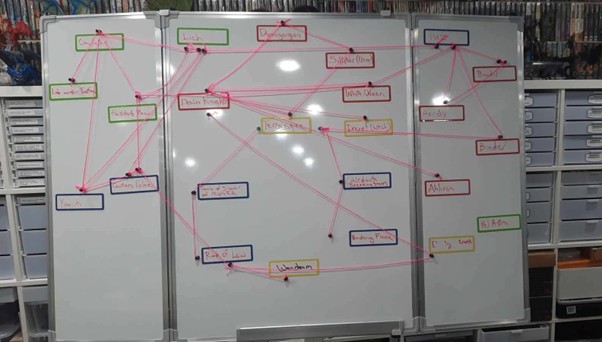
This either requires a book of an answer or what I’ll try to do here… The design for this one was in response to my players’ feedback on the 1st Manifestation of Chaos campaign. They asked that this one have more intrigue and politics and to a man; I believe they would say that I have delivered on that. They bought an old school whiteboard to track campaign threads
How regularly do you play, and where do you play? Tell us about your current group of players.
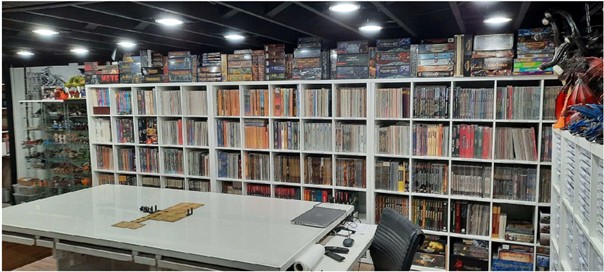
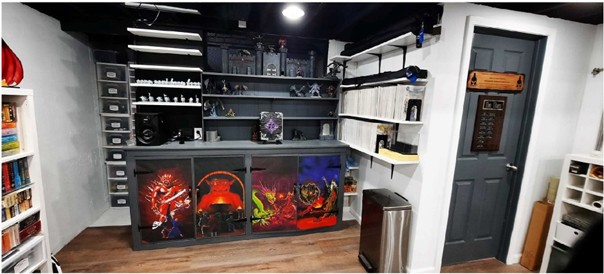
We play 2-3 times a month in The Legendary Lair.
I have run some excellent groups over the decades, but this group is hands down the best. My current group, much as myself, are at the 50-55 mark, are comfortable with who we are and realize the precious free time we have should be spent with friends having fun. Most have been in the group for between 6-15 years.
Every one of them has helped with the portal. whoppermd does the images and banners for the adventure logs, Jurgen1 has written the majority of the logs since session 40, but every player has written a log or two as well. Our player rblaine15 has won the Titan award which is normally reserved for the end of campaigns.
What made you choose the Pathfinder? How does that system complement your campaign?
My guys and I like crunch; we like the limitless options/customization that Pathfinder 1e allows. The fact that PF 1e, is essentially an extension of D&D 3.5 means that the wealth of material to draw from is immense. I do a lot of custom monsters (campaign related) but having that material to draw on is great.
This campaign is part of a trilogy of campaigns. Please explain how a trilogy of campaigns work? What is the connection between the campaigns?
The events of the campaigns build upon what happened in the prior campaign, but the characters are different Towards the end of this campaign some of the old characters who are still around may get a chance to show up, depending on certain future in-game decisions ). I run my games from 1 to between 22-24th level, in truth after that level, most players are looking for fresh changes and challenges.
For example, in the original MOC, there were a great deal of things regarding ithilids, subspecies of ithilids and chaos creatures that went unexplored/addressed. That is going to have a major role in things, for this campaign.
The bones of these first two campaigns are stiped in the deep lore of D&D (Greyhawk specifically) but other D&D lore as well, including nearly 35 years of home brewed campaigns. If they are successful in this campaign, The next and last MOC campaign will deal with the aftermath of the events of this one… It will be a Mythic Pathfinder 1e game.
If they fail, there will not be a 3rd MOC campaign as envisioned; I will instead take that opportunity to switch over to a conglomeration of OSR systems I am working on (Old School Essentials and Shadowdark as the bones, with elements of Dungeon Crawl Classics, Hackmaster and Hyperborea. It will use the Age of Hyboria as the setting.
You completely redesigned the Obsidian Portal interface, including the mouse cursor. What is the inspiration for that design and how long did it take to program?
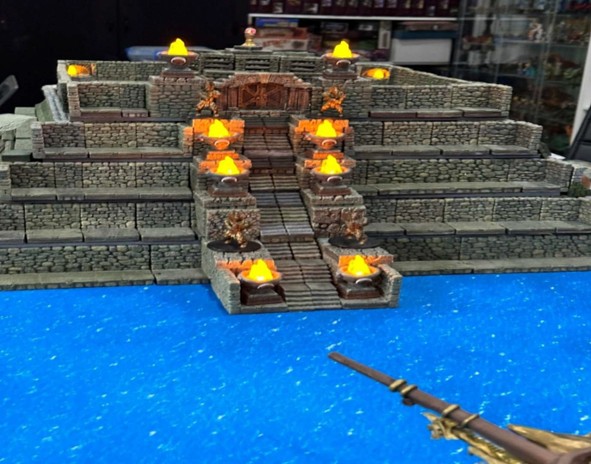
Our member Glyph3x did the lions share, he is super talented in coding, it took him about a week to do the core design, the cursor, is the Atlantean sword from Conan; there is nothing more quintessentially adventure gaming than Conan. I did some of the coding and the vast majority of the wiki pages, (like all of them-lol). My players do adventure logs and work on the Latin spell pages when they want PRP’s.
How much time is usually spent preparing your game sessions? Describe a typical session.
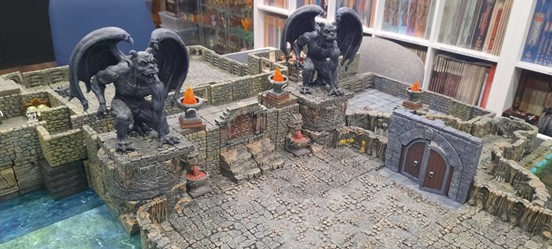
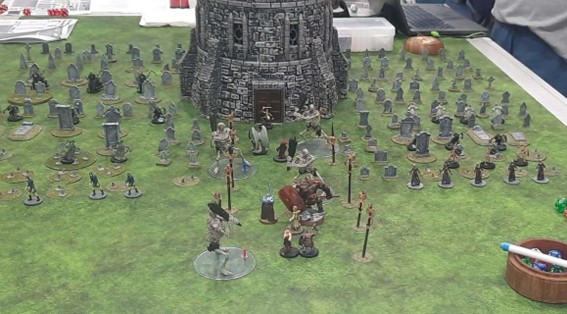
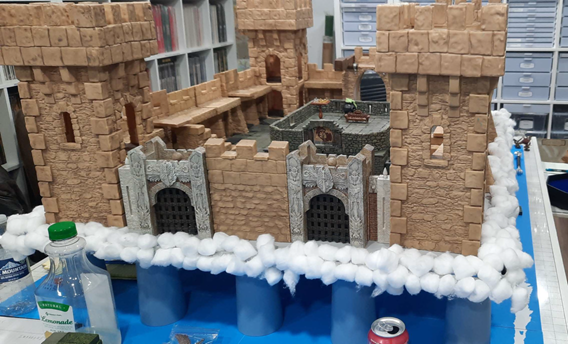
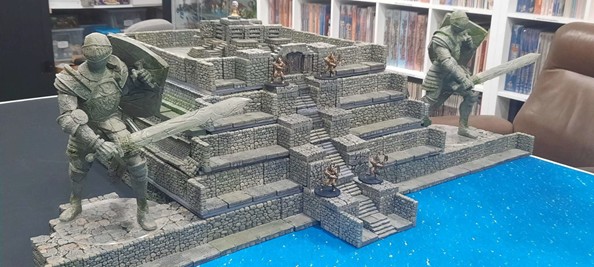
In general, I spend between 4-8 hours preparing a session, upwards of 20+ hours if it is a dungeon or combat heavy session. I use a great deal of 3-d terrain and am known for massive dwarven forge set ups.
You split your character page into several sections (other than PC and NPC). Please explain the different sections.
This was a feature I was so glad the portal added. There are an enormous number of factions, characters, NPC’s, people of import that are in this campaign, this feature allows much easier access to them.
In your wiki section, you put a lot of emphasis on the game mechanics, like XP and gold division, but what I find most interesting is the Graveyard section. Can you please explain what the graveyard is and why it is needed in addition to the “Dead” section in the characters page?
The graveyard is reserved for actual PC deaths. A resting ground for those who gave all… The dead section on the character page is for NPC allies and “respected foes”.
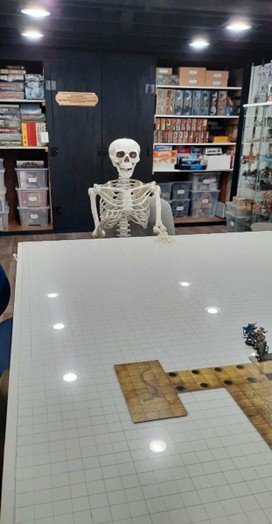
You make a lot of “real-life” connections – you have the “Lair” section, as well as a wiki page designated to your players. What made you make this connection?
Our page comes off a bit heavy on the meta and even though it really does not play that way, we felt that having something to reflect that we are people with a good sense of humor and relatable to other gamers is important.
In your site, you say you moved from Obsidian Portal but decided to give it another chance. What made you stay?
… prior to the reforge, I was a very active member on the portal community pages but in the aftermath of the reforge trust and respect was broken, and I left in disgust. After OP was acquired by Thaen; Kallak, I heard some positive things and reached out to Twiggyleaf and GamingMegaverse and I found that they told it true that the portal was much improved and headed in a good direction.
If you had to pick just one thing, what would you say Obsidian Portal helps you with the most?
Transparency. I run a large group, having a centralized place where they can access everything campaign related is fantastic. They can access the rules, XP, PRP’s, Treasure and so on.
What would you say is the biggest highlight of your game so far (please also provide images and links if possible)?
Normally, I would have had my players answer this one, however I am going to be selfish and take it. The biggest highlight of the game so far for me (and I believe most of the others would agree) were sessions 38–39.
Backstory: My older brother jurgen1 taught me and my younger brother, Charles, to play D&D in 1981 and until he left for college in 86, we played every Sunday. I took over as the DM after that and started DM’ing other groups too. Charles dropped out of TTRPGing in high school (1990) and had very sporadic forays in gaming after that, Jurgen1 stopped TTRPGing altogether in 86. I, sans covid have run the entire way with a consistent game/group.
Anyway, Charles was due to visit us in St. louis and (not for the first time) I tried to get them both to agree to play. And for whatever reason they agreed, for the first time in almost 40 years, we played together again. I had come up with a scenario that I was able to fold into the current campaign and hubris aside, it was spectacular, everyone was on point, especially jurgen1 and Charles. Charles ran a clinic on how to run a thief. Jurgen1 immediately established a dungeon discipline that the others took to. Earnestly had the campaign not already had an over-reaching arch, the events of those sessions would have provided it easily.
For jurgen1, even though months had become years and years had become decades, the fire of the adventurer was still in his blood! He joined our group as a permanent member after that.
Okay, as a last question, we always ask for the GM’s “pearls of wisdom”. What GM insights can you offer the community this month?
Sadly, this “pearl of wisdom” has been the most grievously learned. Our dear friend and longtime member RenegadeRed very unexpectantly passed away a few months ago. Ren’s enthusiasm for the game was infectious and he was always willing to help, big Dwarven Forge set-ups, he was there. Helping me work out some deep lore for the campaign, he was there. Coming up with completely outside the box stuff in game, he was there. Doing some unwise actions that sometimes drove the other guys crazy, he damn sure was there.
The “pearl” is to make sure you take the time to appreciate your group and the adventures you have in the moment because you never know when they won’t be there.
Steel your nerves and ready your spells—this land holds no peace for the unprepared. We’ve lingered long enough in the shadow of crumbling thrones and rising powers. Our thanks to the ever-watchful Leonidas300 and his steadfast companions, whose tales echo like legends across the Flanaess. If you know of another campaign that deserves a place in the halls of greatness, don’t stay silent—nominate it in the community forums for a shot at the coveted Campaign of the Year!
Campaign of the month February 2025: Stream of Kairos

So, have you ever wondered what it might be like to be the Captain of a Timeship on the Temporal Sea? Well, wonder no more, because when you delve into the depths of imagination on this particular campaign, you can do just that! Join us as we chat to previous Campaign of the Month winner, Abersade, discussing The Kairos Delta, Realspace, and the dreaded Orkehds in his new campaign, Stream of Kairos.
First off, feel free to tell us about the person behind the GM screen. Where are you from? What do you do aside from gaming? Alter Egos? Life partners? Family? Where can we interact with you on the internet?
Hi! My name is John and I’m from Flatlandia, also known as Northwest Ohio. Being born and raised here, there really isn’t much to do except for gaming, gardening, and reading in my opinion. I’ve been with my wife (user Saintdiane) for eighteen years now, and both of my daughters are grown, in their twenties, and have long since fled the proverbial coop.
You had previously won Campaign of the Month in April 2020 for” Core: The Ashes of Alcarna”. Both that game and the new one are using the Dungeons and Dragons 3.5 Systems. What keeps you motivated to designing your Campaigns within this system?
There are four main factors at play for me here:
1. I have almost every official rulebook that was published for 3.0 and 3.5.
2. 4th Ed D&D, 2nd Ed Pathfinder, and 5th Ed D&D all lack the sheer number of crunchy options for characters, rules, feats, and classes.
3. Everyone who’s playing (with one exception) is already very familiar and comfortable with 3.5
4. We use a bunch of tacked on systems like Roleplaying Points (an extra way to advance characters) and House Rules that are specific to 3.5 and which were developed over several years.
How different is your current campaign from the previous one? Are any of the players the same? Are the characters related in any way? Are there any cross connections between the two campaigns?
Have you ever had a concept for a game that was probably too weird or borderline nonsensical, but that you just couldn’t get out of your head? That sort of idea just stays there lodged in the bizarre section of your brain, fermenting like juice that’s gone a bit off.
Most of the time these sorts of ideas slowly wither away, eventually fading completely, leaving only a mild sense of relief. Sometimes though, instead of fading away the idea persists, eventually becoming a monster that must be freed. That monster is Stream of Kairos, which slowly morphed from “an underdeveloped idea involving a stream of water with islands in it, floating in the Astral Sea” into “the Grand Unifying Theory of every TTRPG game that I’ve ever run, while still somehow involving streams of water just sort of floating around with bits of land in them”.
Though it links everything together it is important to know that Stream of Kairos is drastically different from Core, and that Stream of Kairos is also drastically different from Rise of the Durnskald, despite it literally containing multiple elements from both games. Also, some Old World of Darkness content for questionably good measure with just a dash of Warhammer 40k thrown in because who doesn’t like it when things get Orky?
As for the players, the players who returned for Stream of Kairos are some of the same players who were around for Rise of the Durnskald and the last game I played in called The Price of Magic. I have a whole page dedicated to them on our wiki, which can be found here.
Your current landing page outlines future journeys on the “Great Temporal Sea”. These adventures seem like they will incorporate some pretty “deep” concepts. Can you give us all a bit of information about the Temporal Sea and the use of “Timeships” in your campaign.
It all ends with a time loop… all the best nonsense does, really.
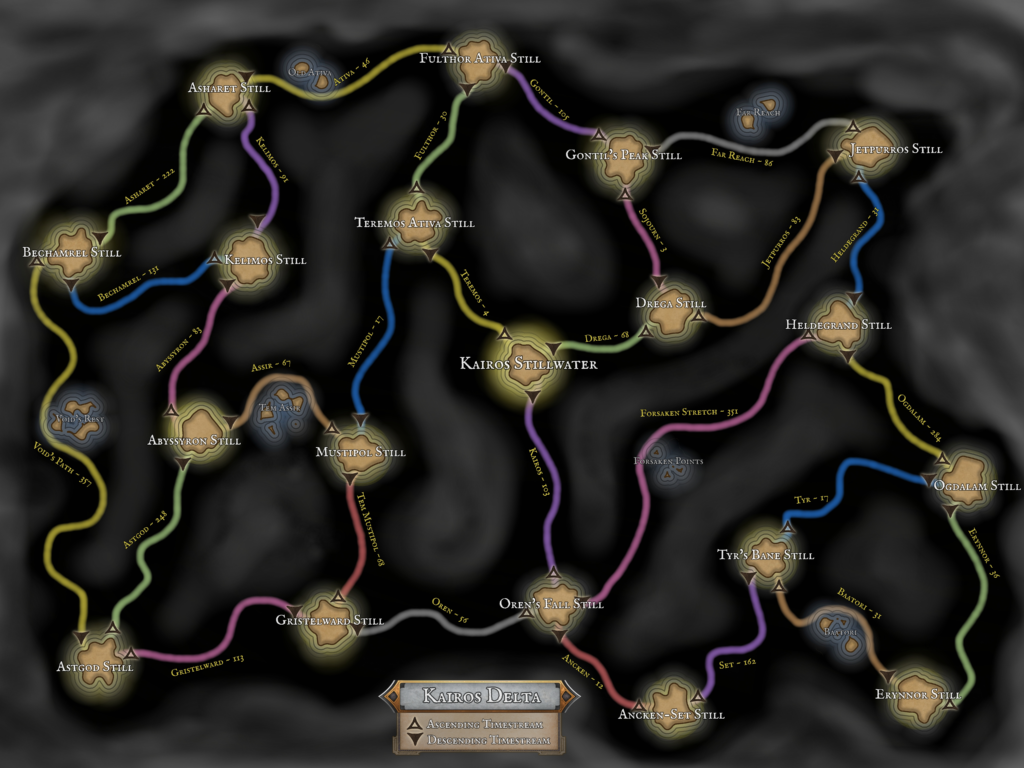
The easiest way to picture the Kairos Delta (and thus the Great Temporal Sea) is thusly: imagine an unbelievably large cloud of dark grey faintly luminescent fog, which takes up the entire known volume of the plane, throw a mess of looped waterways floating through the fog, and plonk down a landmass floating in a small ocean everywhere that the waterways intersect. Now consider that the streams of water are composed of this grey fog, but condensed, and flow in specific directions. These streams of time will either cause something to drastically age upon contact, or will do the opposite, depending on which end of the timestream you entered it from.
In order to traverse the streams folks need protection, which is usually composed of the combined auras of intelligent life. Get enough people together, along with enough Stillwater, and their combined auras will push back the ravages of time. Stillwater isn’t exactly travel friendly though; it takes up literal tons of weight and touching it causes you to become locked in stasis until you are removed from it, so captains aren’t exactly keen on keeping it on board.
That’s where the fuel cells come into play! Maybe don’t ask too many questions about how they are charged though. Slap a couple of fuel cells into a Timebreaker class ship and you have a vessel that can not only traverse the streams, but can forge new ones too, provided you brought a Navigator along.
You remembered to bring a Navigator with you, right?
From where did you draw your main inspirations for the current campaign? Books, gaming modules, films, a vivid imagination? What concepts can explorers in your world expect to encounter?
This one is equal parts easy and difficult to answer. Inspiration comes from all sorts of places, but in this case mainly three sources: a story called “Timeless” from a very popular webcomic (Sluggy Freelance) from back in 2005; the short story “All You Zombies” by Robert Heinlein which I read when I was about ten years old; and the concept of “Arcane Resonance” from a game I’m still fleshing out called Forbidden Empire, which is the second game in the Wrath of the Fallen Goddess planned trilogy.
Arcane Resonance was also featured heavily in Rise of the Durnskald, and also Core, though it wasn’t named. Basically, magic causes ripples in the fabric of reality, bigger magic means bigger ripples, and ripple something hard enough and new stuff happens. Crash a big enough magical meteor into a planet and you can hurl the collective idea of the planet straight out of time itself, left to float around all shattered in a cloud of energy, while the original version slowly heals. Now add a bunch of power hungry Kjerne Runecasters to the mix and, well, though that all happened in the past I’m getting ahead of myself.
As I stated before, Stream of Kairos is my TTRPG Grand Unified Theory, bringing everything and everyone together. I remember reading that D&D cosmology, at least back in the day, theorized that all of the games that everyone ran were tied together by existing in the infinite deep astral, with each game existing within its own prime material plane. In Stream of Kairos, the Kairos Delta exists as the broken shadow of the astral plane, and features scenes and elements from many of the games that I’ve run in the past.
This time around though, the players are seeing the events from different perspectives. Helping to complete the missing portions of the narratives that they played through years ago, and in at least one case drastically changing the course of a doomed world. I mean, it’s probably still doomed, but now it’s different doom.
Sometimes you just have to focus on the small victories.
For more info on all of these concepts and sources, look here: https://streamofkairos.obsidianportal.com/wikis/behind-the-screen
Your campaign has some very innovative design elements. What tools did you use to create it and set it all up? Any recommendations for new GMs starting to design their campaigns?
The campaigns look is done via CSS, paint.net, and flamingtext.com, with a generous splash of google image searching thrown in. W3Schools.com can be a great resource for folks who are interested in learning to use CSS, as can the Obsidian Portal forum and Discord.
What is the importance of the “Orkehd Raiders” in your Campaign. They seem to be integral to the geographic area of “The Kairos Delta”. Please, tell us more…
The Orkehd Raiders are among the most fearsome opponents a ship captain could ever have the misfortune to meet. Piloting vast ships made of iron and steel, armed with cannons and rockets, and frequently protected by powerful energy shields, the Orkehd are a foe you don’t want to meet lying down. Or standing for that matter. Hailing from a different dimension, the Orkehd are powerful and quite technologically advanced, though their skill in magic is extremely lacking.
Oh look, here’s one now: https://streamofkairos.obsidianportal.com/characters/oggie-bigteefs
Without divulging any major plots, what plans do you have for the player characters as they progress through your campaign?
What the characters know: That they are eventually all killed by their sorcerer, ReDyns.
What the players don’t know: One of the players actually knows how this happens, and hasn’t revealed it as of yet.
Having been a member of Obsidian Portal for over ten years, what would you say are the most useful benefits for you as both a Campaign Designer and as a person running a campaign?
I quite like a cohesive theme, and easily accessible info, and eleventy billion rules and systems. Obsidian Portal is, in my humble opinion, still the best platform that allows for easy customization and wiki building without explicitly requiring proprietary software or access fees for everyone involved in the game. Also, I really like the community.
Are there any specific adventures you have yet to have that you are particularly looking forward to that you can give us a glimpse of, without ruining the surprise for your players? You can be as cryptic as you like.
I would suggest that folks read up on what Kairos is, and how it connects to the theme of this game and others I’ve ran. I don’t think that there’s enough clues around to actually ruin the surprise, but maybe someone will figure it out.
Here’s a hint: It all starts with a time loop… all the worst nonsense does, really.
Okay, as a last question, we always ask for the GM’s “pearls of wisdom”. What GM insights can you offer the community this month?
Previously I mentioned learning CSS, and spending extra time getting the world ready to play in so that it sort of becomes self-sustaining.
While those concepts are important, I want to focus on something else this time around. Engage with your players, and your world. Create unique concepts, or monsters, or classes, or races. Create new legends and folktales, maybe songs that tell tales of heroes long gone. Anything really, just make sure to create something, to bring life to your world and vision. You and your players are far more likely to tell tales of the door that made a friend and sacrificed itself to let the heroes continue on their quest than of yet another encounter with a pile of orc guards.
Don’t be afraid to make mistakes, or to be extra goofy with the world (depending on the theme of course). Maybe your world is infested with giant insects that lay eggs that look suspiciously close to oranges, but not quite? Maybe the sewers have Gelatinous Tubes instead of Gelatinous Cubes? Maybe one of your characters is named Lolph Dundgren and you’ve said it so many times over the course of the game that you no longer can remember which way is the actual actor’s name? Maybe try D&D&Space?
And if you’re one of the players?
Maybe, just maybe, play a talking horse who goes out of her way to teach one of her friends how to speak horse. It’s a heck of a story.
Thank you to the community for making this campaign of the month possible! That’s all for now, join us on our next adventure March 1st, and don’t forget to nominate your favorite campaigns for our next Campaign of the Month!
OBSIDIAN PORTAL CAMPAIGN OF THE YEAR 2024- WINNER’S ANNOUNCED!!!!!

A HUGE CONGRATULATIONS TO OUR WINNERS!
FIRST PRIZE:
KERYTH987 WITH WRATH OF THE HIGHBORNE!!!
RUNNER UP: HUMANNOYD with CYBERPUNK 2077:FATE ACCELERATED!
(winners will be contacted by OP staff to connect you with your prizes)
It’s about that time again- time to celebrate some of the very best of our OP Community! 11 great RPG sites, each awarded the prestigious “OBSIDIAN PORTAL CAMPAIGN OF THE MONTH” award in 2024, stand in line to be considered for the OBSIDIAN PORTAL CAMPAIGN OF THE YEAR 2024! And YOU get to decide!
THE DETAILS:
Voting will open Monday December 2nd, is open to ALL, and will close Monday December 9th. The winner will be announced on Friday December 13th. Check Obsidian Portal, Facebook and Twitter for further details.
THE CONTENDERS:
January 2024: More Things in Heaven and Earth
February 2024: Cyberpunk 2077 Fate Accelerated
March 2024: Wrath of the Highborn
April 2024: Season of Strife
May 2024: The World of Elurah
June 2024: The Planewalker’s Guild
July 2024: Ars Magica, Umbra Quercus Saga
August 2024: Freeing Phandalin
September 2024: Echo of The Mists
October 2024: Aloft!
November 2024: Dark Conflagration
THE PRIZES:
This year we have some AMAZING sponsors including Paizo, Killjester, Crit Academy and Syrinscape!
1st Place
- 1 year subscription to OP
- Paizo: Digital copies of Pathfinder Second Edition and Starfinder First Edition Beginner Box PDFs as well as a PDF of Abomination Vaults (Pathfinder Second Edition or Dungeons and Dragons 5th Edition, winner’s preference)
- Killjester: A physical Copy of Sanctimonious Slimes vs Expired Epicures
- Crit Academy: Digital Copy of Memorable Monsters
- Syrinscape: A subscription (Supersyrin trial vouchers, each for two months x 2)
Runner Up
- 1 year subscription to OP
- Killjester: A physical Copy of Sanctimonious Slimes vs Expired Epicures
- Syrinscape: Syrinscape: A subscription (Supersyrin trial voucher, for two months)
Obsidian Portal Campaign of the Month June 2024: The Planewalker’s Guild

After escaping the shattering sky, why not travel the multiverse with a group of Planewalkers as they move from Sigil to the Plane of Air in search of a notorious serial killer. Join up with previous “Campaign of the Year” winner, Dungeon_Master_Loki, and let him guide you through transitive planes, observing the “Rule of Three” and the “Unity of Rings, as part of The Planewalker’s Guild, in a pay-to-play campaign that has been in existence for a year and still has spaces for intrepid adventurers, as they travel to discover the Riven City of Bleurophil.

First off, feel free to tell us about the person behind the GM screen. Where are you from? What do you do aside from gaming? Alter Egos? Life partners? Family? Where can we interact with you on the internet?
Well, I’m an 8th generation French Creole from New Orleans and I’ve been gaming since the late 1970s. When Hurricane Ida hit I was an idiot and rode it out (NEVER try to ride out a Cat 4. Period). I relocated to Cincinnati, a city I had lived in for a few years about a decade ago when my ex wife was in school.
Professionally I work as a freelance game designer and copywriter, I run paid games online and at conventions, and I teach Introduction to Game Design at the University of Cincinnati. I also spent many years prior to that working in music and in online PR. I even worked through the pipe bombing at the Centennial Olympics in Atlanta.
When not gaming I am a huge media buff – music, books, film, etc – with a long standing love of science fiction, satire, and what my friends refer to as “the weird shit”. I have a huge love of alternate histories and time travel stories (I have every surviving episode of Doctor Who for instance). This obviously shines through in my game design work as well, much of it being planar strangeness. I also love to cook, although I must admit I rarely do so when it is just me.
Alter egos? Well, I got the nickname Loki about 25 years ago while working at the House of Blues and have used it as my byline since if that counts. I do have a long suffering girlfriend, who plays Lenata the cleric in The Spelljoined campaign. The vast majority of my family is in the New Orleans area back home, except for Puck and Gremlin, my atrocious felines and editorial assistants.
Find me online? While often in need of updates, Planejammer.com is my main home on the web. My most used channel is Discord (DungeonMasterLoki). If you want me to run a game for you or join one of my paid games / campaigns you can find me through my profile on Start Playing Games and on GRIPNR. I’m on Facebook, but don’t often friend people I have not met in person or had extensive interactions with. (This is especially true with the combination of election season and use of AI rising as the year progresses.) 36 of my titles, books I’ve authored or contributed to, are here on DriveThruRPG and I am deeply thankful for every sale and review!
Please explain the basic concept of your game plan for The Planewalker’s Guild. The game seems to have been running for a year. Give us a few hints about the Planescape scenario.
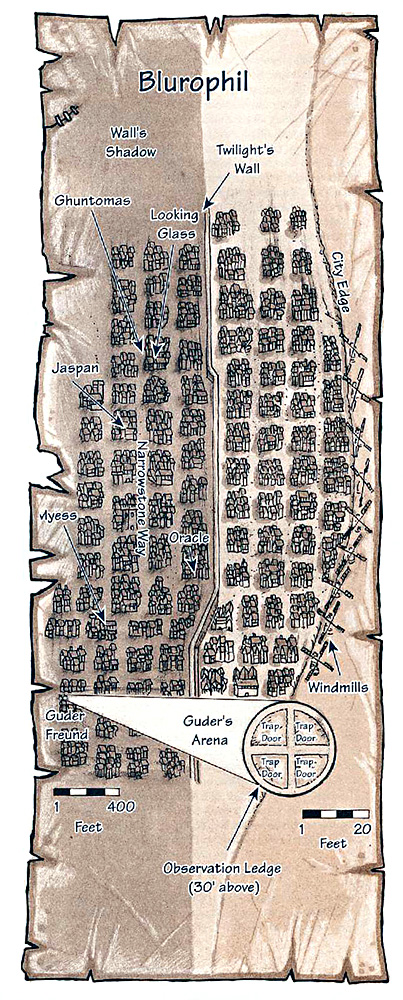
Most of the games I run take place in a shared multiverse, usually centered around Spelljammer and Planescape. The Guild game is one of those. Massive changes are afoot across the planes, extremely destructive (one might even say apocalyptic) changes.
The past year of play started our heroes out as new initiates of the Guild in the wake of Planescape’s Faction War. One of their early missions had them become eyewitnesses to an interplanar incursions that “shattered the sky”. They are currently in the city of Bluerophil on the Plane of Air tracking down a serial killer during the equivalent of Maridi Gras. They have to stop him from completing a cycle of ritualistic murders that will call down the Planebreaker. Future adventures will vary thematically as the [lot of this game and the overall metaplot evolve. I predict between two and four more years for the campaign if we maintain a twice a month schedule bringing any PCs that make it to a solid 20th level.
While there are missions for the Guild I essentially run sandbox style player driven games. RPGs are collaborative storytelling when at their best, so the contributions of my players not only determine the overall direction but also create lasting effects on the in-game universe.
The opening page of your campaign says “Contact Dungeon Master Loki to book your game today,” with the link leading to a professional Game Master page under the “StartPlaying” banner. Please share with us how all of this works.
Well, like many freelancers, income is sparse and times are more often tight than not. Running paid games for companies at Cons and online games through Start Playing Games and GRIPNR helps keep the list on in the design mines. Since the game takes place in my ongoing shared multiverse that means I have hundreds of pages of background info, NPCs, etc available instantly on Obsidian Portal when I need them. All my players share the trait of zigging when I expect them to zag, so being able to pull up everything when they do is invaluable.
As to how it works, I post games online as I create them and those people looking for DMs contact me directly through the site. Cost per session is up front as are reviews of the DM by former players and a capsule review of what the game or campaign is. I run a safe table – LGBTQIA friendly and accepting of all and I require my players to abide by that. Both of the online platforms mentioned above also take care of billing and payment, allowing me to focus on creating something worthy of said payment.
When a new player joins the game I start with the player’s concept, and I encourage people to go big with ideas, which I then help them translate into an effective build. I then get them to write of a background which I then tweak in order to root them more firmly in my setting and provide hooks for personalized subplots down the line. Using Obsidian Portal we have a central place for character sheets and a wiki for the “in use” house rules.
I know there are some that find the idea of paying for a DM to be anathema, but there are a LOT of folks out there who cannot find one, have no one nearby, or other valid reasons. Besides when paying they can demand a certain level of expertise on the DM side of the screen.
Presumably, your games are all run ONLINE. You mention that you primarily use a “Theatre of the Mind” approach, but that you also use battle maps and tokens. You have listed platforms like Discord, Skype and Zoom. You also have “Owlbear Rodeo” listed. How much do you use a platform like Owlbear Rodeo, and how useful is it to your team?
I started playing in the late 70s and Theater of the Mind is the old school way. If you do it right it makes for fantastic immersion. I usually only pull out battle maps on Owlbear Radio when it is an extremely complex combat or a massive narrative moment. I personally find it to be my favorite of the online table top options due to its simplicity. While it has none of the bells and whistles of things like Roll20 it also does not require extensive learning to use. Players can log into your map from a link that you generate and immediately have control of their token. I find that with online games it is especially important to minimize dead time, even more so when being paid for the session. What you lose in bells and whistles you get back in the speed of play that you gain.
Your current player list comprises 6 players. Did they all start at the same time? I note on your StartPlaying page, you still have space for 2 players. Would 2 new players just slot in to the current game, or how would you go about that sort of integration?
Most started at the same time, two started later, and one left due to health issues and has just returned to the table. At the time I’m writing this I do still have two slots open.
When a prospective player contacts me I help them to develop their character concept and bring them in at an equivalent level. (That is why the guild membership is the baseline, it makes it more logical as faces come and go.) I use a good bit of third party material so I can usually find acceptable rules for implementing most ideas.
Your campaign “Planejammer: The Spelljoined” won Obsidian Portal Campaign of the Year in 2011, and it is still running. How busy are you with your various campaigns? Do you have any player crossover between the campaigns? In what ways does the new campaign differ from the old one?
The Spelljoined is my main personal game and the baseline of the shared multiverse all my games inhabit.. It’s on its 8th generation of players and has been running almost non stop since 1979 (there was a gap of about three years in the early 90s). That is the umbrella setting I mentioned before. While the Planewalker’s Guild are facing one aspect of the great multiversal disasters, the Spelljoined are currently in an alternate universe (Gamma World) trying to stop a massive mind flayer plot. Characters cross over between games fairly frequently, and events in one game do influence the others. I’ve also had the distinct pleasure of having a number of guests from the industry sit in on sessions. For instance in one game I not only had X-Crawl creator Brendan LaSalle join us for a session set in X-Crawl, but also M. Nystul joined us playing his Nystul the wizard character (which he played at Gary Gygax’s table) for an epic evening on Greyhawk.
The Spelljoined are 16th level characters with Mythic Ranks doing the crazy, gonzo, multiverse hopping stuff. Bouncing through the alternate realities when not in Sigil or the Rock of Bral. The Planewalker’s Guild is 6th level and operating in the Planescape/Spelljammer setting where evidence of the big battles of the Spelljoined are starting to manifest. The Dept 7 game is set in a variant of Dark Matter where the effects of these conflicts are bleeding through the multiversal barrier, etc. Each group is seeing and fighting different aspects of the Really Big Picture(™).

One of your Player Reviews in “StartPlaying” says that you often reward players for work “outside of the game”. Is this reward given in Experience Points, or do you have other rewards? How much “outside of the game” stuff does the current group engage in?
Work outside of the game includes things like journals and art, in character stuff that contributes to the world. These rewards are usually in the form of bonus Mythic Points or story driven rewards. It is NOT required. If I used XP that would also be on the table as reward, but I use milestone levelling. I find that removing combat xp from the equation encourages non-combat solutions. I don’t get much in the way of submissions from the paid gamers, but in my home game there are a number of players who keep journals and contribute art. We even have a full tarot deck that uses PCs and NPCs from throughout the years that one player made over Covid lockdown.
You have been with Obsidian Portal for some time now, so how would you say it has changed over the years, and why is it still a useful site for someone like yourself?
Over the past decade plus I have seen it evolve a good bit. The Reforge was an exciting time that ended with dashed hopes as things deteriorated for quite some time. When the current team took over and things became more responsive to the community and its needs I was thrilled. I had stopped using it and when I checked back looking at an old wiki I discovered my favorite organizational tool had been resurrected. The current team has my thanks for making my favorite organizational tool viable once more!
Most mission critical parts of Op? The wiki, the ability to keep secrets between players and DM, and the Adventure Logs are all endlessly useful to me as a DM. Especially juggling notes and details, not to mention conversions, that have accumulated over the decades of play.
After all these years of being a member, If you had to pick just one thing, what would you say Obsidian Portal currently helps you with the most?
The Wiki and privacy controls, hands down.
I note from your Adventure Logs, that your group has currently entered “The Riven City of Bleurophil”. Tell us something about that. How did they get there, and what do you think lies in store for them.
This adventure is a follow up to one I ran for a prior group. It came from Tales from the Infinite Staircase and presented the Riven City and the original serial killer. The Guild players are operating 25 years later when a new killer is trying to complete the ritual slayings, and the history of the prior crimes was established by the prior group’s actions. It is my own follow up and recontextualizing of the original adventure.
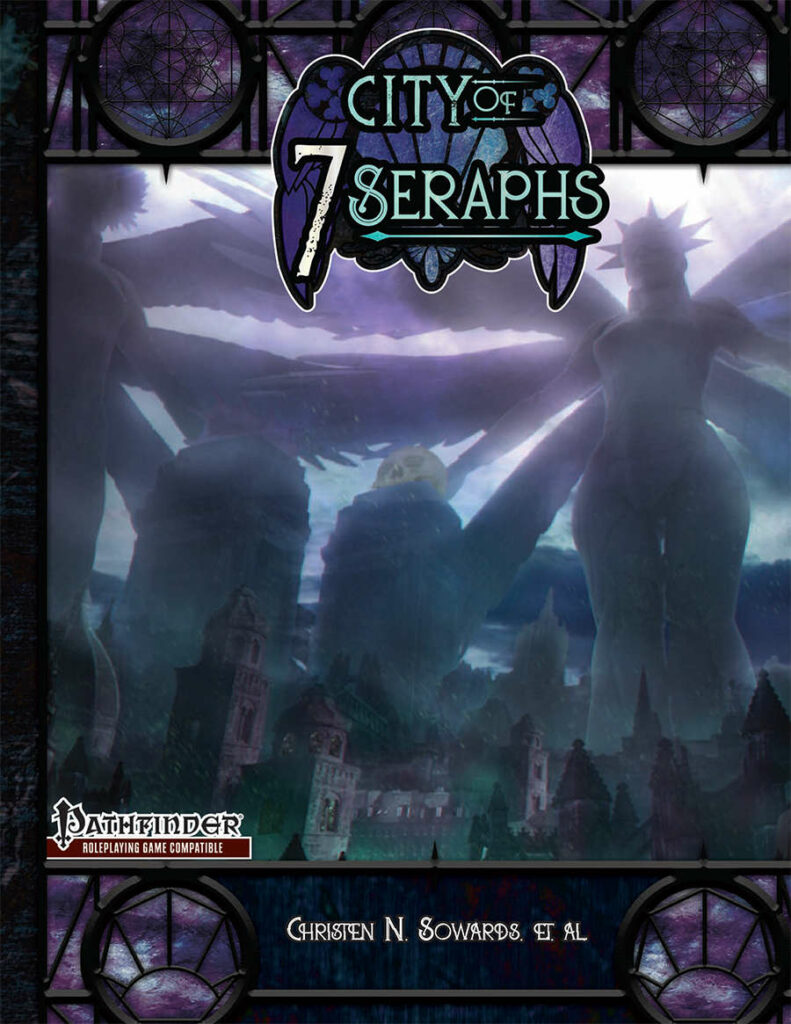
The players were sent there by the Master of the Docks in the City of 7 Seraphs (one of my creations in that book) and their Planewalker’s Guild superiors to do recon. As some of the only eyewitnesses to the Planebreaker’s transition through Elysium they are considered the closest thing to experts available. Now they’re discovering some of the bigger picture. As for what awaits them? That depends on their actions. Will they stop the Gasping Strangler’s successor from completing the dark ritual? Will they see the Planebreaker shatter the sky again? Will Geeta ever stop complaining? A lot can happen, and the stakes are rising rapidly. Let’s just say that there is potential to gain Mythic Ranks in their not too distant future.
The whole “Planescape” scenario was created in Dungeons and Dragons, and yet you are using Pathfinder for your campaign. What were your motivations for this, and did that mean you had to do a whole lot of stat converting?
I’m used to it. I’ve written professionally doing work in Pathfinder 1e, Starfinder, Dungeon Crawl Classics, and Cypher System. I also grew up hacking my RPGs in order to do crossovers back in the 80s. The meta campaign began in the late 70s and has evolved with the times. It started in White Box D&D, quickly shifted to AD&D as the hardcovers were published. The 3.x era was the sweet spot for us in many ways. When 4e hit it did not fit our playstyle so we bounced over to Pathfinder 1e which is what I run them under currently. I’m seriously considering using Rob Schwalb’s fantastic Shadow of the Demon Lord rules for the next generation.
I have an entire wiki of conversions I keep private since it is a lot of IP from various source materials that I do not own (i.e. Greyhawk, Spelljammer, etc.)
Okay, as a last question, we always ask for the GM’s “pearls of wisdom”. What GM insights can you offer the community this month?
Don’t be afraid to improvise, just take notes as you do because you’ll probably need them later. Yes, even the throwaway NPCs. Don’t say no, say “you may try”. Give everybody spotlight time. Be kind to your players and an evil bastard to their PCs. Most importantly: KEEP IT FUN!
May your 20s be both frequent and natural. Loki out.
Thank you to the community for making this campaign of the month possible! That’s all for now, join us on our next adventure July 1st, and don’t forget to nominate your favorite campaigns for our next Campaign of the Month!