Tag Archives: Gaming
Campaign of the Month September 2026: City of Shadows

Welcome to colonial Singapore in the year 1870, a bustling metropolis filled with abundance and vitality. But behind the façade of prosperity lies a city rife with terror and mystery. Unfold the adventure with GM Nicesociety and company in this Campaign of The Month: City of Shadows!

1. Tell us about the person behind the GM screen. Where are you from, what do you do outside of gaming, and where can we find or interact with you online?
First off, thank you for the recognition — I’m honored to be selected for Campaign of the Month for a second time. I’m originally from California, but I’ve called Tulsa, Oklahoma home for the last 26 years now. Outside of gaming, I’m a history buff at heart, which probably shows in how I run things, and I love getting outdoors to camp when I can, along with writing in general. Most of all, though, I love spending time with my wife and kids — they keep me grounded when I’m not busy setting terrorizing 1870s Singapore.
2. How did you get into gaming, or what first introduced you to the hobby?
I started gaming 41 years ago, at 13 years old, back before Dungeons & Dragons was anywhere near mainstream — that’s what I cut my teeth on. From there I branched out into GURPS, Traveller, BattleTech, Rifts, World of Darkness, and just about every other RPG system I could get my hands on. In the ’90s I discovered Cyberpunk 2020 and Chill, and I still love both to this day. I’ve had the same gaming group for the last 15 years, and we still play weekly.
3. Give us a nutshell summary of your campaign: what’s it about, and what inspired it?
The base system is Mayfair Games’ CHILL, though it’s been heavily modified from the core rules with a lot of expanded house rules over the years. I’ve also borrowed concepts from Call of Cthulhu and The Dresden Files where they fit. My group and I love period pieces, and we’ve been playing in the same extended universe across several campaigns now — among them another Campaign of the Month winner, Aether & Ashes, along with Yesterday’s Sins, From the Ashes, and SAVE Rome. Each is set in the same universe at a different time and place.
Our current campaign, City of Shadows, is set in 1870 colonial Singapore. It blends Eastern horror, paranormal investigation, a touch of colonial exploration, and some gothic leanings. We’re leaning hard into historical accuracy for the period, and it’s given us a fantastic cast of characters to work with.
4. What is it about this particular setting or world that fascinated you enough to build a campaign around it?
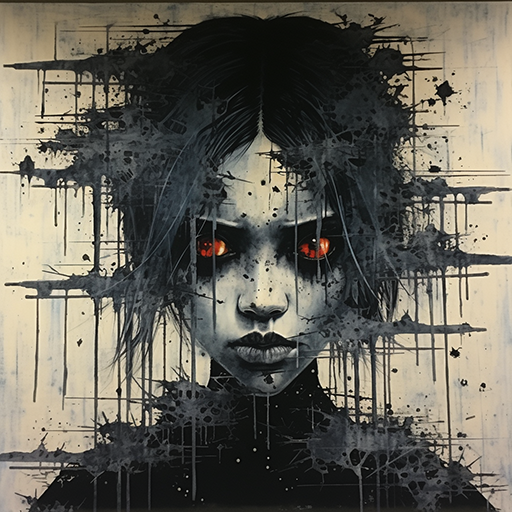
Colonial Singapore in 1870 is a setting that does a lot of the work for you as a GM. It’s a genuine crossroads — British colonial administration layered over Chinese, Malay, Indian, and countless other communities, each bringing their own beliefs, spirits, and ways of explaining the unexplainable. That gives me an enormous well of folklore and cosmology to draw horror from, rather than leaning on the same handful of Western monsters campaign after campaign. As a history buff, I also love the tension baked into the period itself — colonial power convinced of its own rationality, sitting right on top of a city that doesn’t believe in the same rules. That friction between what the empire thinks it understands and what’s actually moving in the shadows of the docks and back alleys is, to me, the most interesting kind of horror: it’s not just supernatural, it’s cultural.
5. What game system and edition are you using, and what guided that choice? What do you like most about it, and are there any downsides you’ve had to work around?
We’re running Mayfair Games’ original CHILL system, though at this point “edition” almost undersells it — it’s been rebuilt from the ground up with expanded house rules developed over years of play. All mechanics run on D10 or D100, which keeps resolution fast and intuitive at the table without breaking immersion to look up charts. I chose CHILL originally because it fit the paranormal investigation tone I wanted and it was what I already knew from the ’90s .and what I love most about it now is how easily it flexes: the core system doesn’t fight me when I want to layer in something new, whether that’s a piece of period-accurate folklore or a mechanic borrowed from another system entirely.
Honestly, the heavy modification hasn’t created the downside you might expect. Even with all the house rules layered in, we’ve kept things simple enough that new players can pick it up without much trouble — though it’s worth noting we’ve had the same core group for over 15 years, so it hasn’t been tested by a revolving door of new faces. If there’s a real downside, it’s that not a lot of people really know about CHILL at all.
6. Tell us about your players and your typical gaming sessions: how often do you play, and is it online, tabletop, or hybrid?
There are five of us total, including me as Chill Master. We play in person every Friday night, usually starting with a communal meal before diving into a solid four to five hour session. As adults, real life doesn’t always allow for marathon sessions the way it might have in our twenties, so our campaigns tend to run long — a typical 13-episode arc takes about a year and a half from start to finish.
Obsidian Portal has been an invaluable tool for us throughout. It lets my players go back and review NPCs, locations, and details they’ve uncovered as the campaign unfolds, so nobody’s relying on memory alone between sessions. That keeps everyone focused and engaged at the table instead of spending game time trying to remember who someone was or where a clue came from.
7. Tell us about the central characters (PCs and/or key NPCs) in your campaign. What roles do they play, and how do your players bring them to life?
Our party operates as the Society of Oriental Studies, a name that gives them cover for exactly the kind of poking around dead men’s affairs that gets people killed in polite company.
Joe Gannon is our cowboy — a hardened survivor with a dark past and an instinct for evil that’s saved the party’s collective necks more than once. He’s also quietly running from Confederate gold he brought with him from the war, which has started catching up to him in ways he didn’t see coming.
Mei Lian is the shadow queen of Singapore’s criminal underworld — publicly a brothel manager, privately the real power behind an empire she built from nothing after being sold into servitude as a child. Nobody in the party plays the long game quite like she does.
Nathaniel Blackwood is a smuggler with a gentleman’s polish and a criminal’s instincts, moving opium and secrets through the docks with equal ease. He’s charming enough to talk his way into a room and dangerous enough that you should worry about how he talks his way out.
Phinn Farrington is our legal authority — an English attorney carrying guilt, duty, and a very literal scar from an encounter with something that shouldn’t exist, picked up during his Navy days in the Mediterranean. He brings order and respectability to a party that badly needs both.
Dr. Simon Williams walks the line between rationalist and mystic, a physician who lost everything to disease and was saved by methods Western medicine has no explanation for. He treats what official Singapore won’t acknowledge exists, and he’s usually the first to notice when something in the room isn’t breathing right.
And rounding out the party is Alice Brown, our thief — orphaned young in London and raised in a den of skilled pickpockets who taught her that a well-placed hidden pocket can be as valuable as any lock pick. What looks like simple thievery hides a far heavier truth: Alice serves a master whose nature is anything but human, and whose appetite for treasure has made her one of the sharpest, most resourceful operators in the party. Quick-fingered and quicker-witted, she’s just as likely to spot the ghost in the window as the unlocked door beneath it, and there’s rarely a room she can’t get into — or out of — without anyone noticing she was ever there.
Considering the character descriptions, and the fact that the players have all written their own backgrounds, the flair and creativity the players bring is self-evident.
8. What tools did you use to design or customize your campaign’s layout, banner, or overall visual presentation? What advice would you give other GMs who want to do something similar?
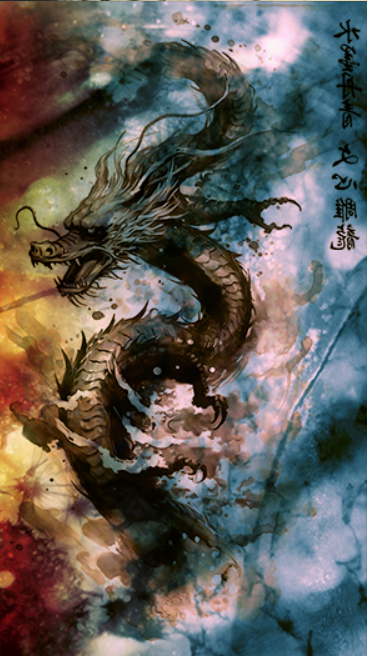
For images, we use a combination of Midjourney and Photoshop, with a lot of attention paid to keeping everything period-accurate. I also lean on Claude to help fact-check historical details and maintain authenticity, making sure the flavor of the campaign reflects the actual history of 1870s Singapore rather than a vague approximation of it. On the CSS side, a lot of what we use was built through trial and error — adapting code from other sources and reworking it until it fit. My wife, who works as a software architect and programmer, has been essential to that process; her help with layout and image integration has shaped the visual identity of the campaign as much as anything I’ve done myself.
My advice to other GMs is simple: details are what sell it. Small, consistent touches matter more than any single big flourish — a complementary color scheme, a visual theme that stays consistent scene to scene, and a willingness to give each campaign its own artistic identity rather than reusing the same look project to project. As for CSS specifically, don’t be afraid to go find something you like from someone else’s work and experiment with it. You don’t need to build from scratch — find a foundation that speaks to you and make it your own.
9. Where do you draw inspiration from when building your campaign, whether it’s literature, film, other games, or something else?
I draw from all sorts of cinematic styles — I actually imagine each campaign as a television season, thirteen episodes with occasional special “pilot” episodes labeled Episode 0. Books have a huge influence too. I’ve mentioned Jim Butcher’s work already, but I also draw heavily from science fiction, mysteries, and classic literature — Sir Arthur Conan Doyle, Agatha Christie, Bram Stoker, and Mary Shelley all shape how I think about mood, pacing, and character.
I also build a soundtrack for every session. Music does a lot of heavy lifting for pacing and tension at the table, and I lean toward instrumental pieces that fit the tone of the setting — a lot of Hans Zimmer, Ramin Djawadi, and others in that same cinematic vein.
10. What have been some of your (or your players’) favorite or most memorable moments in the campaign so far?
One thing we love doing is fan service — reintroducing a character from another campaign in the same shared universe. At one point we brought back a major villain who had been central to our 1936 game: a vampire lord, old enough and powerful enough that six decades backward was nothing to him. Dropping him into 1870s Singapore, decades before my players had ever encountered him, still landed like a gut punch. They nearly lost their minds when they made the connection.
But honestly, my favorite moments are the ones that build slowly — when the group has pieced together the clues themselves and really had to work for the resolution. We’ve had a handful of those moments over the years, and they’re always the most rewarding for everyone at the table, myself included. There’s nothing quite like watching a table full of players connect the dots on their own and realize what they’ve uncovered.
11. Without giving too much away to your players, what’s ahead for the campaign, or what are you most looking forward to?
Without giving too much away — we’re running several character-focused story arcs concurrently alongside the main seasonal arc, each one slowly building toward its own climax. Every player has a personal thread that’s been quietly developing in the background, and when those arcs finally land, it’s going to be huge. Each player gets their own payoff, I get mine as the one who’s been building toward it all along, and the main thread itself delivers a reward for the group as a whole. It’s the kind of layered payoff you can only really pull off with a table that’s been together as long as we have.
12. How did you discover Obsidian Portal, and which feature do you find most useful, whether for campaign design or for active play?
I’ve been a member since November 18, 2015 — at this point, I honestly don’t remember the exact details of how I first found Obsidian Portal, though it was most likely through an RPG forum somewhere along the way.
My favorite feature is easily the character and NPC pages, especially now that I’ve figured out how to categorize them in ways that actually work for a long-running campaign with a huge cast. The wiki pages have been just as invaluable for tracking places, lore, and ongoing threads. And being able to customize pages with CSS and HTML has been a great feature in its own right — it’s given the campaign a visual identity that feels genuinely its own, rather than looking like every other page on the site.
13. How long have you been a member of Obsidian Portal, and what keeps you coming back?
Asked and answered.
14. As always, what “pearls of wisdom” or GM insights can you share with the community this month?
Give your players real opportunities to contribute — not just choices within a plan, but the chance to genuinely shape it. Be flexible enough to pivot when a good idea comes up unexpectedly and be willing to scrap entire sections of your prep if something better emerges at the table. Details matter, so keep good notes, but don’t let them box you in — sometimes the best thing you can do is let go of the plan and go with the flow. At the end of the day, it’s about friends, fun, and collaboration. Have a blast, and don’t take it too seriously.
Thank you to the community for making this campaign of the month possible! That’s all for now, join us on our next adventure November 1st, and don’t forget to nominate your favorite campaigns for our next Campaign of the Month!
Campaign of the Month July 2026: Planejammer: Crisis on Infinite Oerths

“Behold, Planar Travelers of the Multiverse! July’s Campaign of the Month has appeared from the cosmic rifts of space and time, revealing “Planejammer: Crisis on Infinite Oerths” and her captain, the multi-award winning Dungeon_Master_Loki. As the intrepid crew of veteran players psychically sail through a culmination of campaigns — over 46 years of games built by a master of the artform — they traverse tales of adventure that go all the way back to the beginning of roleplaying games as we know them. Prepare your mental defenses for a campaign to end all others, unless of course the scattered heroes manage to save us all… again!”

~ Hail, Dungeon_Master_Loki! As a now 4-time winner of Obsidian Portal’s Campaign of the Month (and Campaign of the Year in 2011, and two Silver ENNIES, just to name a few), we have had the privilege of seeing your games unfold since basically the beginning of OP. And now we find ourselves here, at the finale, where surviving heroes of your other worlds cross planar spaces and timelines to join together and fight an all-encompassing evil that threatens all of existence. For those who haven’t had the chance to read all the adventure logs (or those young’uns who weren’t born yet when you started), can you briefly sum up the stories of your previous campaigns that have all lead to this grand convergence?
Each story arc was an individual subcampaign with successive generations of PCs. I’ve summed it up on the OP for Crisis pretty succinctly:
“The Lightbringers relit the sun of Greatspace saving the sphere from T’lann the Vampire Lord.
The Seven Stars managed to defeat Vecna’s bid for Godhood and take down the Engine Consummate before the Illithids could rewrite reality.
The Spelljoined retrieved the Dreamstone and put it out of reach of those who would abuse it.
The Misfits took over the Citadel of the Planes and evidence that Gith may have returned.
The Medicine Show stopped illithid agents surveilling Sigil.
The Parasol Patrol defended the crucial nexus points of Multiverse 19 and assembled the Shuttle of Skuld.
The Planewalker’s Guild gained firsthand knowledge of the Planebreaker and defeated the return of the Whispering Strangler.
Meanwhile in the far future on the other side of The Gap, The Drifters defeated the first appearance of Vecna cultists and Illithids in the Pact Worlds.”
Each of these events aided or foiled behind the scenes machinations of the illithidae leading to the current final act.
~ “Crisis on Infinite Oerths” seems like a massive undertaking. You’re combining multiple game systems, multiple gaming groups, different levels of technology, and what must amount to hundreds of previous storylines and characters. The rules laid out in your wiki seem to cover just about everything. How did you tackle this cosmic-level task and what advice would you give to those who want to do something similar?
Third Party Publishers are a vital rousource, hands down. There is a lot of work in our industry that is just as high a caliber as Paizo and WotC, often done by the same designers. In that ecosystem they can be more adventurous. The modern stuff I run, like Department 7, uses rules from the PF1 version of Bloodlines and Black Magic by Stormbunny Studios for instance. You can find solid stuff for whatever your weird little DMs heart could desire just by finding books you like and locating third party stuff from the same authors.
As to tackling the crazy amount of spatiotemporal detail, each campaign is a chapter with its own major and minor arcs and blood ties to the PCs in the other games. Each one has an increasing amount of source material to draw upon dictated by the actions of their predecessors.
Take notes or convince a player to take notes. Offer Bounties for Adventure Logs or other contributions from players, bonus points for art. Most of the art for this game is by one of my players (including a full tarot deck featuring present and past characters), Syreene (Kenari_Sanura on OP).
Most importantly, take notes. Use that wiki on OP to add stuff you make up on the fly. You can leave yourself notes in the GM section of any wiki page or character.

~ “Crisis” has been running now for about a year, it seems. Have there been any favorite, memorable moments so far?
I polled my players for this one. Here are some of the responses:
When Dinya flew all the way toward 2 different illithids, only to have them sniped by magic users, so Kenari teleported her right in front of a third so she could full attack. Dropped two mythic points to double the damage on the second crit and dealt a total of 156 slashing/cold/holy/warp/axiomatic damage in one turn. Pathfinder just has a lovely way with big-ass numbers.
… having to coup-de-grace the illithid everyone tried so hard to keep alive is a great honorable mention in a dramatic irony sort of way
When we found AU Superman in an illithid prison pod and it turns out he was a Deep-Cut Pelias (of Scarlet Citadel fame) reference
Dimension dooring into a kaiju’s eyeball
Kenari’s reunion with her lost lover Dassam.
Shooting out the beholder’s eye with a dragon pistol due to his anti magical field and then making him go away with a hostile gate.
Turning the whole evil marine tech army swimming in on us into a frozen Giger art with a Holy Ice wall
~ As a professional GM and long-time gamer (all the way back to Chainmail!), you’ve undoubtedly seen some fantastic characters come and go. You even got a chance to game with Nystul, of Magic Aura fame! Which characters were the real stand-outs for you — the ones that really made an impact in your memories and on your stories?
Oswald Lethbridge Smythe-Carruthers, a renegade giff played by Dudley Batchelor (who is no longer with us). Fabulously fun, laid back until it’s time to hit something, and eventually attained his goal of smacking a god when they prevented the ascension of Vecna in the Seven Stars game. A Strength of 22 so he was really good at hitting things.
Kenari Sanura the catfolk jaunter from the Spelljoined and currently at the table. Not only has the character been an endless source of fun but her artwork also has created the look and feel of the Planejammer Campaign. Played by Emily Vittori.
Captain D’artalon Rix played by Randy Eharb (also no longer with us). Fantastic role player who embraced the captaincy and made it truly his own. One of the few players to truly embrace the hero aspect rather than roguish or anti-heros types.
Etsuriko Chi-asson Toraneko the Shou monk, played by Rachel G. Primary cat herder of the party for over two decades. Now ascended and has become a celestial dragon after the player left the table.
And there are so many more after all these years of gaming I’d have to go on for pages.
~ What moments during these campaigns seemed to excite or resonate with your Players the most?
Obviously the big crazy combats, just as with many groups, but also when they put together pieces of the big picture. My plots are obviously complex and I love their glee and satisfaction when they figure parts of it out. This is especially gratifying as the pieces all come together.
~ We can’t wait to see the conclusion of this epic story. Without giving anything away to your players, can you give us any hints about what’s ahead or themes you’d love to explore further? What about campaigns beyond this one?
Crisis will unfold in different ways depending on two factors: Player Actions, and the Tarot Deck. We have a full tarot deck created specifically for the campaign (many of the cards can be seen throughout the wiki) and cards periodically get drawn influencing events so even I don’t know the exact final act.
There will be forays into other continuities including a return to the Weyland Yutani universe and possibly a visit to the United Federation of Planets in another. There will be at least one more visit to Gamma World. This is all known to the players. The rest is top secret for now.
There will be other games that share this omniverse, but they will be on a much smaller scale. I’ll also be playing around with other systems like Tales of the Valiant from Kobold Press, the upcoming Delve from Stephen Radney-McFarland, the upcoming Heretic system from Total PArty Kill Press, and a lot more X-Crawl from Goodman Games.
~ As an author, designer, and teacher, you have already given us many lessons through your campaign pages, your interviews on Obsidian Portal, and your work on various game books that we have had the pleasure to read and to run. When it comes to preparing and playing games, we’ve learned a great deal thanks to your efforts. As GM’s and players, we thank you for it. In lieu of asking for tips and tricks, we’d like to instead ask your opinion on this final question: what makes storytelling with games important?
TTRPGs are, in my opinion, at their best as collaborative storytelling. Stories have been part of life since the cavemen were sitting around fires trying to explain the world. They resonate with something primal in us, and giving players some freedom to help create and develop the world not only takes work off your shoulders but also makes them invested. This is why I love storytelling games the most out of all the options available.

“And with that, travelers, another chapter in an epic saga ends. Stay tuned to this campaign to see how the adventure concludes. Keep an eye on the stars for other gargantuan games and future Campaign of the Month winners. Don’t forget to nominate your favorites (yes, even your own) via our community forums. Happy Gaming!”
Campaign of the Month May 2026: Wyrms of Airhde

“Ride! Ride for the sapling’s light!
Through thorn and shadow, day and night!
Steel in hand, we swear the vow-
We will not falter now!”
Come with us as we delve into the myriad of mysteries of Castles and Crusades with GM lordrodd in the month’s Campaign of the Month winner: Wyrms of Airhde!

Let’s start with an easy one, all about the GM behind the screen: Where are you from?
Dayton, Ohio USA
What are your hobbies? Are you working on any big projects?
Well, all kinds of tabletop gaming. This includes not only RPGs but board games/war games as well. I have lost track of the number of different RPGs I own and/or have played over the years. I used to run a small game convention in Dayton called FOPcon and I was a player and Game Master in the RPGA for several years, back when it was many different RPGs rather than just D&D and living campaigns. Right now, nothing super big other than working on writing a Castles & Crusades and Amazing Adventures scenarios to run at a local convention here named AcadeCon.
What introduced you to gaming?
I’ve been gaming since the 70’s. My first RPG was D&D when it came out in 1974 that a friend of mine had. I bought the white box and chainmail for myself later. Played many marathon games of Risk back then and went on to include playing many different Avalon Hill games.
What do you like the most about the Castles and Crusades system.
It’s very reminiscent of the old school RPG system I grew up with, yet with a modern touch. The SIEGE system the rules are based around are beautiful in their simplicity and adaptability. While the C&C rules system and mountain of material made it an RPG I knew I would play for a long time, the company, Troll Lord Games, is the reason that without a doubt like C&C will stay at the top of my RPG games. They are very engaged with the community and just down-to-earth nice people.
Are there any downsides to Castles and Crusades that you’ve had to work around?
Not really. I only got into C&C last year after being aware of it for many years. The lore of their published game world, Airhde, is immense, but I have enjoyed getting into it.
Tell us about the world of Aihrde, and your campaign:
Aihrde is the published setting for C&C. It developed out of TLGs homebrew campaign. It is a huge game world with just an insane amount of history and lore built into it. I set my campaign in it because there was just so much available written material and support and it made it easy for me to pick out an area of the world and start stitching together adventures and scenarios in a cohesive way to tell the story that my players and I are telling.
Tell us a bit about your players; how long have you known each other and played together?
I have been playing with them since the early 90’s. They have been playing together somewhat longer than that. We played lots of board games but always come back to RPGs. Call of Cthulhu is a system we play on and off. One of the other players is just in his element when he runs a campaign for us. Making props and stuff like that. I had a character in one of the games that was a pilot and he created a period accurate pilot license for the character. Our most recent games before we started playing C&C were Twilight 2000 and Star Trek Adventures. The plan had been to alternate ST:A with C&C as we like both the Star Trek universe and fantasy settings. We are enjoying C&C so much right now that ST:A is on the backburner.
Where do you play?
We play in person, although during the pandemic we played remotely. One of the players has a nice big room and table and we usually play at his house.
Your adventure logs evoke a sense of camaraderie and adventure. How important are those themes to the feel of the campaign?
We are all old, LOL, and the initial reasoning for the logs was just so we wouldn’t forget where we left off. Because many of us are creative types I think it’s only natural that it becomes more of an outlet for those creative juices.
Are there other pertinent themes?
With one of the players playing a paladin and we have a knight in our groups, one of the themes that has more naturally emerged is one of serving justice and goodness. One of the things I like about RPGs is how various themes and elements come out during play that you could never plan for and end up enhancing the experience. Back in the mid to late 80’s I was stationed in then West Germany in the army. We would play various RPGs in the barracks. I was running two different D&D campaigns then with the same group of people. One was a “good aligned” campaign and in the other the characters were all evil alignment. It was remarkable to me how the players would either be arguing or untrusting in the one and full of cooperation in the other. It was just a natural outcome of the different themes but seeing them occur side by side was enlightening.
The video clips you’ve used for your NPCs are very innovative. What inspired you to do that?
Whenever I create NPCs to add to a game they are usually based on some character or other that I recently enjoyed from a book I was reading or a movie/show I was watching. I’m also a geek and a very visually oriented person. I like play around with AI. I would never use AI to create something to sell but using it to enhance the story I’m trying to tell or the scene I’m trying to set just seemed like the next step in things I do to add immersion to a game I’m running. I like to use my NPCs to help tell the story and add the players experiences with their own characters. I have also used them to help draw out the more reserved players at times to help them get more invested in the story.
You are using the bounties page, and it looks quite nice. What is your favorite aspect of the bounty system that you’ve built?
The C&C game has a variant Hero Point rule. In other games I’ve run I’ve always tried to add some mechanic that may allow the player to overcome a string of bad dice rolling. I modified the Hero Point rules to match what I wanted, and the Bounties page seemed to be the best way to implement them.
Has it helped with encouraging your players to contribute to updating wiki pages and POV logs?
Yes it has. Often on the day we are playing I’ll see an adventure log post or something else hit the site earlier in the day. They like their Hero Points (and burn through them quite often).
Music shows up frequently in your adventure logs; is music an important thematic element in your sessions as well?
I like immersion in my games. Even when playing boardgames at home I usually have some type of theme appropriate music of movie playing in the background. I even have playlists for different genre of games. In RPGs, for many years, I’ve used Syrinscape for background sounds and in combats to enhance the feel. In the combat sound sets there is always a Wilhem Scream option. In our current game during fights, I hit that when the players dispatch a bad guy/monster. I’ve noticed them waiting for the sound after they tell me how much damage they’ve done. Once again I’ve used AI to help in creating some music and songs. We have a main theme on the homepage, and I’ve liked using songs to recap some of the sessions. I usually write what the recap is and then convert that into a lyric. Then I will translate that lyric into a Chaucerian Middle-English lyric with a heroic couplet. I pop that lyric into a song generating AI to make a song using medieval style instruments. I’ve been having fun with it. I may change up musical styles at some point. Throw in some modern music here and there.
What does prep time look like for your typical gaming session?
I usually over prepare. We never get as far as I think we will. I normally do a read through before starting an adventure to get the overall story in mind and decide what, if any, changes need to be made to fit the campaign. During the week I’ll take some time in the evenings to read up on the upcoming encounters. If I have the time I will create images of the descriptions of locations or encounters. Some of them I will animate. I normally text those to the players during the game right after or right before I read the description.
What inspired you to create and run Wyrms of Airhde?
Like I mentioned earlier, I wanted to run a C&C game and the Aihrde setting was a great big sandbox of a world to play in. Earthwyrms is the name of our gaming group, and we often just call ourselves Wyrms. I’ve used Obsidian Portal for many years running many different games. I looked at my account earlier today and the first game I used OP with was the Serenity RPG back in 2010. It’s nice having that historic record of past adventures.
Are there any specific adventures that you are particularly looking forward to that you can give us a glimpse of, without ruining the surprise for your group?
The adventure I’m running is Beneath the Canopy of Green, which is a grouping of semi connected adventures. It is published by Troll Lord games. I have a side adventure that is tied to one of my NPCs in which hints of have already been dropped here and there during different adventures. When the main part of that starts depends on when it fits best into the story. I’m looking forward to that happening.
You’ve been a member of Obsidian Portal for eighteen years now. What keeps you coming back to Obsidian Portal?
As I spoke to above, I like immersion in my games and OP helps with that. I like how I can revisit older campaigns and reminisce on the adventures had and stories told.
What do you find the most helpful Obsidian Portal feature to be?
There are many things. I have enjoyed the development of OP over there years. I find it easier now to set up and manage the campaigns that I used. That is probably a combination of your enhancements and my familiarity with the tool. Feature wise I like the Adventure Logs the most. I like the Character/NPC section, Maps, and the new Bounties page is something I can see using in any game I am running. That really encourages involvement from the players, which is great to see.
As a final question, we always ask for the GM’s “pearls of wisdom”. What GM insights can you offer the community this month?
Something that took me some time to learn over the years is this, players will get out of a game what they put into it. As a GM you create the environment to tell a story and your players are story tellers with you on that journey. I’ve had players whose biggest enjoyment is just the gathering of friends, and the game is second fiddle. Don’t get offended if a player or players don’t seem to be putting in the effort with their characters that you put into the game. This is a hobby and is never supposed to feel like work. I put the effort I do into running a game because I enjoy that. When it starts to feel like work or if you start to feel like you’re not being appreciated for the effort, then you are putting in too much effort. Be adaptable. If something is not being enjoyed by the players be willing to switch up or try something different. Another thing I’ve learned is that I am a control freak. I had a problem railroading players down the tunnel of the game/story I wanted to run. Once I learned to set up the sandbox of the game or scenario it’s much more liberating to let the players guide where the story goes and keeps me thinking on my toes. At my age the more thinking I can do the better. If the story you want to tell is not the story they want to tell let that guide you into telling a story that everyone wants to tell.

Thank you to the community for making this campaign of the month possible! That’s all for now, join us on our next adventure June 1st, and don’t forget to nominate your favorite campaigns for our next Campaign of the Month!
Campaign of the Month March 2026: “Dark Sun: Shadow of the Monolith”

Feel the heat of the blasted skies in this month’s Campaign of the Month winner, “Dark Sun: Shadow of the Monolith” by MYTH_DM. It’s an artistic, anachronistic, Arcanotech masterpiece that blends several old settings into something so new that even seasoned veterans of the sand-swept wastes will raise an eyebrow… or whatever Thri-Keen have. Antennae? Read on and find out!

We would love to hear a little about you and your gaming group — who you are, what you’re into, creative projects you’re involved in, and how you got into gaming.
Our group of 8 (DM +7 players) are all friends who’ve gamed together for differing periods of time. One player has been with me for 20+ years and two are newcomers to the group for this campaign. The rest have all been players in my previous campaign ‘MYTH’, which ran for close to 3 years and finished with an epic finale last June.
I am a graphic designer with the Department of Defense. I have a wife (who is a player) and an awesome 14 year old daughter who is just as much of a gamer as I am. I’m a published illustrator and a writer with Games Workshop (Warhammer 40k & Black Library) and have had a side business building gaming terrain for clients around the world.
What I’m into…that’s a long answer so I’ll just list them…lol: Writing, reading (historical, fantasy, sci-fi), D&D (obviously), Warhammer 40k + multiple other tabletop wargames (Frostgrave, Gaslands, K47, Reality’s Edge, etc.). I’m a bit of a fitness fanatic, love the outdoors and Jeeps. I enjoy painting miniatures and building terrain for my games.
I got into gaming in the 80s with my cousins when I got the original D&D Red Box edition for Christmas. It’s been all downhill since…
PLAYER: Troy / ‘Venk-Ka’
I’m consumed by my family and job and love the social interaction and mental detachment after long weeks that this campaign offers. I got into gaming during my active duty time where many of us just needed a fun way to get away from reality and lose ourselves in a positive and creative way.
Your action-packed, visually stunning take on Dark Sun is fresh and outstanding, especially to those of us who played old-school Dark Sun and have been searching for a more modern take. Can you tell us a little bit about the setting and system in your campaign?
Thank You! After finishing my previous campaign ‘MYTH’, my players were eager for more so I spent 5 months over this past Summer and Fall developing DARK SUN. While MYTH was pretty standard fantasy I didn’t want to do that again. Don’t get me wrong, I still love fantasy and still wanted it to be a big part of the next campaign. I just wanted to put an ‘out of the box’ twist on things, add in elements that really sparked my imagination with something new that hopefully hadn’t really been done this way before.
DARK SUN had multiple inspirations. First, three existing campaign settings: the 80’s ‘Dark Sun’ (of course), ‘Eberron’ and the Privateer Press ‘Iron Kingdoms’ world. I also have always loved Star Wars, specifically anything on the desert world of Tattotine.When the original TSR Dark Sun was released, I was excited, but ultimately did not enjoy the setting the way I thought I would. So, in high school I created a world called ‘Maelsearth’, which combined elements of low-tech Star Wars and Dark Sun together. It didn’t get far but I still kept all of my notes and illustrations which I pulled out this past summer (nearly 30 years later) – and used them to build the bones of my version of DARK SUN.
A new element I added to the setting was a version of steampunk, which I reframed into DARK SUN’s ‘Arcanotech’ – a mix of steampunk style technology and the arcane. Arcanotech drives everything in my version of ‘ATHAS’ – a world that is struggling to survive after a cataclysmic event called ‘The FALL’. Between arcanotech and ‘the BLEED’ (a corrupted arcane power emanating from the fractured Dark Sun) which powers it, the people of Athas have survived to build a new world in the harsh deserts, wastes and ruins of a former golden age.
The system I use in DARK SUN is a heavily homebrewed version of D&D 5e.

What elements or themes of Dark Sun inspire you most as a GM?
There are several themes that inspire me the most and drove me to create this setting. They were a mix of post-apocalyptic/dystopian world flavor, lost/ancient history, and arcanotech/steampunk style technology – including arcane powered guns, armor, airships and walking constructs made for labor and war (laborjacks and warjacks). All of this is combined with an overarching theme: salvaging, survival and rediscovery in a sweeping desert world hiding the mysteries of its own past.
Salvaging is the main premise surrounding the character’s involvement with the world. Called ‘Freelancers’, the characters are ‘salvaging’ lost arcanotech from the blasted remains of the world that existed before the FALL. This offers a means of survival, which ‘might’ lead them down a road to rediscover what happed to their world in the distant past and possibly even a way to bring it back…
Your first adventure log jumps right into action in the midst of a running battle. What do you like about games that begin in the thick of conflict?
This was new for me. I really wanted to start this campaign off with a bang – drop them right into the thick of things, into a narrative that was already moving forward. Specifically, I wanted the first thing I said in at the start of Session 1 to be: “I need everyone to ROLL INTIATIVE!”.To me, this created instant immersion and set the tone for a campaign centered around danger and high stakes. It allowed me to show them elements of the world through direct action rather than just telling them about it through a long exposition intro.
PLAYER: Troy / ‘Venk-Ka’
As a player, it sets the tone and forces each character to come together immediately. In this campaign, we were “thrown” together instead of coming up with a party background. I like the focus on each individual without the need to explain why Ven-Ka is doing whatever with Vale. We were put in a situation and the GM gets to play with how and why. Flexibility and creativity for all of us.

The campaign has only just started, but has already hooked us as readers with a tale of a secret map, powerful syndicates, and dangerous, magical storms. What have been the most interesting parts of the game so far, and (without giving too much away to your Players) what parts are you really looking forward to, next?
Honestly just exploring the world has been the most interesting part, because – to me – it is such a unique setting with something new always around the corner. I love setting up scenes that help show off all these new trappings to the players. Trappings that step away from classic fantasy that we’re all used too.What I’m looking forward to next is the continued exploration of the world. There is still so much to reveal! Maybe even some stuff about the enigmatic ‘Builders’…
What moments during the campaign seemed to excite your Players the most?
Hard to say, They seem to be enjoying everything so far. I try to keep a balance of combat/action, narrative/story and individual character development with each player getting a chance to explore their backgrounds or having elements of their backgrounds becoming part of the current narrative. Of course, we are still early in the campaign so not every character has had this opportunity yet, but they will. I strive hard to form complete arcs for each character by the time we hit the finale a few years down the road.
PLAYER: Troy / ‘Venk-Ka’
While combat is always fun, I really enjoy the snippets of story that gets unfolded each session. Who gets introduced next? Is this a nemesis to someone, or a link to something deeper? Is there a clue to some yet undiscovered puzzle? I cannot wait for the next session!PLAYER: Kristen / ‘Vale’
I love it when we have to work together on something as simple as a puzzle to figure out a clue or decipher it. I think it helps us figure out our strengths as a group and individually. It gives insight into how each of us thinks about solving a problem, or looking at it from a different point of view. I love learning about other players’ back story (or origin story) in-game and out. What you reveal and how you do it says a lot about the kind of character you play.

Are there any game mechanics in this version of Dark Sun that have been especially fun?
I have enjoyed developing the entire arcanotech / salvaging economy along with developing all magical items around this theme. In DARK SUN there are no pure magic items – or least none have been seen since before the FALL. Magical items are now created in the form of arcanotech devices powered by Bleed by using arcane schema or blueprints. Artificers (or as I call them: Splicers or Relicsmiths) play a huge role in DARK SUN.Also, an especially fun part of the creation process was developing all the customized character races and classes that fit uniquely within the setting – all of which can be found in the wiki.
A mechanic within those classes that I paid close attention to was the ‘cost of power’. If you are a normal martial or rogue-like character, you’re fine. But, if you are a Bleed Sorcerer, psionic or a divine Shardbound then your otherworldly power comes at a cost…
PLAYER: Troy / ‘Venk-Ka’
Ven-ka is the pseudo “Tank”, so the I don’t experience the risk/reward as much as Samara… yet. I’m sure the GM has something planned in time to make me rethink what I’m going to do. This is probably the aspect I enjoy. Bleed corruption causing mutations or negative effects from casting are exciting!I love the customization based on core D&D. A custom realm, with modified races and classes really lets us put a fresh spin on everything from character creation through game play. I genuinely look forward to each session and what we get to experience next.
Our research shows that you used to make some pretty impressive miniature terrain, back in the day. Has there been any creative terrain or prop-making for this campaign yet? Or does your group rely more on digital tools? Or simply theater-of-the-mind style play?
Yes, I did have a commission studio a few years back called ‘Broken Sword Studios’. It was a pretty successful side business that allowed me to create a lot of terrain projects for clients across the US and over-seas. However, it became so busy that after a few years I decided to put it on the back burner to spend more time with family.This did not stop me from making miniatures and terrain set pieces for my own campaigns though. I try to do a mix of physical terrain and digital maps (I built a custom gaming table with a tv inset for digital maps). So far, in DARK SUN, we have just had digital maps, but some physical terrain is coming soon!

The art for the campaign is breathtaking and the overall page layouts and design work are top-notch, as are many of your other campaigns on Obsidian Portal. How did you approach the visuals for this campaign and what advice can you give to other designers who want to achieve this level of imagery?
The visuals for this campaign were driven by some artwork I stumbled across online. It was a desert setting with a combination of fantasy and steampunk style technology that really inspired me.
I know a lot of people are down on AI art, but to get everything created in time over the Summer and early Fall to meet the kick-off date for the new campaign, I taught myself Midjourney. To me it was a fantastic tool that allowed me to create some amazing visuals that all lived in the same world – once I figured out my prompting formula that achieved similar/complementary styles/themes.
Some of the other art is derived form Heroforge – the miniature creation tool that you can use to design and 3d print miniatures. I always create, print and paint custom minis for my players so it was easy to use Heroforge to create art for the site that perfectly matched my setting.
Lastly, the general graphic design/layout of the site all comes from my background as a Graphic artist.
Advice: find a theme and strive to stick to that theme/look & feel across everything you create for your campaign in order to give your world consistency.

As we always do, Obsidian Portal loves to ask if you have any tips, sage advice, or inspiring quotations to share for other creative entertainers?
Absolutely! A gentleman named Joseph Staten was the lead writer for the wildly famous HALO video game. He was invited to do the commencement address at his alma mater and this was a portion of his speech – which I have framed and hanging on a wall in my ‘War Room’ – what we call my gaming room 😊:
‘Create more than you Consume’
“We live in an on-demand world, where everything is there for us to consume. I urge you to resist. I am not asking you to turn off the internet, or the TV or the radio. What I am suggesting, if you can, is to ask yourself everyday:
‘What did I create?’
‘What did I contribute?’If the answer is ‘nothing’ or ‘less than I consumed’, then strive to tip the scales in another direction. Pursue your passion. Time is precious: do not squander it by only reading, watching or playing other people’s accomplishments.
By all means, be ravenous in your consumption because that leads to true inspiration. But do not stop working to create something even more inspiring because it is your own.”
-Joseph Staten
PLAYER: Troy / ‘Venk-Ka’
If you don’t like the answer (or lack of) from the NPC you’ve been looking for, just levitate him until you get what you want!
Thank you to the community for making this campaign of the month possible! That’s all for now, join us on our next adventure April 1st, and don’t forget to nominate your favorite campaigns for our next Campaign of the Month!
Campaign of the Month November 2025: La Compagnie du Dragon Blanc

Finally, we are pleased to present you our September Campaign of the Month, La Compagnie du Dragon Blanc – join us in our exclusive interview with GM jean_luc_rousseau to gain a special insight on the mind behind the work!

Let’s start with the group: who are the players around the table?
Starting with 5 players, the White Dragon Company now has 8, ranging in age from 16 to…57 for the GM, which is me!
Tell us a little about your group: how did you meet and what led you to immerse yourselves in the world of Faerûn?
I’ve been playing AD&D 2nd Edition since 1984 and I’ve been passionate about the Forgotten Realms from the very beginning. I wanted to form a group, including two of my three children who discovered role-playing games through this. Other passionate friends have joined us for the past 3 years. Next March, our Company will be 4 years old!
How do your games unfold?
We play at my place and at our association, the Circle of the 3 Kingdoms, in Agde, in the South of France, usually in the evening.

How often do you organize sessions? Do you play in person, online, or in a hybrid format?
We play monthly, sometimes bi-monthly, and always in person. For me, distance breaks the immersion.
Most people here are familiar with D&D, but perhaps not the 2nd edition in particular. What appealed to you about this version?
I started with the first edition, then naturally moved on to the second. I like the fluidity of its rules. And it constantly takes me back to my teenage memories. I’m completing my collection for my son, a mage in the Company, who also loves this universe. The components of the second edition are magnificent, especially the cards. I love them!

You’ve certainly spent a lot of time on your various campaigns on Obsidian Portal. Which features have become essential for organizing and running your games?
The website is a very useful tool, providing a complete summary of each of our sessions. We add to it as we go along, and it’s a valuable reference tool. The character recall and management features are particularly useful.
I notice you have an eclectic mix of different fantasy worlds that many will recognize.
I agree, but I remain faithful to the overall storyline of this period in the Middle Lands. I incorporate elements that I adapt intentionally, but always respecting the story and the main events. I’m passionate about it, and the lore is so rich that it allows for easy adaptation without altering its core essence.

Are there any particular difficulties in merging these elements from such diverse worlds?
No, but I ensure the overall coherence. It’s important to maintain certain reference points.
The level of detail in your Adventure Journals sometimes makes me feel like I’m sitting at your table. How do you go about writing them? Do you manage it alone or as a team?
Thank you for the compliment! I do it alone, and it takes a lot of time, but it’s my passion! I do it all by myself, and I occasionally edit the summary, year by year, into a booklet for each of my players.
If you had to choose a single moment of resounding success or spectacular failure to describe your campaign so far, what would it be? Whether it was hilarious, poignant, or simply brilliant, we’d love to hear it.
A moment of success: I love role-playing, and we were able to spend an entire 5-hour session without rolling a single dice roll… the players were completely immersed in the game and their character portrayals—a real treat for the GM!
And finally, we always ask the question: what’s your secret to running a successful campaign?
The coherence of the whole, passion, and a solid “historical” framework that allows the players to feel like they’re part of the world they’re in. If you had to summarize your GM philosophy, what are the key ingredients that make your game captivating and keep your players coming back?
Allowing players to truly immerse themselves and embody their characters, rather than simply organizing a series of soulless battles. While combat is an integral part of the game, it’s not the most important thing for me. The relationships and interactions between players around the table are what make the game special, not the dice or the rigid application of rules! Freedom, consistent world-building, and role-playing form the foundation of my game philosophy.
Thank you to the community for making this campaign of the month possible! That’s all for now, join us on our next adventure of COTY in December, and don’t forget to nominate your favorite campaigns!
Campaign of the Month September 2025: Broken Shield

Enter the world of Golarion, where a group of adventurers fight against the devastating power of the mighty lich known as “The Whispering Tyrant” to save the area of Lastwall from utter ruin. Follow 10th_King and his team as they battle against world-shattering danger to the tune of German and Finnish metal in the dangerous, yet adventurous campaign known as “Broken Shield”.

First off, feel free to tell us about the person behind the GM scr21een. Where are you from? What do you do aside from gaming? Alter Egos? Life partners? Family? Where can we interact with you on the internet?
My name is Nick. I was born in Seattle, which always feels like home to me, but have lived in Richmond, Virginia for so long now that I should really stop telling people that first part. I am married to a phenomenal person who has been my inspiration for so many things. I actually had them come into this campaign to play as the former demigoddess Arazni. That reveal was one of the best moments early on because every time my wife came to watch us play, at some point in the session I had one of the PCs notice a scrying sensor watching the party, but none of the players connected the dots until the big moment.
You have a very prominent banner on your landing page that is both detailed and intriguing. Why don’t you tell us all something about it.
One of my players commissioned a beautiful piece of art for the campaign featuring all the player characters in a Darkest Dungeon style. The video game was one of my early inspiration sources for the campaign’s atmosphere and I liked the artwork so much that it’s been my background on my home computer ever since. My players don’t know this, yet, but I altered the established adventure to make their characters functionally immortal partly because I appreciate this art and the enthusiasm for my game that it represents.
How long has your campaign been running and what made you choose Pathfinder as your gaming system.
This particular campaign is an adaptation of Pathfinder’s adventure path Tyrant’s Grasp and we’ve been playing it for about two years now almost weekly. Tyrant’s Grasp is a fantastic AP and Paizo used it to introduce some cataclysmic changes to their world of Golarion when they went to their Second Edition. My players and I have been playing in our own version of the Pathfinder setting (named by us Pathfinder Prime) for over 10 years. In that time, we’ve failed a lot of campaigns, both published and homebrew, resulting some sweeping changes to our own Inner Sea. I used Broken Shield to sell my group on PF2E and bring Pathfinder Prime in line with some of what I thought would be Paizo’s biggest alterations to the larger setting.

Do you play online or at a table? Tell us something about your average gaming sessions. How often do you play? What is your gaming group like?
We play in person most weeks. Classically, everyone brings snacks and I always try to theme what I bring based on what will happen in the session. A quiet little hint for the players to puzzle out for my enjoyment. We play at one of my player’s houses so he can help watch his son who has also made an appearance in a couple sessions. As a whole, my players are very tactically minded, forcing me to constantly be on my toes to have any hope of challenging them, but since we have so much established history in this world we’ve built and between ourselves, we also have a lot of lore and cohesion we can rely on for character creation and role play. My group is all very creative, giving us a wonderful balance of fluff and crunch. Every one of their characters is my absolute favorite at varying points. Look into the OP page for some amazing examples of their talent, but for a brief overview we have Andre Goncharov (a.k.a. the White Spider, a now world-famous circus wrestler grown into his own tall tale), Raffletholomew Twice-Dead (the midwife “native” of the town where inciting events for the campaign begin and host to one of Pharasma’s most powerful agents now clinging to existence), Wil Scarborough (the orphaned child of a different player’s former character in our Carrion Crown game), Mathias Forest (the adopted son of that player’s own Carrion Crown character who was not concurrent with the character that died and orphaned Wil), and Apollonia (the daughter of that player’s own character in a homebrew game now carrying on that player’s many-year legacy and plans for the setting). Each of these was unknowingly and completely independently made to be perfect for the campaign and weaving their stories into the adventure has been delightful.
Tell us about life in Lastwall. What dangers are still propagated by “The Whispering Tyrant”? What sort of adventures do your characters get up to? What are their quests? What are the challenges?
For those unfamiliar with Paizo’s Pathfinder setting, the Whispering Tyrant is basically THE big bad. A classic lich necromancer bent on world domination and his own superiority over even the gods themselves, his power over death is unimaginable and nearly unstoppable. The AP as written is about him destroying Lastwall as a nation, leaving it a land of horrors and undeath. The characters have at this point traveled hitherto unseen parts of the world to try and find a way to stop his onslaught, and have only recently come back with any hope of actually being able to do so. They have been several catastrophic steps behind him up to now and have been repeatedly caught off guard by expecting things to follow normal game tropes. More than once, they’ve discovered the thing they set out to stop or learn about is either already in progress or has already happened. I’ve worked hard throughout to give them the impression that many of these events were destined to occur later in the story only to pull the rug out from under them. That has sometimes backfired, forcing my hand even earlier, bit it’s been a BLAST.

Is the main WIKI mainly set up by yourself? Do any of your players help out? Do you have any tips for newcomers starting to build their own campaigns?
I built the initial wiki, but life and time have gotten away from me. At this point, a couple of my players have largely taken control of it and are responsible for how incredible a resource it remains. From day one, I have rewarded player’s for adding content, bribing them with Hero Points, but their efforts have gone above and beyond. I am truly in awe of the work they do every week.
There are several musical links in your campaign, particularly in the adventure logs. How important are these to your campaign? Do you use music during your sessions?
I create new playlists to use in session for each part of the campaign. Every major milestone means a change to the tone of the music I set. One of the first, as an example, used a lot of video game music, heavily featuring the Darkest Dungeon soundtrack which may have influenced the commissioned banner a player got. Currently I play a lot of German and Finnish metal as the players explore a Dwarven ruin and Elvish artifacts. My players also use music specifically to set the tone of some of their adventure logs and in particular I’ve been impressed with how many of Wil’s logs actually line up in their writing with the music playing as you read it. Line breaks frequently match breaks in the music if you hit play just before you start reading.
Without divulging any major plots, what is your plan for the future of your central characters?
We are honestly in the home stretch of the campaign, so my players and I are really all focused more on the legacy these characters will have on Pathfinder Prime at this point. I recently tried to force them into a difficult heroes choice where they had to risk that legacy to save the world itself. The characters all elected to do the right thing, but the players were very frustrated with my decision. They blamed the source material (sorry Paizo!) and will only learn I’m the culprit reading this, but I wanted the stakes to be real. I had to backtrack on that choice a bit, but we’ve worked it into the story and after some checks, only one of them will suffer the full consequences.

What would you say are the most useful tools available on Obsidian Portal, both in terms of Campaign Design and in terms of active playing?
I have used OP for every campaign we’ve run in our Pathfinder Prime setting. I find it incredibly useful for giving players background on the setting and character creation. Our group has talked several times about creating an Obsidian Portal wiki just to have our own wiki for our Pathfinder games and tracking all the changes from the published setting. By far my favorite part of Obsidian Portal, though, are the adventure logs and players’ ability to document their own perspectives on each session or other events in their lives. As both a player and a GM, the insight into another character and the creativity we all get to display even between sessions is incredible.
What have your main influences been in building and running your campaign? Think of literature, films, games, anything else.
There are honestly so many influences I draw on for this game. I’ve mentioned Darkest Dungeon a few times, but I’ve also relied on one of my favorite video games, Bloodborne, for creepiness and atmosphere. Supernatural and the Castlevania TV show have also been big inspirations. I have steeped myself in classic horror from Dracula and Frankenstein to the Cthulhu mythos to guide my own storytelling. I also listen to playthrough recordings of Pathfinder every day to keep on top of rules, and steal techniques and ideas from fellow GMs. I’d especially like to shout out Find the Path who are also currently going through Tyrant’s Grasp and who are a phenomenal podcast.
Okay, as a last question, we always ask for the GM’s “pearls of wisdom”. What GM insights can you offer the community this month?
I am truly blessed to have a fantastic group of players who are just as invested in this ongoing story as I am. The best advice I think any GM can give is to communicate with your players and use them to help us all tell a group narrative. Take their ideas and their goals and rewrite everything if you have to. You can definitely still surprise them by twisting their expectations, but the involvement you get is incredible and unique. This is a cooperative medium and watching something grow beyond any of us has been truly beautiful. My thanks have to go to Obsidian Portal for giving us a place to store and refer back to our legacy!
Thank you to the community for making this campaign of the month possible! That’s all for now, join us on our next adventure June 2nd, and don’t forget to nominate your favorite campaigns for our next Campaign of the Month!