Tag Archives: Gaming
Obsidian Portal Campaign of the Month August 2024: Freeing Phandalin

Greetings, brave souls and seekers of tales untold! Today, we embark on a journey into the heart of a fantastical realm where dragons soar and heroes rise. Join us in talking with Bortas, the GM behind Freeing Phandalin, the winner of our Campaign of the Month for August 2024!
I want to jump straight into your setting. Phandalin is a location I am sure many folks are at least passingly familiar with, given that, what drew you to run your game here?
I’ve ran LMoP and really had a great time, and in reviewing the newer starter box, DoIP, I noted the questing system is more “West Marches” style, putting a lot of agency on the players to pick the sort of adventure they want, with far less railroading involved. The plot sort of develops out of ‘order,’ but it develops in a way the players pick.
Next, tell us a bit about yourself as a GM. How long have you been running games? I notice you have a few other games, some in the same system, some in Pathfinder, do you have a favorite system? Lastly on this topic, do you get a chance to play much or do you prefer to live behind the screen?
I started playing in 2011, and almost immediately started writing for my own campaign. I’ve done homebrew campaigns, and I’ve run prebuilts, both have differing appeals. I don’t get to be a player as much as I like (no one can relate, I’m sure!); every couple of years I get into a campaign, but I’ve never been in one that last longer than 6 or so sessions. I like systems that are sort of vanilla fantasy, they are flexible enough that we can add our own weirdness on top of, but universal enough that no one has to be a rules expert.
Switching gears for a moment here. Tell us a little about why you chose 5e for this game (as well as some of your others)? Do you have any homebrew you typically include in 5e games or anything special just for this one?
I’m fond of 5e, as it feels like you can ramp up or down the ‘crunchiness’ of it depending on player ability, even in the same game. My buddy can get really into utilizing complex mechanics for the fun/silly, but his daughter is likely to just move and blast 🙂 As for home brewing, I’m not great at developing a game world that comes out at the table, so I do less of that these days, and let basic settings handle the heavy lifting, let me focus on engaging encounters.
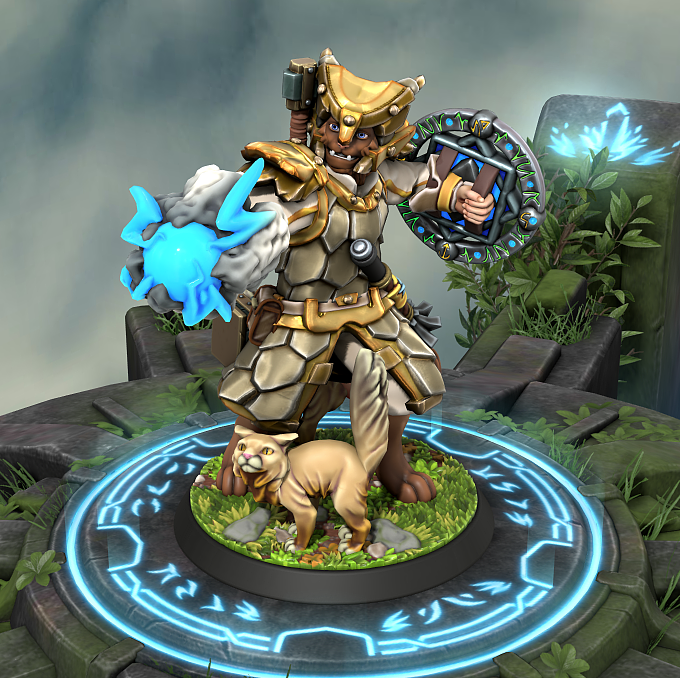
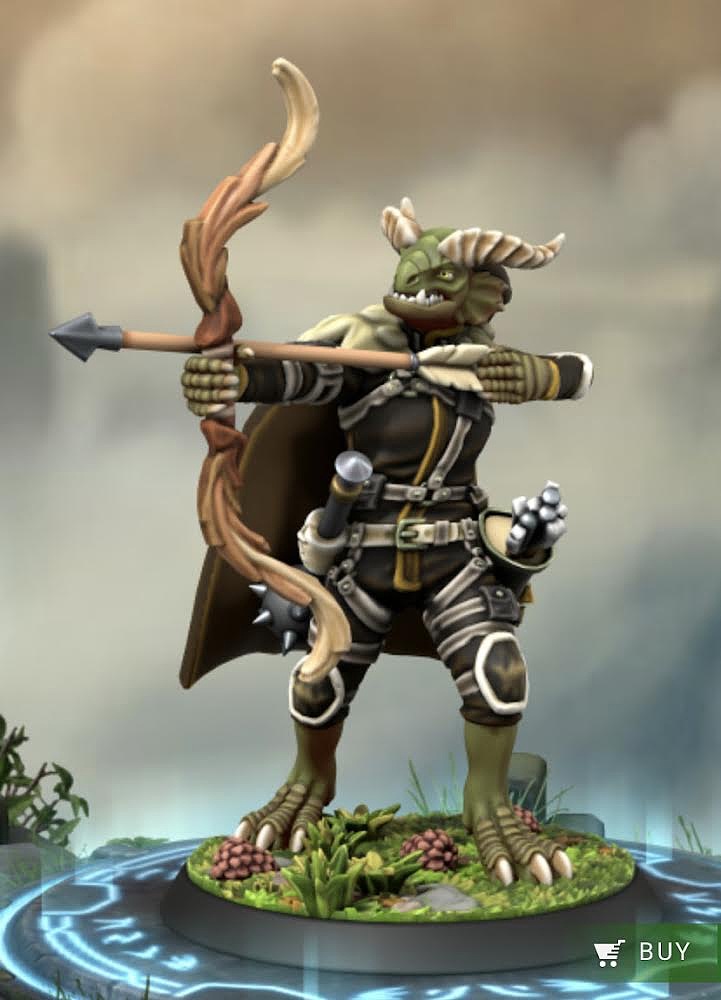
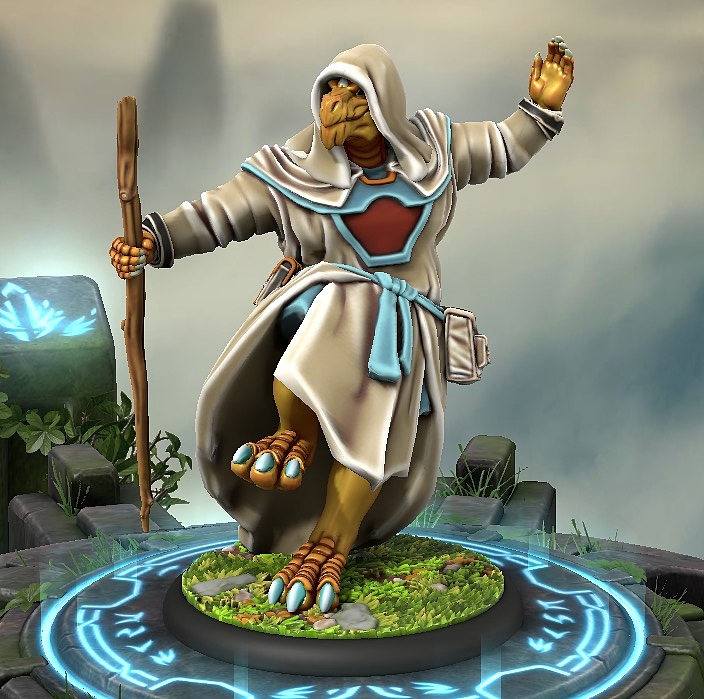
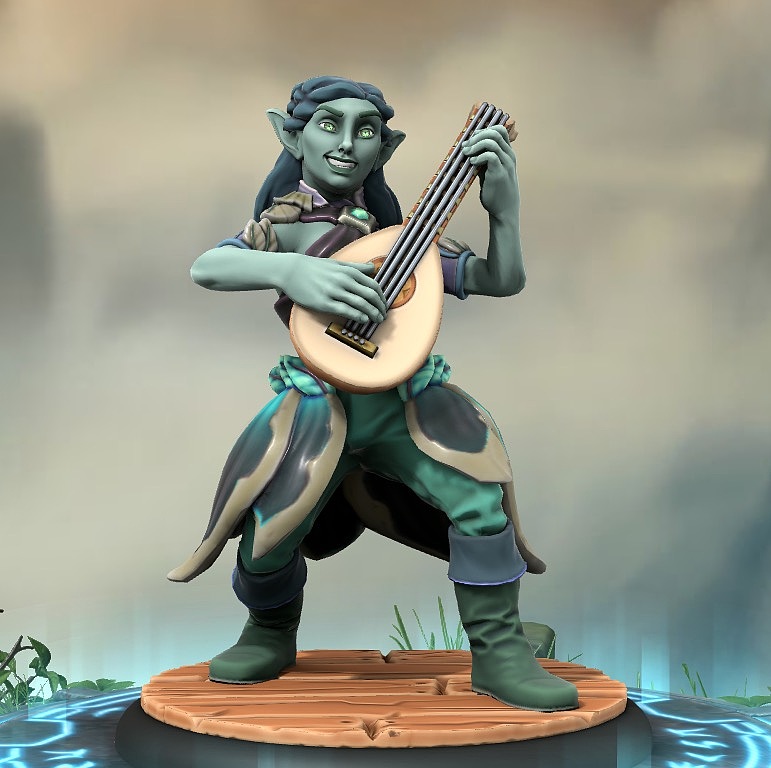
I love the mix of character art in this game, there is a very consistent feel to it yet the individual characters are quite distinct. How do you come by it? Made by yourself or a player, AI tools, borrowed from the internet?
Artwork most of the basic graphics for the site I built with the community experts, but if it looks like a graphic, I probably just used google image search. I do tend to run it through the same filter and crop them similarly for consistency. The character artwork is using the HeroForge system to make minis, then just a screenshot :-). I find that you can take pretty different image art styles, but if they both have a sepia filter and similar contrast, it’ll work out.
What’s your group like and how do you play? In person, remote, a mixture? How did you assemble your party?
I’m fortunate enough to play in person. I’m even more fortunate, in that I only have to schedule with one other family. Our gaming group started as my partner inviting another couple, but almost immediately our oldest kids wanted in, and after a couple of months, the two younger kids wanted in. So….. I have too many players, 3 adults and 4 kids…. But they get along, and less adult scheduling disasters. As for summoning the crew, the adults get together and cry over our calendars for a while, before agreeing on a date way too far in the future. Adulting sucks.
The look and feel of your site is fantastic, seeing as you’ve been on Obsidian Portal for a while, I’d love to know how long it took you to nail this one down, also if you have any tips or tricks that might be useful to others when it comes to planning and execution of such a stellar site we’d love to hear them!
Re site design: I spent a lot of 2016-2018 in the community section of this site. My goal when I first started learning was simple: to resent a medieval feeling, while on a website – replace the feeling of ‘tech’ with ‘magic’. This sort of informed every design decision: the right is on parchment, character images expand when focused on, etc. OP really helped me discover CSS and what it could do. I worked really hard on my first OP site. But after that campaign concluded, I realized a bunch of my design work had been too specific for that campaign. I took that campaign’s CSS and whittled a bunch out, my goal updated to being able to take just the CSS and drop it into any campaign and have that campaign be transformed, without customization needed. My only advice to people learning: look at other people’s code. Look at your site at different browsers. Look at it with different browser widths. You can do it, AND we want to see it!
Shifting back to the game itself, do you or your players have any great, or terrible, moments you’d like to highlight?
The party had come upon an orc-infested shrine. At the start of the round, they rolled an escalating doom die (each round, add +1, bad things happen at high numbers), more orcs would spawn, a mini boss, an environmental disaster (collapse of some kind). Anyway, the orcs just keep coming and coming, and after a few rounds, they started trying new things. From my perspective, there was no exit condition. They tried new things and they worked. When they elevated above move smash move, the orcs spit out some bosses and that was the end.
Looking through the reports (Adventure Logs) for this game, I adore the use of elements like “(text missing)” as well as the odd image. Is that a collaborative effort or do you manage the chronicling all by yourself?
I’m glad you picked up on the “text missing” – i utilize that to cover a section where I could write a lengthy description… that doesn’t necessarily serve to advance the story, even if it would recap highlight. I do all of the cataloging, so partly it is about saving me effort. But I also review the last log with the crew before we play, and this is better done in a short, punchy way, so I try to write my logs as very dense highlights. The parts that were in our imagination when we did it, I try to leave in our imagination and instead remind us, rather than tell us.
Famous last question. What’s a bit of your GM secret sauce you think others should know about?
Secret GM Sauce: TTRPGs are not players vs DM. You celebrate their wins, feel mourn their defeats. Your job is to present tough problems, not solutions – present them a problem you don’t know how to solve and then lean into their creative genius. Remember your job in response Is very very simple: “that just works” “that could never work” “hmmm, I’m not sure, and if you failed, that could be bad – let the dice decide!” Don’t jump to the last option “roll dice” first – your world makes far more sense to people if the obvious failure points obviously fail. Or the trivial tasks don’t warrant dice. When we operate inside of set of rules (more so if we aren’t super familiar with the rules), it’s easy to say no: but your job is “yes, and!” And…. If you’re behind the screen, you’re a servant and hero to me <3
Thank you to the community for making this campaign of the month possible! That’s all for now, join us on our next adventure September 1st, and don’t forget to nominate your favorite campaigns for our next Campaign of the Month!
Obsidian Portal Campaign of the Month July 2024: Ars Magica, Umbra Quercus Saga

“Gather your grogs and call upon the covenant of Umbra Quercus, our new Campaign of the Month winner! At the helm, the madirishman and his mystical magi, who have collaborated for several years to produce a fascinating fable steeped in deep lore, strange sorceries, and a setting and story that reads like a great adventure novel. Wander onward to gain a glimpse of this admirable Ars Magica campaign.”
You’ve worked professionally with Atlas Games so you probably have a better understanding of Ars Magica than most. For those who don’t know the game, can you briefly describe the system and setting?
Hoo boy, you’re really in danger of putting me in full proselytize mode when asking about Ars (ArM is the semi-official shorthand I guess, but we always just call it “Ars”). I discovered the game in the mid-90s or so when it was Third Edition and immediately fell in love. It’s my favorite setting/system and our current saga is the sixth I’ve played in.
My initial draw was undoubtedly the magic system, which has rightfully been much acclaimed. It’s incredibly flexible and after five editions, remarkably internally consistent. Spells are generally in the form of “verb + direct object”: a Technique and a Form, and your magus character will have varying scores in the Techniques and Forms depending on what you choose to specialize in. Because of the setting, these are in Latin, but once you get past that, it’s remarkably easy to design spells that are consistent in power relative to one another. Your standard Fireball (more prosaically named Ball of Abysmal Flame in Ars) would be a type of Creo Ignem (‘I create fire’) spell, but if your score is high in Creo you might also use it to effectively Creo Corpus (‘I create body’) to heal someone. (Note there is no resurrection in this game, but magi typically live many years beyond those of normal men through longevity rituals.) Likewise, laboratory activities are well defined and tell you how to make new spells, magic items, etc. While you gain experience points like in other games to advance your skills, it is generally these lab activities that increase your power. Over years of game time you pursue these to achieve truly epic magical abilities.
Secondly I am a bit of a Medieval history buff and while you could use the rules to play in, say, Middle Earth, the default setting is “Mythic Europe” of 1220 AD: basically our historical Europe, but the things people believed then are literally true. Magic exists, demons corrupt the unwary, faeries perplex travelers, you encounter angels and dragons, etc. I particularly love trying to reinterpret actual history through the lens of this setting. Sure, the Mongols sacked all of Medieval Rus but spared the great city of Novgorod. Was it because the Russian ground became too swampy for them to attack the city? Did Novgorod avoid destruction by paying tribute to the invaders? Or maybe magic was used to influence the general’s mind and convinced him to spare it?
Yet slapped onto this quasi-historical Europe is a completely ahistorical political entity. All the magi are members of the secretive Order of Hermes, which governs how magi may interact with not only each other but the “Mundanes,” as people without the Gift are known. (Beats “Muggles,” IMO.) So you can also milk a lot of great stories out of these interactions, even though in our current game we decided to set our saga in the Hermetic boonies specifically to tone down this particular dimension of the game.
What is the main story, so far?
Our characters are magi fresh out of apprenticeship who have stepped into a mystery. Instead of founding their own covenant, they were invited to join an existing one founded by a trio of powerful magi. Yet not only have these founders disappeared, the wizard who recruited them was likewise nowhere to be found when they arrived at their new home.
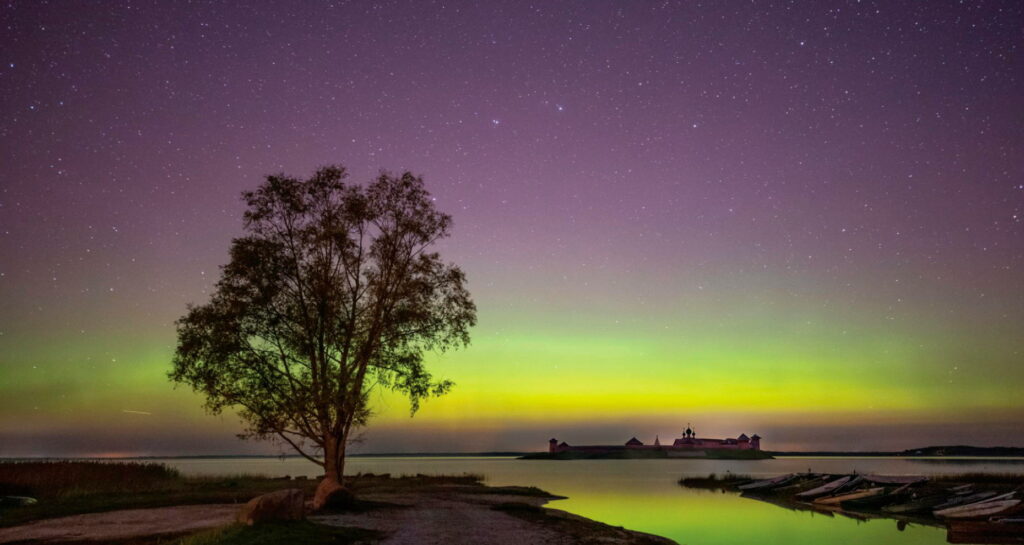
Their covenant home is a small island on a remote lake with impressive fortifications in Livonia (modern-day Latvia), where German crusaders are fighting against native tribes to Christianize the last pagan part of Europe. The players have learned that the covenant has some connection to a prophecy about the destruction of the Order of Hermes, and the founding magi apparently were there to investigate. So finding their predecessors has taken on a new urgency.
Just recently they have unearthed the remains of one of the founding magus’ apprentices. Speaking to her shade, they have gained new insight into the last known appearance of two of the three founders. She was seemingly sacrificed by their as yet unknown enemies; what is less clear is the nature of the involvement of one of those founding wizards.
Along the way, the young magi have encountered menacing packs of wolves, a mysterious bird woman, and a faerie living in their bathhouse. They have chased an escaped pig, parlayed with mudmen, and encountered a mystical site that seems to produce doppelgängers of people under certain circumstances…
Umbra Quercus involves a good deal of collaboration, shared tasks, and organization with your gaming group, where Obsidian Portal is only one tool among many. Could you explain how your group typically uses OP, the campaign forums, Discord, Dropbox, email, and any other tools and tricks to help you play the game and coordinate all those wonderful tales that we get to read in your adventure logs?
OP has been critical for our many and varied campaigns. We’re big on Troupe play and there’s a lot of collaborative world-building. We also seem to favor somewhat Byzantine plots. :^) OP gives us a centralized place to store character stats, discuss rules or logistics by thread, keep track of when our next game session is, and more. Considering those Byzantine plots, I think the Adventure Log is among the most useful for keeping track of just what the heck happened last week or three months ago,
We started as a face-to-face group but like many others, COVID-19 forced us to move to Discord for actual game play; we’ve only met a few times in person since. Discord, however, has its advantages: it’s easy to share maps, links to web pages, and other resources in the middle of a game session. Like OP, there’s a paper trail as well; you can look back at the chat log and remind yourself of important details. I won’t dwell on my failed attempt to use voice modification software to simulate speaking to the dead…
Ars can get kind of complicated and so we have used numerous aids like Excel spreadsheets and files for (the now-defunct) Metacreator. Dropbox and Google Drive are great ways to let us share those files as well as PDFs for rules or character sheets.
Google Maps has also been huge in allowing us to share a map with all of the important sites of the campaign: other covenants of the Order, towns and fortresses, mystical sites, and so forth. Useful for translating those real-world sites into saga locations, and even ballparking travel distances. Take a look at our Map of Fortifications and Mystical Sites of the Region.
What moments during the campaign stand out to you and your group as real highlights?
In “The Crossroads,” the magi and their grogs avenge a young boy and rescue a local girl from the clutches of a corrupt Sword Brother by slaying him, only to encounter him limping down the road towards them only a few hours later.
In “The Evil Medieval Weevil Upheaval” (Beta Storyguide Ted has all the best names), the magi encounter a demonic centipede with a human face that casts a dire influence upon the innocent men and women of the local village with its ugly glare.
In “Puerulus Amissa,” the magi and their grogs, using earth, fire, mental manipulation, and induced hallucinations, protect a young Russian boy with the Gift from a group of soldiers determined to take him back to his harsh uncle.
In “This Little Piggy Went to Market,” a covenant guard is suddenly and mysteriously overcome with admiration for a piglet belonging to some German soldiers, and runs away with it, to the chagrin of his companions and causing all sorts of legal problems. If your game doesn’t feature a pig chase, you’re doing something wrong!
What are the advantages and disadvantages (if any) to having more than one Storyguide in an Ars Magica campaign?
The Troupe style of play was baked into Ars from its early days, and this was something of a revelation for me. Due to time constraints imposed by schoolwork, I was used to the idea of rotating DMs all the way back to playing AD&D 2e in college, but Ars was the first game I encountered that was really pretty much designed to have people play different characters depending on the needs of the story. In fact, the characters’ covenant (where they live together and practice their magical arts, be it a castle, sailing ship, or traveling caravan) is really the central character of any saga. Instead of having to have everyone meet in a tavern and then get hired to rescue the princess, the covenant concept is a natural impetus for driving all manner of stories, and the covenant itself evolves just like the player characters do.
Each player has a Magus—the most powerful characters in the game—and a Companion: a character of note who has some reason for affiliation with the magi. (These you might think of as the other “character classes”: a knight errant, a traveling troubadour, a curious monk, etc.) If it makes more sense for your companion to participate in a story, you might play them instead of your magus. Then there are the Grogs: background characters that may be swapped between players when they’re not playing either of the above. Think foot soldiers, the blacksmith, or that book merchant who occasionally visits.
This means even the GM gets to play every once in a while, and while there’s always the dangers inherent in design by committee, I’ve found that if you have multiple creative and knowledgeable people working to build the game world, it’s often more detailed and interesting than anything one could come up with on one’s own. It’s certainly more satisfying for the players to have a voice in the bigger story. It also helps when you have a group of busy professionals that no one person is on the hook all the time for creating stories! To avoid any problems, the Storyguides typically have ownership of their own story arcs, and any story abutting one of these arcs is talked through in advance. This also keeps spoilers to a minimum.
Ars Magica has what some players consider the best (or at least the most interesting) magic system in table-top roleplaying. Would you agree with that idea and why?
It’s definitely the most flexible simulationist system I’ve run across, as I think becomes clear when you think about my description above. In fact, it gets kind of hard to give it up if you go back to another system (A brief primer worth mentioning). We played a group of wizards in our last (non-Ars) game and while it was a lot of fun, we kept saying in many situations, “well, if this were Ars, we could…” While your characters will have a set list of spells they can cast relatively effortlessly, the system allows you to spontaneously “invent” spells at a cost of Fatigue. Ars Magica Fifth Edition has a robust set of guidelines that allow you to be creative with magic in any situation, yet also tell you what your limits are. Want to dig a hole magically? You look at your Perdo (I destroy) Terram (earth) scores. Want to dig it in stone? Well, the rules tell you that’s harder. Similarly for parameters like how big the hole is or how long an illusion spell lasts. It allows players to be very imaginative in coming up with magical solutions. (“Well, I don’t think I have the scores to fling my jailer across the room, but I might be able to levitate those keys off the hook on the wall…”)
Sounds like magi can do anything, right? Well, with the right scores, they can. But they bleed just like everyone else.
Also, Ars Magica’s best days may yet be ahead: Atlas has announced the Ars Magica Definitive Edition for this fall, which will revise and consolidate the current Fifth Edition rules, but perhaps most importantly, inaugurate an open license which will allow for a host of new materials.
By way of your Obsidian Portal profile page, we discovered that you’ve done a great deal of wonderful character sheet design work over the last quarter-century or so (http://www.mad-irishman.net) and generously shared them with the gaming world. What elements make up a very good character sheet, in your opinion? Or, to put it another way, what common problems do you find on some standard character sheets that often need to be fixed?
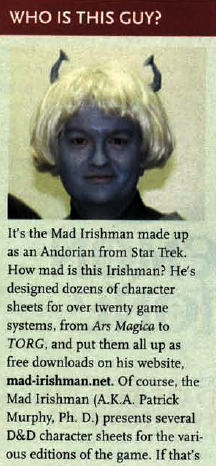
It’s gratifying that people have found my stuff useful…and my site afforded me an appearance in Dragon magazine with a picture of me dressed as an Andorian, so there’s that.
Designing character sheets is a bit like designing user interfaces for web pages. You want to have the information you need at your fingertips. Typically, sheets focus on information that is unique to your character, but sometimes there are frequently-accessed rules that everyone needs to hand.
Character sheets for RPGs used to be almost an afterthought. Typically I could open an RPG book, flip to the last page, and see something that was like the last thing anyone worked on and seemingly created by someone who hadn’t actually played the game. Having desktop publishing software at hand, at first I was just using it to create copies of existing sheets that I could print rather than photocopy, but it was only natural I started making sheets for how I played the game and what information I thought I needed to record.
But people have different needs, one size does not fit all, and games have certain options players may choose to adopt or ignore. This is why some of my later sheets utilize PDF layers: by toggling these layers on or off, the same space on the page can be used for different blocks of information, or at least different styles.
As someone with gaming industry experience in writing, layout, font design, and even a bit of cartography — what do you love most about the creative process with regard to games?
I guess the problem with answering that is I love all of it. There are many games and gaming products I adore, and some of them may have had, say, a great story, but looked like they were produced on a 1940s typewriter and then Xeroxed. But when I think of some of my favorite products, many of them feature multiple impressive design dimensions.
AD&D’s Desert of Desolation series? An evocative setting replete with Jim Holloway artwork. Woodcuts by Eric Hotz define Ars Magica and Hârn. Similarly, where would the World of Greyhawk be without Darlene’s cartography? And nothing says “Gamma World” to me like that Shatter font, or anything Middle Earth and an uncial font (thanks, MERP and Ralph Bakshi).
When Victory Games’ James Bond 007 RPG came out, I was struck by the loving *design* of the products: prop handouts replete with the “For Your Eyes Only” folders, eye-catching layout, and a splash of color in the text itself…which in the mid-80s, was quite the change. This was all *on top of* innovative rules like ease factor bidding and chase scenes.
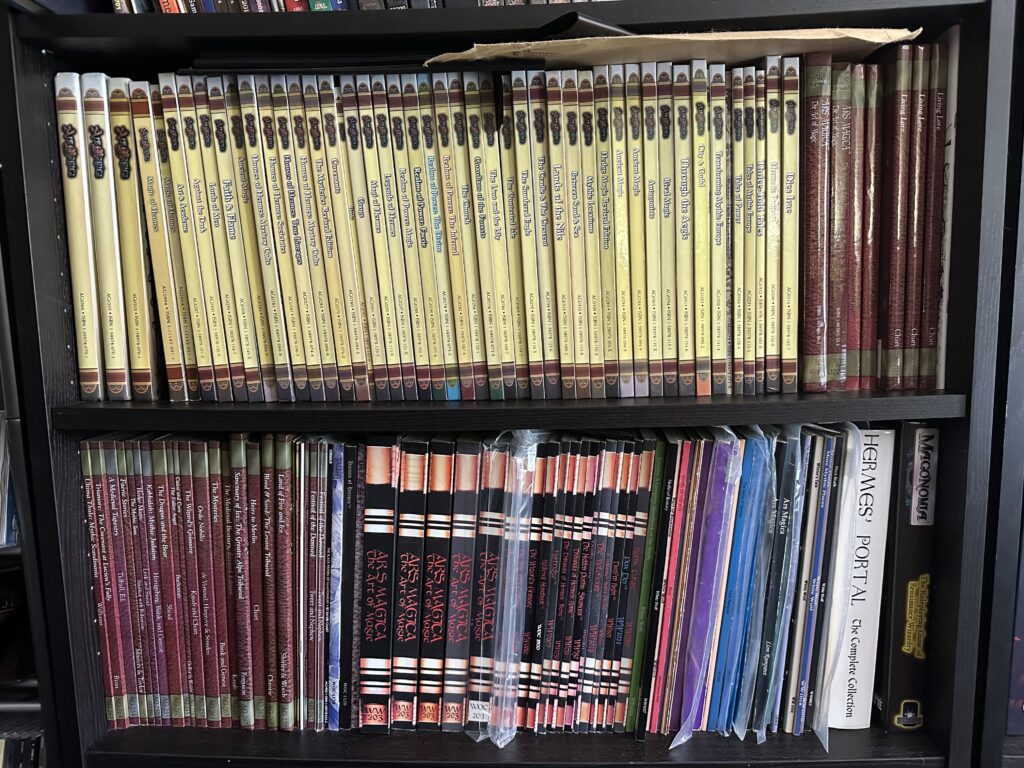
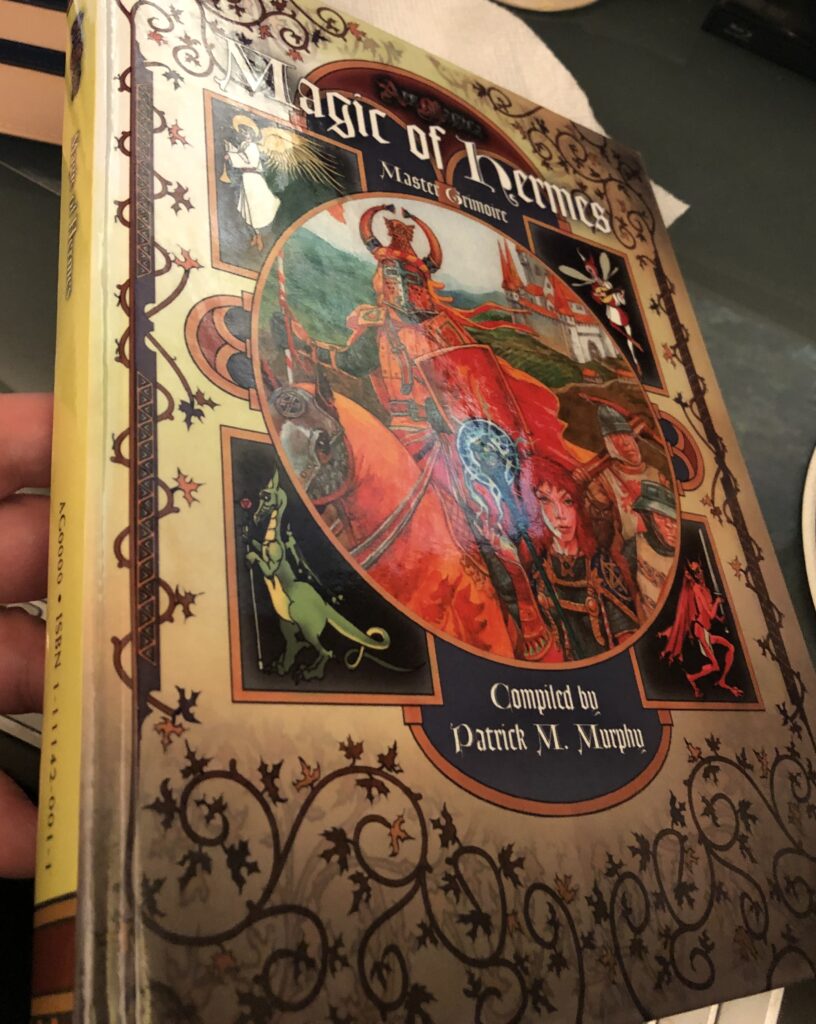
All of these areas of design are great fun as far as I’m concerned. Perhaps a more extreme example of me having that kind of fun (also outing my compulsion to compile information I guess) is my Ars Magica “Master Grimoire” that I have been compiling for the last 20 years. It contains all of the spells and spell guidelines from the official Ars Fifth Edition products, but also those from earlier editions, fanzines, web sites, and so on. Invaluable for our game play. But of course I also had to lay it out exactly like an official Atlas Games product and mimic their trade dress. It currently weighs in at 455 pages! It’s pretty awesome, if I do say so myself…I just wish I could share it with everyone, but unfortunately it uses like a million different people’s intellectual property.
Anyway, I guess this is why I’m master of none of these areas but have dabbled in them all. :^)
This question is for those among us looking for new RPGs to play and hidden gems outside of the mainstream. Out of all the RPGs that you have played or own (and I know there’s a lot), what are some of the lesser-known game systems or supplements that you might recommend and why?
Man, another toughie, where I’ll want to go on and on. You can look at my other OP campaigns or the list of games I own (over at my Mad Irishman page) and get some feel for a few of them. I do have a ridiculously large RPG collection that includes many unplayed games to go with all those unpainted miniatures. <eyeroll>
Another setting I love—maybe my second favorite—is that of Space: 1889. Victorian adventure with scientific romance elements. Like Ars, it’s great for taking real-world history and giving it a twist, just sci-fi this time. The Great Game played out on the surface of Mars, with native cloudships dueling with Earth flying gunboats. You can also probably find it in a rule system you like: it’s been through its own GDW system, Savage Worlds, Ubiquity, and most recently, the Empyrean system.
While we’ve played that, one that’s still on my bucket list is Lace & Steel by Kitsune Press. Swashbuckling fantasy a la The Three Musketeers, but in a more fantastic world with centaurs (sorry, half-horses), ogres, and pixies. I love the mechanic for conflict: there are card decks to simulate fencing, sorcery, and that most dangerous of duels, verbal repartee!
If you like the idea of playing wizards in a quasi-historical setting, but like your rules lite, take a look at Magonomia: Renaissance wizards using the FATE system.
2300AD. Pendragon. Iron Heroes. I still want to play a straight Western game that doesn’t have steampunk, magic, or zombies. Many great games out there to try. The World of Synnibar is not on this list.
As is tradition, Obsidian Portal always loves to ask if you have any tips or sage advice to share for those of us who want to create and run games like this one?
There’s already tons of great gaming advice out there, so I’ll start with a focus on Ars and other “quasi-historical” games.
Real world history is your friend. You don’t have to be beholden to it, but it’s great to mine for ideas, since you don’t have to go to the library anymore to find out everything about Hungarian mythology or Venetian history. You can pluck many great story ideas straight from Internet resources on these topics and others. Then just think about how things might play out a little differently if magic or sci-if tech were involved…
I’d also put in a pitch for collaborative world building. If your players are game, you’ll get more buy-in from them if they’re all involved to some extent in setting the story. Lean on each player’s strengths and interests, and outsource some of that design and bookkeeping.
Pax, and may your Stress dice roll lots of ones!
Thank you to the community for making this campaign of the month possible! That’s all for now, join us on our next adventure August 1st, and don’t forget to nominate your favorite campaigns for our next Campaign of the Month!
Creator Spotlight | An Interview with Hankerin Ferinale of Runehammer about Crown and Skull

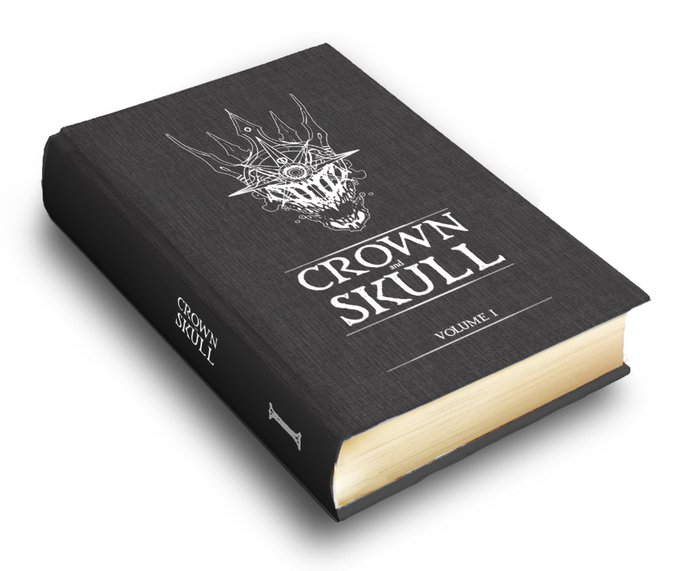
Fantasy RPGs are a dime a dozen, but Crown and Skull promises a refreshing experience. In this interview with Hankerin Ferinale, creator of the system from Runehammer, we delve into the unique mechanics, world-building, and design philosophy that sets Crown and Skull apart.
Ferinale sheds light on the inspiration behind the game, how it challenges player interaction with the world, and the exciting future planned for this evolving system. So, grab your dice, and prepare to be enthralled by the evocative world of The North Holds!

Crown and Skull feels like a fresh take on fantasy RPGs. What inspired you to create this unique system?
I played Fantasy Hero (1st Edition) for years in high school. The system didn’t age terribly well, but its foundational thinking was great. After 8 years of RPG publishing, I wanted to both look back to my origins and forward to a few current inspirations like Cairn and Into the Odd. That’s just the mechanics. The WORLD and TONE are where I’m the most excited. I’ve been working as a writer and artist for over three decades now, and I started to feel real, emotional, moody, evocative stirrings in this setting. I hope all the readers feel as deeply connected to THE NORTH HOLDS as I do. That humanist connection is teh core inspiration of the book(s).
The “skill as tool” approach sounds intriguing. Can you elaborate on how this changes player character interaction with the world?
For ages now, we’ve been taught that our stats/attributes can solve any problem with a die roll in role playing. Removing stats from the mechanics and being strict above the use of skills only, forbidding attempts by the unskilled altogether, is the biggest step toward substantive character differentiation I have seen. So different, in fact, I find many players and GMs a bit dazed at first, then very excited. As for interaction with the world, there’s far more think-before-act. The player can’t simply roll a stat to get out of a bind or overcome a challenge.
The phase-based combat seems like a strategic twist. How did you develop this system and what are its advantages for players and GMs?
I didn’t! I reduced Fantasy Hero’s 12-phase system into a 5 phase setup. The advantage is almost entirely offered to the GM. These 5 phases allow room to build truly challenging foes against even large parties of heroes. A single foe might take action(s) on up to 3 phases, while heroes are always limited to one. This lets the monsters expand into vastly larger realms of challenge and variety, compared to traditional initiative systems.
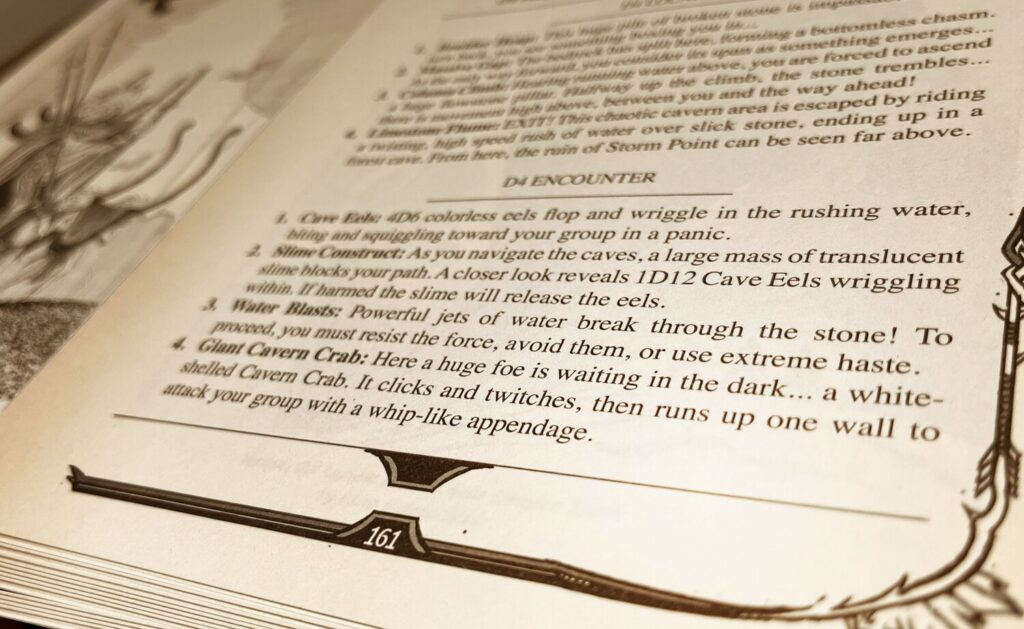
Crown and Skull is known for its emphasis on player skill over character stats. Can you talk about the design philosophy behind this approach?
As mentioned above, stats blend all characters together. By removing them entirely, and forbidding attempts by the unskilled, the differences between heroes becomes extreme. MUSCLE is a skill, not a stat. No muscle skill? You can;t even ATTEMPT to move the boulder. This differentiation enhances one of the key visions of the hobby’s framers: that characters need each other to thrive.
We’ve seen some discussions about the lack of traditional “gold” mechanics. How does Crown and Skull handle character progression and rewards?
In CROWN, you earn hero points. Gold is seen as banal and uninteresting, though present if your table wishes. Hero points replace gold, and adjudicate the finding of usable loot. They come in all kinds of reard packages, from deeds of renown, to the dire and unavoidable choice of THE CROWN, OR THE SKULL?

Crown and Skull is still evolving. What are some exciting things you have planned for the future of the system?
There are 4 more volumes of CROWN and SKULL coming. These volumes introduce new mechanics, world material, and tables. The coolest part of the forthcoming volumes, though, is portraying ongoing epochs of the world, influenced and shaped by the actions of all of CROWN’s players and GMs. It is a 6 year experiment in a truly living world… another core dream of our hobby’s mighty originators. Achieving a truly living world is not easy! It requires a DAILY interaction habit with the player community.
Do you have any advice for GMs and players who are new to Crown and Skull?
Join the Runehammer Discord! This isn’t a sales pitch at all, but a call to engage with a living, breathing community that is building a world brick by brick. It’s also a great resource for those odd questions or sticking points as many 5E players seek new horizons.
Thanks for the interview, Obsidian! FOR THE CROWN!
-Hankerin Ferinale

Crown and Skull is produced and published by Runehammer. Visit them on social media:
Patreon, Youtube, Instagram, X (formerly Twitter), Facebook
Obsidian Portal Campaign of the Month April 2024: Season of Strife

Twenty years after the fall of Utugash’s kingdom, a group of adventurers sail into Celestine and into their new destiny. Villains and allies of every faction eagerly await to use the newcomers for their own purposes, while even more sinister forces lurk in the shadows… Join us in talking with GM EdgarS as we explore the Season of Strife!
First off, feel free to tell us about the person behind the GM screen. Where are you from? What do you do aside from gaming? Alter Egos? Life partners? Family? Where can we interact with you on the internet?
Heya, I’m Edgar, I’m from the Netherlands, and I’ve been playing D&D for about 15 years now since I was invited to join a campaign for the first time. I really got into Critical Role around 2018 and watching it helped elevate my gaming and give me a way bigger sense of the possibilities the medium held to tell a story beyond ‘there’s a monster in the next room of the dungeon, go hit it.’ I also started DMing in 2018 and have or are running a couple of campaigns at the same time.
Before D&D I came from the world of tabletop gaming: building, painting and playing Warhammer Fantasy and 40K mostly, which really helped me get out of my shell as a teen (you gotta play with/against other people physically present on the other side of the table after all). From there it was a hop and a skip to D&D. I’ve been lucky to have had a pretty stable and dull life. The most I have in terms of baggage is experiencing bullying in high school because, well, huge giant nerd, but it’s precisely due to things like tabletop gaming and DMing I’ve gotten over that and grew to be a version of myself I enjoy, and being way more extrovert and bringing the sorely needed levity at office meetings. But yeah aside from that, I grew up in a fairly affluent household with loving parents, went to college (studied history and international relations), and after maybe a couple of years in the wilderness got a proper job recently working for the government. I even bought my first apartment a few months ago, which gave me the opportunity to set up a purposely-built storage room for all of my D&D terrain!

As for online, I used to be more active in various places such as tabletop gaming forums, but now I mostly lurk in peace and quiet, stay in my lane, and occasionally tweet out some art or dnd pics on my twitter (no I’m not calling it X) at @DCabbagefarm. That refers to Emperor Diocletian’s cabbages by the way. I’m a historian. Hi.
Tell us about “Season of Strife” in a nutshell. How did you design the world? What was your inspiration?
So the Season of Strife was born when one of the players put out a ‘looking for group’ call on Tumblr for an online d&d campaign, and I decided to take the plunge and offered to DM, back in late 2020. Not quite knowing whether this’d end up being a massive campaign or would bleed out early I decided to use the same homebrew setting I was using for my weekly campaign, the Twilight of the Spheres (and by the way, that one’s got its own Obsidian wiki too, probably even more expansive than the Strife one), but simply designing a new area for the world like it was some kind of Warcraft expansion. Exactly how many hidden continents are there?!
After this I expanded the map further, filling it out as I went until it reached its current state of completion, with enough space for a few more fresh campaigns. Here’s the full map, and be warned it’s a big boy

The first Twilight of the Spheres campaign (2019-2022) took place in the north-eastern region of the world, Eos, dominated by the Coalition (a pretty standard late-medieval European fantasy society consisting of a union of city states) and the Kyshtar Dominion (a majority dragonborn proto-industrial semi-Babylonian hodgepodge). That quarter of the map was all that existed of the setting, with no more than vague allusions to other stuff being beyond the boundaries. The new area I added specially for the Season of Strife was far to the south of it, an island chain called the Teylu Archipelago, inhabited by the Teylu eladrin & water genasi people who mix inspiration from both Polynesian culture and aesthetic, and Scandinavian and celtic. Two of the players are Scandinavian so that’s how that got included into the mix, plus the traditional celtic influences of the Feywild re: the eladrin. As a historian I like to draw heavily on history as inspiration for my worldbuilding, and regions in my setting often have some kind of ethnic or socio-political conflict. In this case it’s the colonial settlers who arrived from the Coalition and Kyshtar Dominion (collectively called ‘the Elyzians’) in the wake of a devastating flood that hit the Archipelago, and whose presence is pushing the Teylu to the margins. This conflict operates as a backdrop to everything going on in the campaign and it’s been very fortuitous that the players themselves chose to have a party consisting of two Elyzian characters and one from the Teylu, so that they could RP through these clashing perspectives and get a multifaceted view of the situation. Settler politics. Fun!
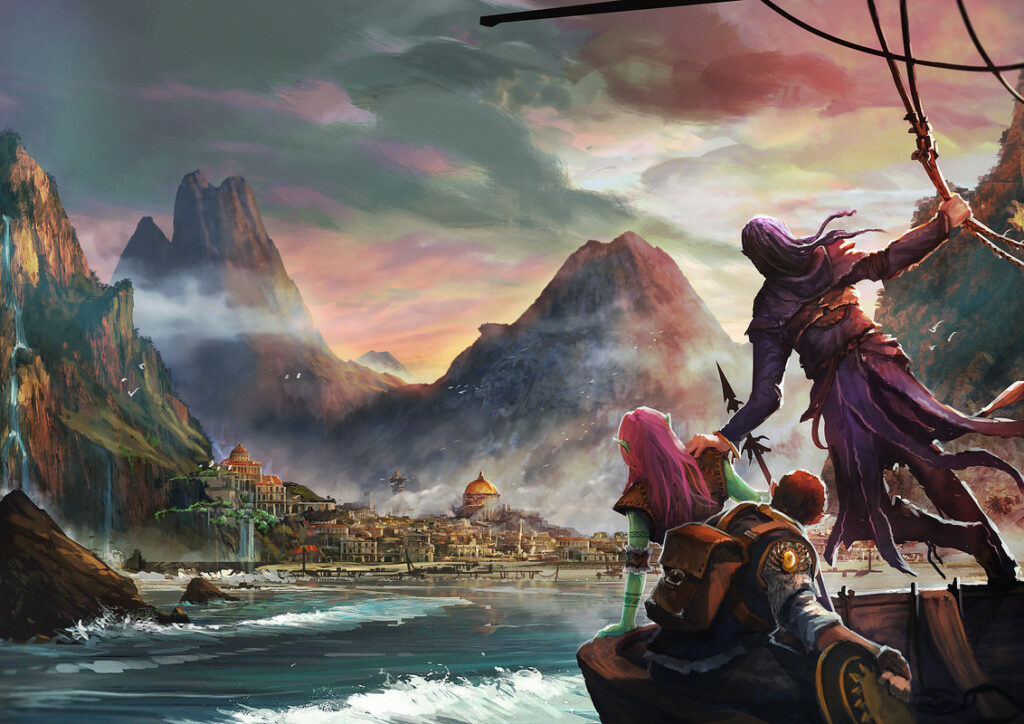
As for the outline of the campaign’s plot, in ancient times the Spring Court of the Feywild was cursed by the other season courts to slumber, and left behind buried in the material plane. However now a radical Teylu cult, the Teyhua, are seeking to awaken Spring and use its power to expel the settlers from the Archipelago. To do this a number of seals first need to be removed, which can each only be done by the Summer, Autumn, Winter and Spring knight (mortals in the employ of the courts as their champion, because they’re able to break Fey rules such as crossing running water and being able to lie), and the player characters find themselves entangled within this storied web and – mostly by accident – becoming knights for the fey courts.

I’m an avid worldbuilder, drawing heavily on historical minutiae, so in order to scratch that itch and build up a corpus of material I also write a “worldbuilder gazette” article every few months, dealing with info about the world that might not naturally pop up during sessions, such as how the different regional calendars work, lunar orbits, holidays, the economy, and nations the players haven’t visited yet. For every other worldbuilding-obsessed DM out there: I see you, I hear you.
How regularly do you play, and where do you play? Tell us about your current group of players.
The campaign is played online, using roll20 and Zoom, and we play about once every two to three weeks. With me included we’re a group of four from across the UK and west-central Europe. I’m gonna refrain from telling you too many personal details, but I’ll just say they’re some of the goshdarndamndest best RP’ers – nay, actors! – I’ve ever seen at any D&D table. They’re so insanely good. Sometimes I just shut up and listen for 30 minutes while they RP amongst themselves.
You put a lot of emphasis on the factions in your game, enough to place them on the front page. Can you tell us how important they are in your game?
As mentioned previously, I draw a great deal from history when worldbuilding, and if anything history is a revolving door of peoples, polities and cultures clashing with each other. The factions on the wiki’s home page are for the most part the main cultural groupings; what background an npc is from can inform a massive amount about their character, customs and perspective on things, especially how they relate to the local background conflict and what that means for their relationship with the player characters. I don’t want to have my game world populated by unattached caricatures, I want the npcs to have allegiances of their own – be they culture, country, ethnicity, etcetera. In my opinion they make characters richer and more vibrant, and give the players an additional set of approaches to relate to them (are they from a rival faction? Are they both foreigners away from home? Do they have certain proclivities or interests relating to their culture that might be used to sway them?)
I don’t want every country to be contained in its own cordoned-off little box either, like they’re in their own stasis bubble: People move! Countries do war, trade, diplomacy, propaganda, cultural exchanges, religious exchanges, espionage, migration and more! Interactions between the different factions are the building blocks of my world, and the quest design flows organically from that. Part of having a reusable setting is having background conflicts that continue to passively generate animosity that can be leveraged into new quests. In the season of strife campaign the main plot is almost entirely motivated and impacted by the background conflict of the indigenous Teylu being squeezed by the Elyzian settlers, and most quests and npcs are at the very least tangentially related to that. Most recently the players were sent on a little sidequest to solve a dispute on some Teylu islands where wealthy Elyzian settlers had built… well… the Hamptons, basically, and their mayor was secretly throwing meat into the bay to lure sharkfolk to the local Teylu water genasi village’s spiritual site to disrupt their traditional links to the land.
I’ve also been working with a couple of artists whom I have commissioned many times. One of them is designing the factions icons for me. Those icons are all unique and purpose-made for my setting, not just plucked from the web! The faction icons there are the ones that are currently done, but in the end there will be two to three times as many! I’ve currently got a plan in the works to start a project with these artists, in order to make an illustration of one or two “average joe”’s from each main culture, to create a kind of setting sourcebook and give an idea of what the regular person in the street of each nation would look like.
Your WIKI section is very detailed and quite comprehensive. Who is responsible for adding the information and organizing it? How much time do you spend updating it as the campaign progresses?

Your WIKI section is very detailed and quite comprehensive. Who is responsible for adding the information and organizing it? How much time do you spend updating it as the campaign progresses?
L’wiki, c’est moi. It’s all done by me and I’ll conservatively estimate “a metric ton of time”. It’s a good thing I enjoy wiki-building (I read aloud from my hostage note) and I’m a glutton for punishment if nothing else. My players do help me out every so often with writing sections of the summaries if I don’t have enough time to finish them, and one of my players performs vitally important recording wizardry, making video recordings of the session and uploading them to a private youtube playlist so we can watch them back and use them to make summaries. And she also makes thumbnails for each session! Recently we also redistributed some tasks so that another player would help me out with writing the short synopses.
Your campaign has many items and makes great use of Obsidian Portal’s Items section. How do you feel the extra work it takes to implement this benefits you and/or your players?
It’s always good to have a central place to store data as a master reference. Handing out item cards or putting them into word documents or reading out the item descriptions is all well and good but you can almost guarantee that stuff’s gonna get lost or misplaced at some point. Much better to have somewhere you can always refer back to. We also have a few items that have become real staples of the characters’ iconic look, such as the sword Spring’s Edge, one of the first items the group acquired in the first ten sessions, and it’s nice to be able to give these items an image to represent them.
What made you choose D&D 5e as your gaming system? Have you played other gaming systems, or earlier editions? How do you feel it compares?
I played 3.5th edition in the first campaign I joined (playing for a good 13-14 years) and DM’ed it for a while, and gods above and below in hindsight I found it so cumbersome and bloated, with hundreds of sourcebooks and a level of stat block number crunching I was simply never going to be able to get a proper grip on; After a while you get monsters on the field with modifiers of +20 to hit, and if you overshot the challenge rating you were supposed to give the players by a bit you could quickly end up with foes the characters could literally do barely more than single digit damage to. And worse, I disliked how lower level spells became exponentially useless as time wore on, because both the DCs and effects of those spells remained as low as a low level character casting them, encouraging you to only throw your highest level stuff. I could probably go on for a while but I’ll save the internet the byte space.
In comparison the 5th edition rules are easy enough to follow that I learned them simply through watching/listening to Critical Role, picking up most of the game (and learning answers to some of the baked-in rules conflicts or less commonly understood features) before ever even opening the Player’s Handbook. The familiarity I now have with the system appeals to me, the basics are pretty easy to follow, flexible enough to homebrew off of, and combat can be balanced quite decently on sheer ‘vibes’ alone, while fixing a lot of the annoyances I had with 3.5 (I don’t think any annoyed me more than being unable to move more than 5ft and make more than one melee attack, turning most battles into stationary ones because it was actively detrimental to move). The system is also robust enough that you can overshoot and make monsters too strong, without instantly signing the players’ death warrant.
How much time is usually spent preparing your game sessions? Describe a typical session.
Most sessions take me a couple hours of prep, often about equal or slightly less than total playtime… except when I need to build a battlemap in Roll20, which can eat up hours of my time while I finetune tiny details. Regardless, my prep can often be described as “leapfrogging.” Whenever I prep a session I will inevitably have enough material that we end up covering (nearly) two sessions with it. Plus if I need to buy time, I’ll just let the player characters talk to one another. Bam, there’s half an hour filled, easy peasy. In our very latest session the players started right after having been portalled to the gates of a Feywild city. They were right in front of the gates! It took 30 minutes before they even walked up to the guards! It’s a miracle we get anywhere at all.
Can you please explain the difference between your session summaries and your miniature session summaries? What is the difference between the two types of sessions?
Those both relate to the same sessions. The ‘session summaries’ are the long versions – which are probably a little too long at times, sometimes reaching more than 10 pages and rarely less than 4 – and the ‘miniature session summaries’ are brief synopses about one paragraph long. It’s a practice I picked up in the first campaign that I ran, where I noticed players had difficulty recalling the basic outline of the few sessions before it (especially because that campaign only played once every 6-7 weeks or so), so the mini summary contains a very basic outline of the main events/facts of the session, just so you can more easily search back for when something happened and so you can recall the basics at a single glance, rather than walls and walls of text. The mini summary section on our wiki then links to the long-form summary of that particular session.

I’m a bit of a fanatic about chronicling everything in massive detail because:
A) I’m a historian and work with archival departments at a government ministry. It’s kinda in my blood at this point.
B) The first campaign I ever joined as a player ran for like 12-13 years and we had basically zero documentation, so halfway through there were just complete year-long arcs of the campaign I had no recollection of or where I didn’t know the order of events anymore, so a lot of plot stuff inadvertently flew over our heads half the time because we didn’t remember anything.
C) I just can’t stop myself. Help.
How long have you been using Obsidian Portal? What brought you to the site and what keeps bringing you back?
I had an account before then but I’ve actively used Obsidian Portal since about 2018, when I first started DM’ing my own campaigns. There might be shinier things out there, with widgets and gadgets and holograms, but I like the easy legibility Obsidian Portal’s format provides if you wanna put up big blocks of text. With some pretty basic coding you can do a fair amount to make it look nice, formatting it like it’s a Wikipedia article. And of course being able to hyperlink back and forth between different pages makes navigating through the wiki a breeze.
If you had to pick just one thing, what would you say Obsidian Portal helps you with the most?
I put up stupid amounts of text, and like I said above I like the legibility Obsidian provides. As a history enthusiast my favored terrain is wikipedia pages (I get a +2 to hit modifier against other historians), so that’s the model I like to copy. I’m also happy with the pre-defined sections for characters, game logs and items, rather than needing to build custom wiki pages for each of them and it becoming a right old mess. If there’s anything else I might want to see from Obsidian Portal it’s one or two more sections like that, such as a bestiary section for common creatures/creature types found in your setting.
What would you say is the biggest highlight of your game so far?

Oh gosh, oh golly, oh jeepers, I had such a tough time answering this question!! We’ve played 74 sessions up to this point, and so many exciting things have happened! Should I pick the time the cleric held an impassioned speech before the church to denounce the bigoted high priestess? Or the victory in the Autumn Tournament when the rogue defeated the other candidates to become the new Autumn Knight? Perhaps I ought to pick that time the party were surrounded by enemies on all sides and opened up the Iron Flask they’d carried with them for nearly 30 sessions without knowing what was inside, summoning a succubus to their aid? That time the ranger/druid had a romantic ride across the meadows of the Feywild on the back of a stag with one of the main villains (he’s hot so it’s okay), or simply when two players were wasted drunk and trying to escape across the rooftops from some bandits, with the air genasi rogue floating away from danger like a balloon?
This artist has done a huge series of illustrations for our campaign, all of which can be found here
I guess if there is one moment I had to pick it would be in the earlier stages of the campaign when the players were at a fancy gala, and the rogue suddenly ran into the crime boss (and secret weretiger) on the dancefloor whom she’d been romancing at the start of the campaign before getting cold feet and breaking it off. I cannot describe the utter mic drop moment when that French accent suddenly returned and I showed off the art I had commissioned for the occasion:

As an aside I also want to add that for me the personal highlight of any game is when the ranger/druid communicates with any flora or fauna. I never know what voice will come out of my mouth but let’s just say the interactions don’t really live up to the wise, sage druid image. Pigeons hate her, seagulls have died for her, trees want to practice their stand-up comedy routines on her.
Okay, as a last question, we always ask for the GM’s “pearls of wisdom”. What GM insights can you offer the community this month?
I mean you’re gonna hear this one repeated ad nauseam, but communication really is key in playing a game like this. You gotta have some people at your table you can trust you can talk with like adults, make sure you’re on the same wavelength as to what kind of game you’d like to play, and make the players feel you’re playing with them not against them. Though as a DM I feel you should always reserve the right to not acquiesce to every single thing the players might ask for; sometimes mother knows best.
However, apart from slam-dunking that low-hanging fruit into Tantalus’ head, there’s a couple more things I’d like to add: First off, the success or failure of your campaign can lean very heavily on what the players are like, irrespective of your quality as a DM. There’s something Brennan Lee Mulligan said at a DM roundtable a couple years back that’s always stuck with me, namely “there’s nothing you can do if the players don’t care.” You can be the best DM in the world with the coolest party tricks and goblin voices but if there are sacks of potatoes sitting opposite your screen it’s gonna be a bad time (and I don’t mean people who are simply shy or withdrawn, I mean people actively unwilling to engage or care). And conversely if you’ve got some people who come to the table with a good attitude, are willing to engage and have a good time, you can elevate any game to beyond what it is on paper. I’ve had about half a dozen campaigns in my DMing career and I’ll earnestly admit some are running better than others (but on the whole I’m very happy with them all), but there’s one that thankfully bled to death where I was straight-up not having a fun time, because of a complete unwillingness from half of the table to engage, like they were forced to participate against their wishes. I didn’t DM that game any differently from my other campaigns, but it was a rotten experience while my other campaigns give me a surge of energy at the end of the night. You’re playing a collaborative game and that collaboration is what makes or breaks a campaign.
Secondly, being behind the DM screen gives you certain insights into how the game functions, and you can try to transfer some of that wisdom to your players to help them get better/get more out of the game. If you have players at your table who are DMs themselves you’ll often quickly notice they play a little bit differently that other players, and in my experience they tend to be a bit better with spotting plot hooks, unearthing crucial info buried in a piece of dialogue, and jumping on opportunities to give the scenario a different twist. With a little encouragement and advice I’ve seen the folks in one long-running campaign in particular transform from ‘enthusiastic amateurs’ into model players. If you wanna give your players any insights to help their play, I’ll offer you this one: “If you don’t do anything, nothing happens.” This applies to every aspect of the game. If you don’t respond (promptly) when the DM asks you about scheduling, the game doesn’t happen. If you don’t go talk to that npc who seems to hold a potential plot hook, then that quest doesn’t occur and you don’t do anything during the session. If the rest of the party is chasing the undead who just attacked the village and kidnapped someone but your character doesn’t want to leave their bed (this happened once), you won’t be able to do anything in the game for the next hour or more. If your character is getting distorted visions about their personal quest but is informed they first need to consume the waters of life to see them more clearly but you make no move to acquire said waters of life, nothing happens. If you never take the initiative to turn to your fellow players and go “hey I think we should plan a heist to steal the plot item”, then no fun shenanigans-filled heist happens. If you play the game super safely and cautiously, none of the fun stuff happens. D&D is an immensely malleable game, where your efforts as a player can and will shape the contours of what the session is gonna be like: Make your players aware they have that power and co-opt them into making the game more fun and to try and get them to engage with what you’re putting out for them.
Thirdly, based on my own campaigns so far and the ones I’ve participated in as a player I’ve picked up a way to structure my campaigns that I’m quite happy with, and that I’m using for the second Twilight campaign. If I could do Strife again from the start I’d have liked to use this approach there too. I like to start by taking my time with the lower levels – giving players enough time to fully explore all their spells and class features and ways to use them creatively, and making them appreciate their new abilities more when they finally get to level 5 and beyond – and giving them a pure sandbox game. They’re set loose in the world and allowed to do generic low-level quests: Root out the goblins blocking the local road, escort the archeologists to the nearby excavation site, find out who’s stealing from the warehouse, etcetera. They get the sense of fulfillment of completing quests (rather than just subsections of a long-running main plot), get to explore your world and setting, get to build a network of NPC contacts, and have complete freedom to pick and choose for themselves what to do. This also puts them at liberty to fail or abandon quests without the stakes being too high and introduces the players to the idea that “if you mess up, you make a mess”, because at a certain point in a high-level plot the party can’t really be allowed to fail that much anymore without endangering the entire setting… and DMs put a lot of work in their settings! They don’t wanna toss it out on a whim! So this early sandbox stage both gives the party freedom and gives the DM freedom not to have to plot-armor the party. In the Season of Strife the party spent their first ten sessions in the starter-town, Celestine, engaging with a local crime boss (slash love interest), and then hitching a ride on an archeological expedition to another part of the island for a while and doing a bit of dungeon delving, before they got involved in the bigger plotlines. You can also start throwing in subtle foreshadowing to the campaign’s eventual BBEG… A namedrop here and there, a whispered rumor, mysterious graffiti appearing in the cities, and so forth. After the sandbox stage you’ll start reaching levels 6, 7, 8 or so, which in my opinion is the game’s sweetspot. This is the part where the format becomes more plot-driven, your players may encounter recurring villains (possibly lieutenants to the campaign’s BBEG), and the stakes start increasing. Perhaps this stage results in a kind of mid-campaign climax. A big victory for the players to revel in at the end of the second act. Maybe you’ll even return them to the sandbox stage for a while to do sidequests or loose ends, before the plot and stakes start dramatically ramping up again as the BBEG starts coming to the fore and you get to the big, epic, dramatic battles as you work your way to the final confrontation. Players generally don’t like losing more than once (in a row), so my recommendation is to always split up your plot into separate portions which can be won piecemeal.Also, get theater kids to join your game. They are good at roleplay and drama. It’s… it’s in the name.
Thank you to the community for making this campaign of the month possible! That’s all for now, join us on our next adventure May 1st, and don’t forget to nominate your favorite campaigns for our next Campaign of the Month!
Creator Spotlight | An Interview with the Creators of Divination RPG
Divination RPG offers a transformative approach to tabletop roleplaying, merging the ancient tradition of tarot with the dynamic mechanics of RPGs. This game invites players to embark on a journey of self-discovery and adventure, navigating a world where the flip of a card determines fate.
In this exciting interview, we delve into the minds of the creators behind this innovative game, Matthew Muñiz and Nyx Tesseract, to uncover the inspiration, mechanics, and future for Divination RPG. Join us as we explore the fascinating world where destiny is woven with each card drawn, and where players become active participants in an unfolding narrative guided by the very tools of divination.
Don’t just consult the cards, adventurers! Support the Divination RPG Kickstarter!
What initially drew you to incorporating tarot into an RPG experience?
I’ve always used tarot as a part of my TTRPG ventures, I think. It’s been an idea generator, a generator for NPC motivations—a set of huge, abstract symbols from which to draw. So as I ran D&D games growing up, and later, World of Darkness games, I liked to use tarot to get ideas about plots, motivations, antagonists, worlds of magic, all kinds of stuff. I got my first Pixie (RWS) deck in my teenage years, and started running games for my friends right around the same time.
Matthew Muñiz
Were there influences other than tarot that served as inspiration for the game’s mechanics?
I loved the World of Darkness games from the 90s, and grew up on Basic and Advanced D&D—a childhood inheritance from my erstwhile-nerd parents. I liked how WoD games let you develop your character without levels (I recall that as revolutionary once upon a time, way back when). Those worlds also aspired to delve into the psychology involved in role-playing and character development. I think of those games as blazing a trail that now lots of other narrative-first games follow.
Some of those, like Bluebeard’s Bride and Kids on Bikes, use shared hero and shared character dynamics that really influenced Divination as well. As roleplaying games explore GM-lessness, elements of shared storytelling are becoming increasingly common, and I think those mechanics work beautifully in Divination because it’s based on tarot. Tarot is so much about introspection and personal growth, and so a game where the parts of the mind negotiate that (and sometimes fight over it) suits our world really well.
Matthew Muñiz
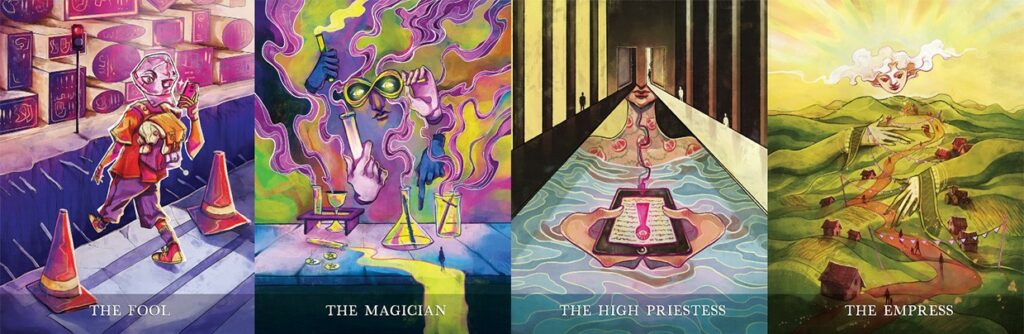
Can you walk us through the core mechanics of Divination RPG?
There are two main mechanics that make up the heart and soul of playing Divination. One is the shared Hero that Matthew mentioned, and the second is the performance of Tests.
You play Divination as one Aspect of a Hero, and your fellow players are also Aspects of that same Hero. Each Aspect embodies one set of drives and desires inside that person, which adds an additional element to roleplay. Sometimes one Aspect is in Control of the Hero and is navigating the world and dealing with NPCs just like any other roleplaying game, but at other times we zoom in to the internal and see the conversations happening between the Aspects—the Hero’s internal thoughts and conflicts and questions playing out live. Each player has an Aspect sheet which tracks the stats and abilities unique to them as an individual, and collectively the players share a Hero sheet which tracks the stats available equally to all of them.
Where all those different stats and abilities come in brings us to the other core mechanic of Divination: the Test. This is essentially your skill check, but it’s resolved by drawing a tarot card instead of rolling a d20. We use one portion of the tarot deck that contains numbered cards only, and draw a card to get a numerical result (after applying modifiers to reflect difficulty, stats, and Powers, of course). The number gives a clear success or failure, but the scene depicted on the card and the meaning of the card is rolled into the how of that success or failure as well.
Tests can be Active when the Hero is proactively acting on the world, or Passive when they need to respond to the forces of the world acting upon them.
Nyx Tesseract
How do you envision the concepts in Divination RPG fitting into the broader world of tabletop RPGs?
One of the things I’m personally most excited about is the way Divination handles the Hero’s experience of being hurt both physically and emotionally. We’ve separated this experience into Injury, which happens to the body, and Harm, which happens to the mind or the psyche. I don’t want to spoil too much of what you can discover playing the game, but I think we offer the opportunity for players to explore a lot of nuance in what it means to be hurt. This is something we’re really excited about offering to the gaming community at large, because I don’t think either of us has seen it handled or delved in quite this way before.
And I mean, it’s so tarot. It’s so tarot to explore every element of our human experience, the good and the bad, through a lens of non-judgmental curiosity.
Nyx Tesseract
How does interpreting the cards impact the gameplay and decision-making process for players?
The beautiful thing about Divination is that it’s both numeric, which means it can do the things that dice can do, and it’s pictorial, which means it speaks in the fuzzy, flexible language of pictures. When a Test is read, it does more than just tell the players whether or not they were successful at whatever they were trying to do—it can also suggest why. This almost always amounts to thoughts and feelings that influence the moment, but a Diviner is invited to weave the meanings they read in the cards into the story in any way that inspires them. This makes for emotional, profound moments where everyone is surprised by what they discover in the cards. I know we keep saying this, but it’s so tarot.
Matthew Muñiz
What challenges did you encounter while designing a system that incorporates both numerical crunch and interpretation of tarot cards?
It’s challenging to offer people permission to interpret tarot cards. People think they have to memorize long lists of meanings, but in my opinion, all you have to do is look at a picture and allow it to make you feel something. In Divination, we divide the tarot deck into smaller decks to make it easy to do this. The mechanical crunch is fairly easy, with +1s and -1s like other games.
You really just have to trust that you’ll look at a picture and seize the opportunity to be creative with what you see—or give yourself permission to skip that part when you want! You don’t have to interpret any moment that doesn’t make sense to you. A joy of Divination is allowing a symbol to persist and coming to understand what it means later.
Matthew Muñiz
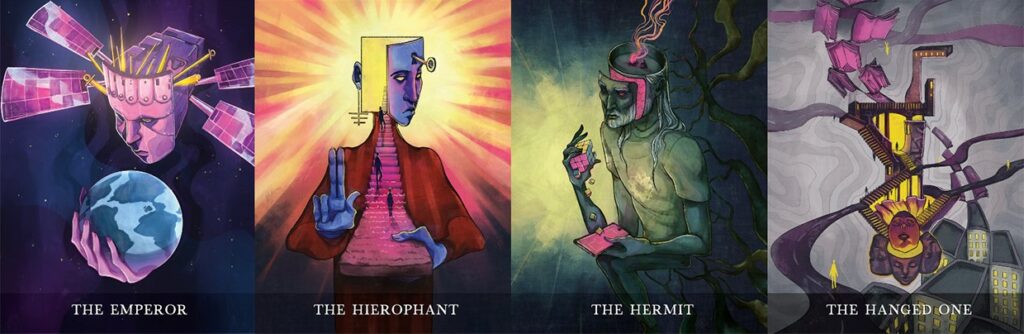
Besides tarot’s role in the mechanics, how does tarot exist in the world and society of the game?
Tarot is baked into every part of our setting, which imagines two worlds: the Apparent and the Esoteric. The Apparent is the mundane world we all inhabit, and the Esoteric is the one populated by Artists—modern wizards who use the tarot and their unique connections to the Art to pursue their agendas.
These Artists each walk a Road that dictates what their connection to the Art is like. There are seven Roads in total, and each is wildly different. In Divination, you’ll make a single Hero on a single Road, so you get incredible replayability from our game as you explore all seven Roads. Each Hero on an Esoteric journey will be a part of a rich world full of competing agendas and surprises, all drawn from tarot.
Matthew Muñiz
What has been the community’s response to Divination RPG so far?
We’ve been just blown away by the way Divination seems to really touch every single person that touches it. I think the shared Hero is a huge part of that, and particularly the way the game builds that Hero. Our character creation process isn’t something you do at home before you show up to play; it’s almost a game in and of itself as the players are led through a series of story prompts (guided by tarot cards, of course) to tell formative stories about their Hero’s life. It acts as kind of an icebreaker, but in practice it becomes so much more than that. We run a lot of games at conventions and events where you regularly have four strangers come together for a game, and we’re always blown away by how naturally the game fosters investment and trust as the players build their Hero together. It’s pretty magical.
Nyx Tesseract
Are there any plans for future expansions or other content related to the game?
The core book—the Divination RPG Guidebook as we’re calling it—is going to be really complete in terms of running and playing the game. But as Matthew mentioned earlier, there are these seven different Esoteric Roads to explore, and I think that’s the most likely place for some expansion. The core book will include setting information for each Road, but eventually we’d like to create a full campaign module for each one as well, complete with NPCs, antagonists and threats, and even an outline of story beats and options. Currently we’ve got a full module like that for one of the seven Roads, but that’s a place we’d love to continue exploring and even bringing in outside writers to create more of those modules.
Nyx Tesseract
What is one of the most creative things you’ve seen players or Diviners do with Divination RPG?
I think you could pose this question to our Discord community and get dozens of stories, so I’ll just share one very recent one that brings me so much joy. One of our Discord members ran across an event called “Capybara Week” where a gaming group was looking for GMs to run any system with a capybara theme. Our community member signed up to run a Divination game with the following pitch: “Four aspects of the mind of someone find themselves awakened one day inside the body of a capybara, by a twist of fate. Together, they will navigate this new life on the shores of the lagoon, deciding whether to adapt or seek a way back to who they once were.”
Nyx Tesseract
Obsidian Portal Campaign of the Month March 2024: Wrath of the Highborn
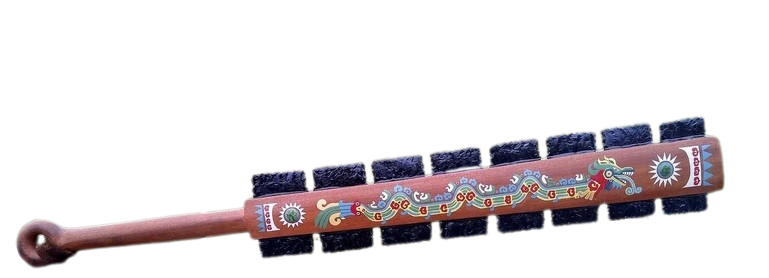
You search the lands for treasures and find them within the Obsidian Portal, in a land called Beregond. Like a glittering, magical jewel, one campaign shines brightly — it is “Wrath of the Highborn” by Keryth987! Within its many facets, you behold lands many decades in the making, fantastical stories written by a true entertainer, animated visuals and videos, and some surprises… is that a Klingon Bat’leth? Step forward into the not-quite-forgotten realms of this multi-award-winning GM to find out how he did it and how you can improve your own campaigns…
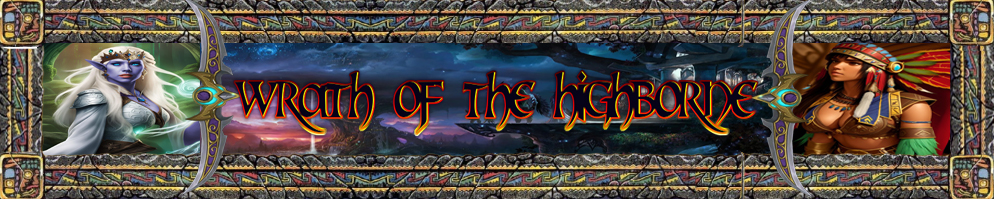
- Congratulations on your third, winning campaign! We know from your previous interviews that you’ve been playing since 1991 and have been using Obsidian Portal for almost a decade and a half, now. What changes in the world of gaming have you seen in that time which have had the greatest impact on you and your group?
First off, thanks. It’s nice to see what is a Labor of Love for me to get acknowledgement. Regarding changes in the world of gaming, I’d have to say the presence of computers and technology, along with the growing popularity of TTRPGs in general. When my group began playing it was 2nd Ed D&d and everything was pen and paper with dice, some miniatures, and a GM screen. Now everyone has a laptop or pad at their seat, with Obsidian Portal and D&D Beyond open as we play 5e for the current game (Other non-D&D Campaigns well, no Beyond being used of course). It’s also been nice to see gaming go from a fringe hobby to the popular activity it is now.
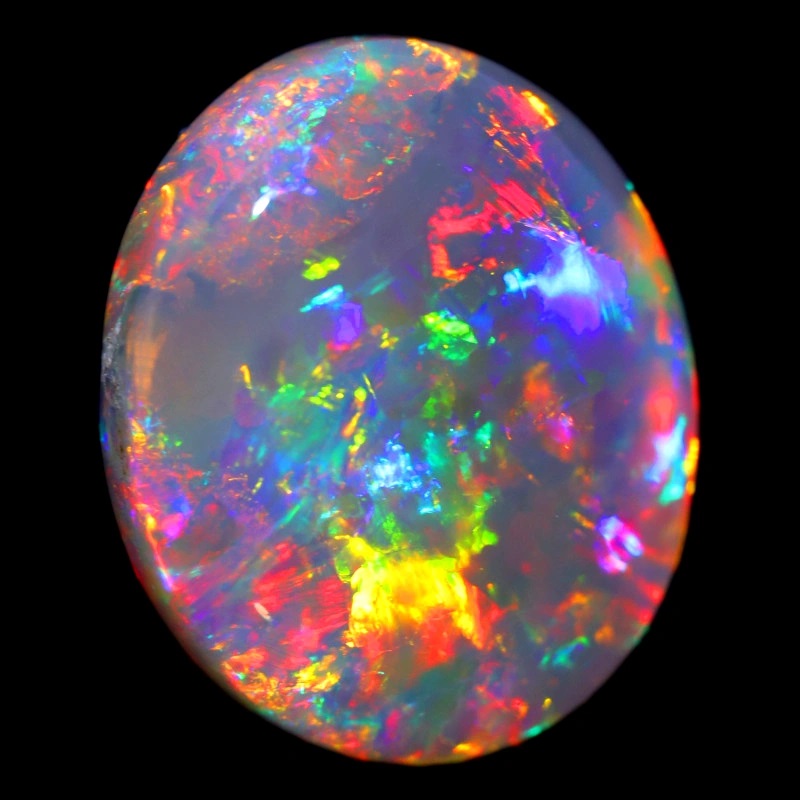
- The Chronicle section of “Wrath of the Highborn” details the journey of your players with some very excellent writing, from a simple village meeting to epic battles with dragons and demons. Can you give us a brief synopsis of the campaign, so far?
Well, this campaign actually comes out of my previous D&D Campaign, “A Rising Darkness.” In that campaign, the group of PC’s ended up needing to free a powerful elven sorceress to obtain something they needed to stop the Big Bad. That sorceress helped them in turn by also eliminating one of the lieutenants of the campaigns Big Bad, who just so happened to be the Elven Queen who had exiled her in the first place. She then went on to take over the city her rival once ruled and began building an army and playing conqueror, all while sending those she dubbed Her Chosen (and provided with a means of automatic resurrection should they die) with recovering some powerful magic relics called The Jewels of Aelis. The current party, through discovery, divine messengers, and prophecy, learned of this and have taken up the cause of defeating The Highborne Queen, recovering The Jewels of Aelis before she does, and destroying them.
The campaign began with them escorting the daughter of a prominent merchant from Goldshire, along the Sword Coast, across the Trackless sea, to Maztica, where they journeyed to Fort Flame. It was about the time of their arrival in Maztica, that they learned of the Jewels and The Highborne Queen’s goals. Since then the group has been following what evidence they have gathered as to where the various Jewels are, recovering them, and trying to find a way to destroy them, all while dodging The Highborne Queen’s Chosen, as well as some other enemies they have made along the way. As of the writing of this, they are off in Kara Tur, trying to infiltrate the Monastery of the Black Moon, to recover the last of the Jewels that have not already been recovered by either them or The Highborne Queen.
- “Wrath of the Highborn” is set in Beregond — a world adapted and expanded from Forgotten Realms material — and is also part of a shared set of worlds called “Chornalth” which are written and organized by other GM’s. Are there any challenges or advantages when dealing with interconnected planets and stories managed by other game masters?
Not really. We’ve been sharing “Chornalth” now for some time (The other two worlds being Liga – a heavily modified Oerth/Greyhawk Adventures, and Krynn – a highly modified Dragonlance world with some Dark Sun and others thrown in). Everyone in our group is pretty good at separating player knowledge form character knowledge, so when there is crossover, we are usually able to confer well and still not ruin the RP and sense of wonder while ensuring no one steps on another GM’s toes or messes something up in the other GM’s world. It also is a nice thing to have the shared world, as the last campaign on Liga (a Pathfinder Campaign) and actions taken by those PCs were what was utilized by the Big Bad of “A Rising Darkness,” to release his evil Over-Deity from his prison, which the events of, in turn, provided the villain for Wrath of the Highborne. It’s fun being able to play in one’s own sandbox sometimes as well, so, having the crossover ability allows that to happen both character wise as well as lore and interaction.
- Decades of work have gone into Beregond and it shows — one of your previous winning campaigns was set in the same world. Is “Wrath” connected in any way to the previous stories of “A Rising Darkness” or are your players treading on entirely new territory?
Well, as mentioned previously, the villain of “Wrath,” The Highborne Queen herself, was a sort of ally of the PCs in Rising, and two of the PC’s in “Wrath” – Shalryssia Peshlakai and Vimesh Damocles, are related to two PC’s from “Rising” – Sylmara Skystriker and Vito Damocles respectively. However, the party has covered far more territory than in past campaigns as they’ve also adventured outside of my modified Faerun, venturing to the continents of Maztica and Kara Tur, and even up into Selune’s Tears via spelljammer.
- Your site visuals are always outstanding and you’ve been incorporating video and audio components with your games for some time now. For GM’s who want to emulate those same techniques, what advice would you give or what digital tools and resources would you recommend?
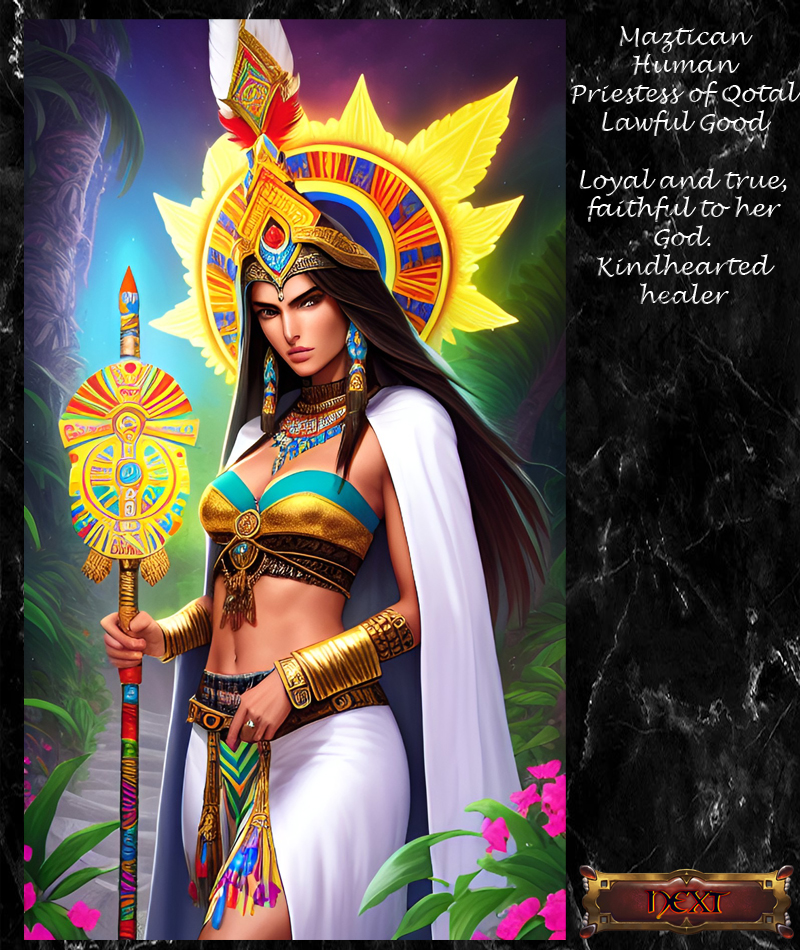
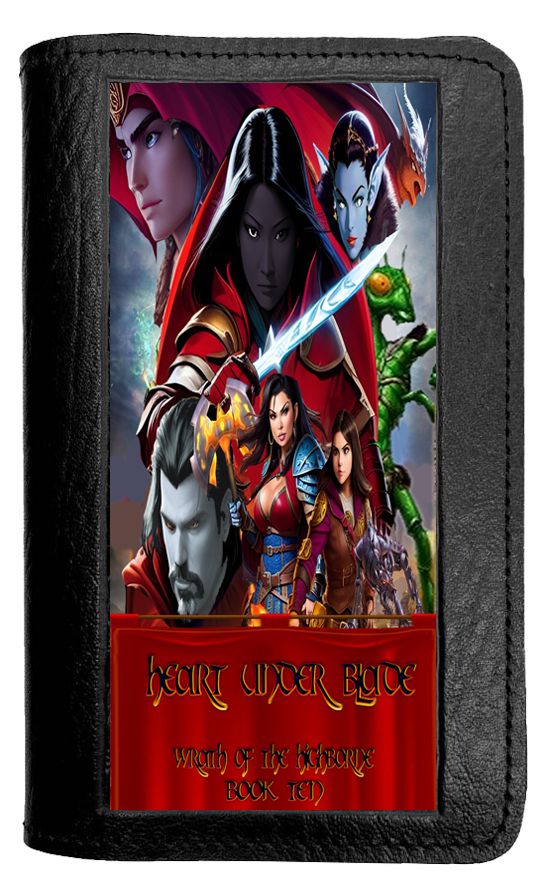
Well, the videos are made using Wondershare Filmora, and the music is usually edited as needed in Audigy. I’m rather proud of the two videos for “Wrath,” both the Teaser on the Main page as well as the Introduction/Opening Credits that is listed as the Prologue for each Book on the site). As for the artwork, lots of Photoshop work, and, I have to admit some AI tools for base images. – Specifically Dream by Wombo. I know many frown on AI art, but were I to rely on my art skills, everything would be stick figures and such. The AI lets me take my ideas and those of my players and turn them into images that can be used, though not a single on has not been manipulated via photoshop, whether it’s to create and entirely new image such as the campaign background (there are, according to the folder on my PC, 20 separate images utilized in that), creating the many Book Covers (angain 8-10 base images to produce the various components and then Photoshop to put the elements all together), to modifying the skin colors and eyes of images so Night Elves and Genasi and Half Drow match the player’s vision of their character. It also lets us let our characters not only be “This character looks like Alessandra Ambrosio as a Maztican Priestess of Qotal” as a text or vocal description, but actually be able to see the character’s physical appearance.
- You have extensive experience with lots of different gaming systems — story-driven like Dresden Files, more rules-focused like D&D, and everything in between. In your opinion, is the game system critical to the success of a campaign or is it just a personal preference?
To be honest, the system isn’t as important to a campaign’s success as much as those involved in playing it – both GM and Players. My group’s been blessed for many years to have had plenty of great players and storytellers. Some have since moved on from the gaming table either due to Real Life commitments or moving out of the area, and others have joined the group to take their place, but in a gaming group that meets regularly every week and has done so since the 90s, we’ve only had to ask 2 people to leave the group due to issues. The heart of any successful campaign is not the setting or the system, but the people playing the game.
- You don’t shy away from mixing and matching elements from different settings to get the kind of game you want, like bringing in a race from a futuristic TV series or movie into a fantasy game like “Wrath.” Have you ever run into any unexpected problems when introducing something like this? Is there a lot of prep-work involved to make it all fit together or can you just make adjustments after enough years of GM experience?
Well, in “Wrath,” adding in Mass Effect’s Asari was a bit of a challenge…but eventually I found a way to make it work based on the lore I’d created for Beregond and “Chornalth” in general. Others, the idea of how to bring them in just came to me suddenly. And some, like the Draenei and Night Eves of World of Warcraft, well, they were simply a modification of their origins as provided in their original source material. To be honest, the biggest problem caused by this would be a toss up between trying to figure out how to make Klingon weapons work stat-wise, or finding a location to place the Tharks of Barsoom. Seeing as how every race that has been added has been because I wanted said race available, it’s not been too much trouble. And now, with resources like OP and Beyond, it’s even easier as I am able to find resources for these already available to use rules wise.
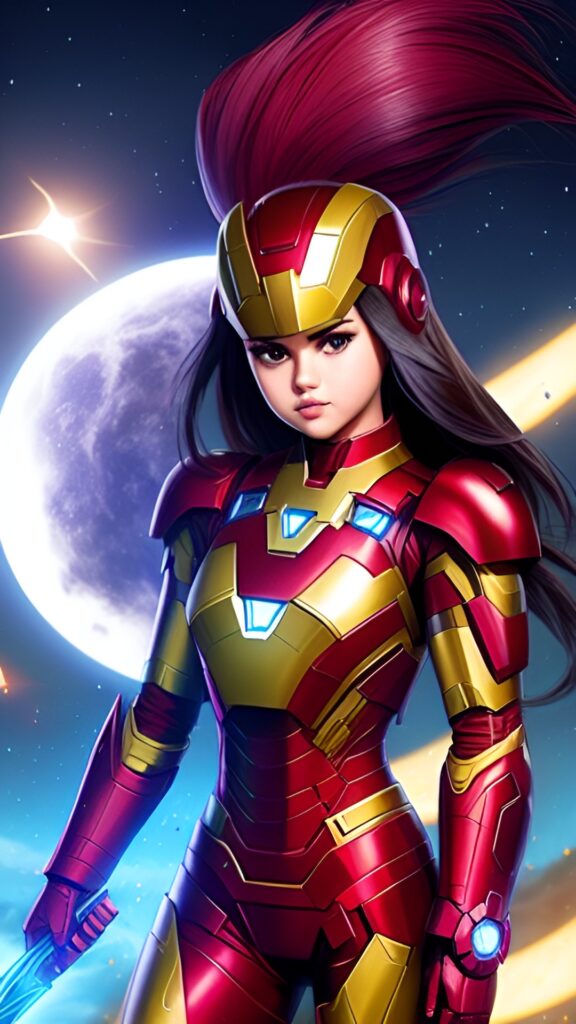
- Without giving too much away to your players, can you give us any hints about the future direction of “Wrath of the Highborn?”
Well, as mentioned they are working on retrieving the final Jewel that they know has not already been recovered. This is forcing them to infiltrate the Monastery of the Order of the Black Moon, a group of Shar worshiping Shadow Monks in Kara Tur (and something that came completely out of the background of one of the PCs, Koumori Shojo). This will bring the group into conflict with the Order’s Master Monk, as well as his followers and probably some Priests of Shar as well, After that, the players have indicated to me that they want to deal with the Red Wizard of Thay that once possessed one of the Jewels and that they have come into conflict with, as well as eliminating the remaining of The Highborne Queen’s Chosen. They also have a side quest for the Sha’ir Warlock in the group, Vimesh , to finish, as well as recovering the remaining Jewels from The Highborne Queen (which might cause them to destroy her). And then, finally, they need to discover the location of The Hall of Bones, to destroy the Jewels.
- Any plans for future campaigns that you would like to disclose? Or are you looking forward to a break while someone else runs the next game?
Well, I always am working on new campaign ideas. I have at least three concepts I’m tinkering with on OP now. But, the current plan is to resume our Savage Worlds campaign that was put on hold, then after that it looks like we might be playing a Planescape campaign, and one of the other players is hinting he is ready to start running the sequel to his last Pathfinder campaign. Honestly, the fact that pretty much everyone at the table is capable of and enjoys being a GM, is one of the reasons our group has lasted this long (the other being strong bonds of friendship). So, it looks like it will be a bit of time before I’m behind the screen again after this.
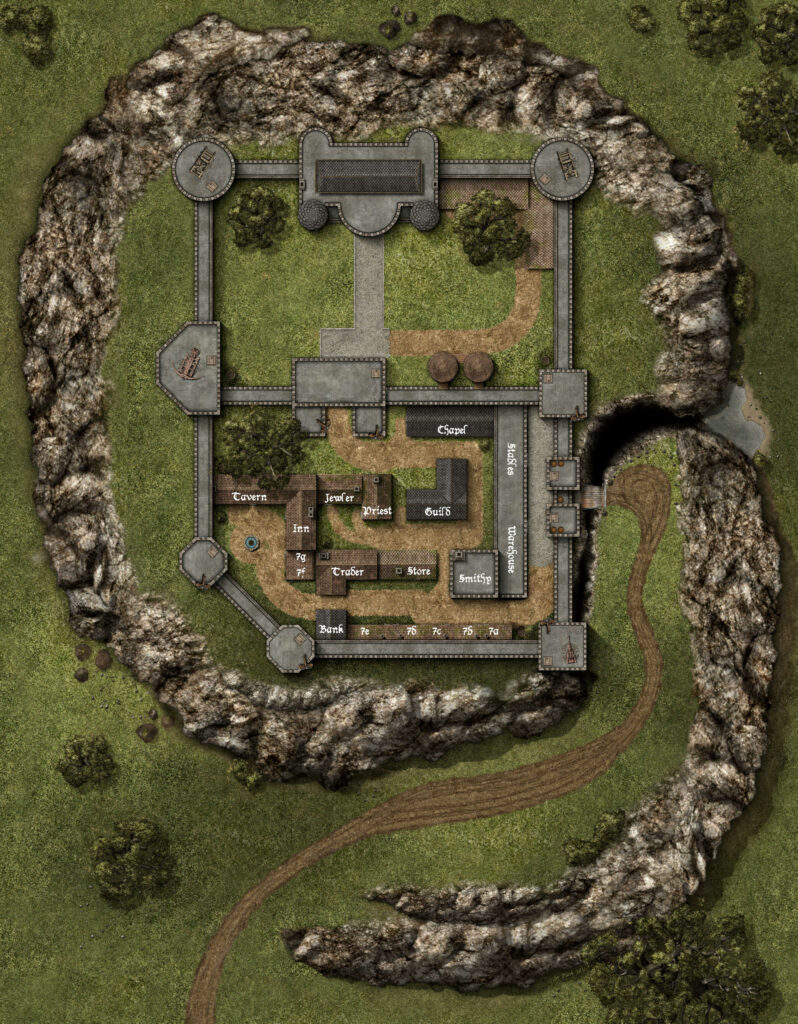
- Finally, Obsidian Portal readers are always hunting for helpful hints on how to better run their own games or build their sites. Do you have any particular tips or tricks that you would like to share?
Well, Obsidian Portal has been a godsend for me, enabling me to organize my thoughts and concepts and get them down somewhere solid, as well as to keep track of previous events in campaigns. As for developing sites themselves, Wolfhound’s tutorials over on his “Dresden Files Dallas” site are still a good place to start, as are the Obsidian Portal forums. However, the biggest help for me has been the Obsidian Portal Discord Server, where I have repeatedly gone for help and assistance on how to take an idea and make it work Textile/CSS wise (I’m looking at you Nuadaria and Abersade and others) and i highly recommend anyone interested in using Obsidian Portal go there, socialize, bring up their questions, and share their creations.
Alas, adventurer, our journey into Beregond is brief and too swiftly ended. With thanks to Keryth and his players, we turn our sights to other realms and future jewels of wondrous writing, clever coding, and delightful design. Do you know of a campaign worthy of notice? Perhaps your own, even. If so, send us word on the Community Forums or the Obsidian Portal Discord so that we may share the creativity of our gaming greats with everyone. Until next month, traveler!
Thank you to the community for making this campaign of the month possible! That’s all for now, join us on our next adventure April 1st, and don’t forget to nominate your favorite campaigns for our next Campaign of the Month!