Welcome to colonial Singapore in the year 1870, a bustling metropolis filled with abundance and vitality. But behind the façade of prosperity lies a city rife with terror and mystery. Unfold the adventure with GM Nicesociety and company in this Campaign of The Month: City of Shadows!

1. Tell us about the person behind the GM screen. Where are you from, what do you do outside of gaming, and where can we find or interact with you online?
First off, thank you for the recognition — I’m honored to be selected for Campaign of the Month for a second time. I’m originally from California, but I’ve called Tulsa, Oklahoma home for the last 26 years now. Outside of gaming, I’m a history buff at heart, which probably shows in how I run things, and I love getting outdoors to camp when I can, along with writing in general. Most of all, though, I love spending time with my wife and kids — they keep me grounded when I’m not busy setting terrorizing 1870s Singapore.
2. How did you get into gaming, or what first introduced you to the hobby?
I started gaming 41 years ago, at 13 years old, back before Dungeons & Dragons was anywhere near mainstream — that’s what I cut my teeth on. From there I branched out into GURPS, Traveller, BattleTech, Rifts, World of Darkness, and just about every other RPG system I could get my hands on. In the ’90s I discovered Cyberpunk 2020 and Chill, and I still love both to this day. I’ve had the same gaming group for the last 15 years, and we still play weekly.
3. Give us a nutshell summary of your campaign: what’s it about, and what inspired it?
The base system is Mayfair Games’ CHILL, though it’s been heavily modified from the core rules with a lot of expanded house rules over the years. I’ve also borrowed concepts from Call of Cthulhu and The Dresden Files where they fit. My group and I love period pieces, and we’ve been playing in the same extended universe across several campaigns now — among them another Campaign of the Month winner, Aether & Ashes, along with Yesterday’s Sins, From the Ashes, and SAVE Rome. Each is set in the same universe at a different time and place.
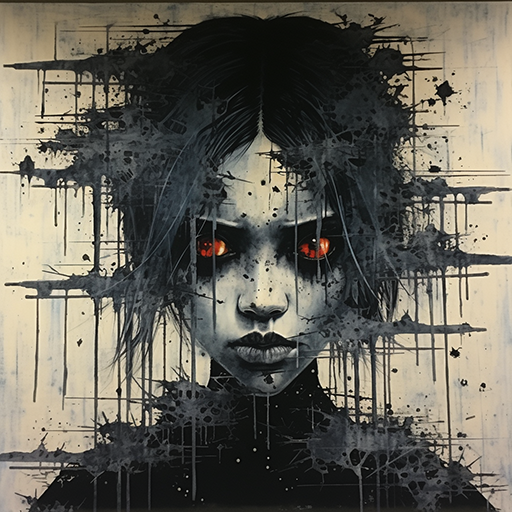
Our current campaign, City of Shadows, is set in 1870 colonial Singapore. It blends Eastern horror, paranormal investigation, a touch of colonial exploration, and some gothic leanings. We’re leaning hard into historical accuracy for the period, and it’s given us a fantastic cast of characters to work with.
4. What is it about this particular setting or world that fascinated you enough to build a campaign around it?
Colonial Singapore in 1870 is a setting that does a lot of the work for you as a GM. It’s a genuine crossroads — British colonial administration layered over Chinese, Malay, Indian, and countless other communities, each bringing their own beliefs, spirits, and ways of explaining the unexplainable. That gives me an enormous well of folklore and cosmology to draw horror from, rather than leaning on the same handful of Western monsters campaign after campaign. As a history buff, I also love the tension baked into the period itself — colonial power convinced of its own rationality, sitting right on top of a city that doesn’t believe in the same rules. That friction between what the empire thinks it understands and what’s actually moving in the shadows of the docks and back alleys is, to me, the most interesting kind of horror: it’s not just supernatural, it’s cultural.
5. What game system and edition are you using, and what guided that choice? What do you like most about it, and are there any downsides you’ve had to work around?
We’re running Mayfair Games’ original CHILL system, though at this point “edition” almost undersells it — it’s been rebuilt from the ground up with expanded house rules developed over years of play. All mechanics run on D10 or D100, which keeps resolution fast and intuitive at the table without breaking immersion to look up charts. I chose CHILL originally because it fit the paranormal investigation tone I wanted and it was what I already knew from the ’90s .and what I love most about it now is how easily it flexes: the core system doesn’t fight me when I want to layer in something new, whether that’s a piece of period-accurate folklore or a mechanic borrowed from another system entirely.
Honestly, the heavy modification hasn’t created the downside you might expect. Even with all the house rules layered in, we’ve kept things simple enough that new players can pick it up without much trouble — though it’s worth noting we’ve had the same core group for over 15 years, so it hasn’t been tested by a revolving door of new faces. If there’s a real downside, it’s that not a lot of people really know about CHILL at all.
6. Tell us about your players and your typical gaming sessions: how often do you play, and is it online, tabletop, or hybrid?
There are five of us total, including me as Chill Master. We play in person every Friday night, usually starting with a communal meal before diving into a solid four to five hour session. As adults, real life doesn’t always allow for marathon sessions the way it might have in our twenties, so our campaigns tend to run long — a typical 13-episode arc takes about a year and a half from start to finish.
Obsidian Portal has been an invaluable tool for us throughout. It lets my players go back and review NPCs, locations, and details they’ve uncovered as the campaign unfolds, so nobody’s relying on memory alone between sessions. That keeps everyone focused and engaged at the table instead of spending game time trying to remember who someone was or where a clue came from.
7. Tell us about the central characters (PCs and/or key NPCs) in your campaign. What roles do they play, and how do your players bring them to life?
Our party operates as the Society of Oriental Studies, a name that gives them cover for exactly the kind of poking around dead men’s affairs that gets people killed in polite company.
Joe Gannon is our cowboy — a hardened survivor with a dark past and an instinct for evil that’s saved the party’s collective necks more than once. He’s also quietly running from Confederate gold he brought with him from the war, which has started catching up to him in ways he didn’t see coming.
Mei Lian is the shadow queen of Singapore’s criminal underworld — publicly a brothel manager, privately the real power behind an empire she built from nothing after being sold into servitude as a child. Nobody in the party plays the long game quite like she does.
Nathaniel Blackwood is a smuggler with a gentleman’s polish and a criminal’s instincts, moving opium and secrets through the docks with equal ease. He’s charming enough to talk his way into a room and dangerous enough that you should worry about how he talks his way out.
Phinn Farrington is our legal authority — an English attorney carrying guilt, duty, and a very literal scar from an encounter with something that shouldn’t exist, picked up during his Navy days in the Mediterranean. He brings order and respectability to a party that badly needs both.
Dr. Simon Williams walks the line between rationalist and mystic, a physician who lost everything to disease and was saved by methods Western medicine has no explanation for. He treats what official Singapore won’t acknowledge exists, and he’s usually the first to notice when something in the room isn’t breathing right.
And rounding out the party is Alice Brown, our thief — orphaned young in London and raised in a den of skilled pickpockets who taught her that a well-placed hidden pocket can be as valuable as any lock pick. What looks like simple thievery hides a far heavier truth: Alice serves a master whose nature is anything but human, and whose appetite for treasure has made her one of the sharpest, most resourceful operators in the party. Quick-fingered and quicker-witted, she’s just as likely to spot the ghost in the window as the unlocked door beneath it, and there’s rarely a room she can’t get into — or out of — without anyone noticing she was ever there.
Considering the character descriptions, and the fact that the players have all written their own backgrounds, the flair and creativity the players bring is self-evident.
8. What tools did you use to design or customize your campaign’s layout, banner, or overall visual presentation? What advice would you give other GMs who want to do something similar?
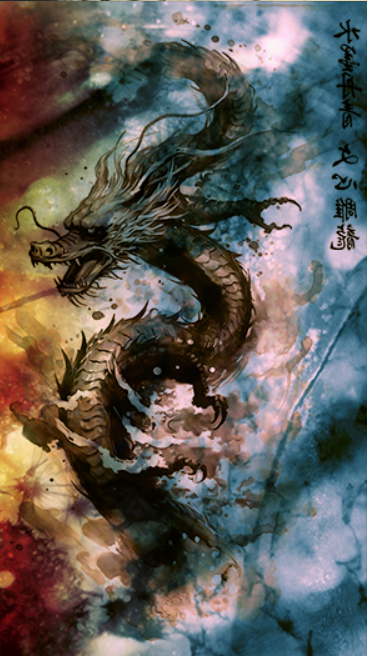
For images, we use a combination of Midjourney and Photoshop, with a lot of attention paid to keeping everything period-accurate. I also lean on Claude to help fact-check historical details and maintain authenticity, making sure the flavor of the campaign reflects the actual history of 1870s Singapore rather than a vague approximation of it. On the CSS side, a lot of what we use was built through trial and error — adapting code from other sources and reworking it until it fit. My wife, who works as a software architect and programmer, has been essential to that process; her help with layout and image integration has shaped the visual identity of the campaign as much as anything I’ve done myself.
My advice to other GMs is simple: details are what sell it. Small, consistent touches matter more than any single big flourish — a complementary color scheme, a visual theme that stays consistent scene to scene, and a willingness to give each campaign its own artistic identity rather than reusing the same look project to project. As for CSS specifically, don’t be afraid to go find something you like from someone else’s work and experiment with it. You don’t need to build from scratch — find a foundation that speaks to you and make it your own.
9. Where do you draw inspiration from when building your campaign, whether it’s literature, film, other games, or something else?
I draw from all sorts of cinematic styles — I actually imagine each campaign as a television season, thirteen episodes with occasional special “pilot” episodes labeled Episode 0. Books have a huge influence too. I’ve mentioned Jim Butcher’s work already, but I also draw heavily from science fiction, mysteries, and classic literature — Sir Arthur Conan Doyle, Agatha Christie, Bram Stoker, and Mary Shelley all shape how I think about mood, pacing, and character.
I also build a soundtrack for every session. Music does a lot of heavy lifting for pacing and tension at the table, and I lean toward instrumental pieces that fit the tone of the setting — a lot of Hans Zimmer, Ramin Djawadi, and others in that same cinematic vein.
10. What have been some of your (or your players’) favorite or most memorable moments in the campaign so far?
One thing we love doing is fan service — reintroducing a character from another campaign in the same shared universe. At one point we brought back a major villain who had been central to our 1936 game: a vampire lord, old enough and powerful enough that six decades backward was nothing to him. Dropping him into 1870s Singapore, decades before my players had ever encountered him, still landed like a gut punch. They nearly lost their minds when they made the connection.
But honestly, my favorite moments are the ones that build slowly — when the group has pieced together the clues themselves and really had to work for the resolution. We’ve had a handful of those moments over the years, and they’re always the most rewarding for everyone at the table, myself included. There’s nothing quite like watching a table full of players connect the dots on their own and realize what they’ve uncovered.
11. Without giving too much away to your players, what’s ahead for the campaign, or what are you most looking forward to?
Without giving too much away — we’re running several character-focused story arcs concurrently alongside the main seasonal arc, each one slowly building toward its own climax. Every player has a personal thread that’s been quietly developing in the background, and when those arcs finally land, it’s going to be huge. Each player gets their own payoff, I get mine as the one who’s been building toward it all along, and the main thread itself delivers a reward for the group as a whole. It’s the kind of layered payoff you can only really pull off with a table that’s been together as long as we have.
12. How did you discover Obsidian Portal, and which feature do you find most useful, whether for campaign design or for active play?
I’ve been a member since November 18, 2015 — at this point, I honestly don’t remember the exact details of how I first found Obsidian Portal, though it was most likely through an RPG forum somewhere along the way.
My favorite feature is easily the character and NPC pages, especially now that I’ve figured out how to categorize them in ways that actually work for a long-running campaign with a huge cast. The wiki pages have been just as invaluable for tracking places, lore, and ongoing threads. And being able to customize pages with CSS and HTML has been a great feature in its own right — it’s given the campaign a visual identity that feels genuinely its own, rather than looking like every other page on the site.
13. How long have you been a member of Obsidian Portal, and what keeps you coming back?
Asked and answered.
14. As always, what “pearls of wisdom” or GM insights can you share with the community this month?
Give your players real opportunities to contribute — not just choices within a plan, but the chance to genuinely shape it. Be flexible enough to pivot when a good idea comes up unexpectedly and be willing to scrap entire sections of your prep if something better emerges at the table. Details matter, so keep good notes, but don’t let them box you in — sometimes the best thing you can do is let go of the plan and go with the flow. At the end of the day, it’s about friends, fun, and collaboration. Have a blast, and don’t take it too seriously.
Thank you to the community for making this campaign of the month possible! That’s all for now, join us on our next adventure November 1st, and don’t forget to nominate your favorite campaigns for our next Campaign of the Month!