


OBSIDIAN PORTAL CAMPAIGN OF THE YEAR 2024- WINNER’S ANNOUNCED!!!!!

A HUGE CONGRATULATIONS TO OUR WINNERS!
FIRST PRIZE:
KERYTH987 WITH WRATH OF THE HIGHBORNE!!!
RUNNER UP: HUMANNOYD with CYBERPUNK 2077:FATE ACCELERATED!
(winners will be contacted by OP staff to connect you with your prizes)
It’s about that time again- time to celebrate some of the very best of our OP Community! 11 great RPG sites, each awarded the prestigious “OBSIDIAN PORTAL CAMPAIGN OF THE MONTH” award in 2024, stand in line to be considered for the OBSIDIAN PORTAL CAMPAIGN OF THE YEAR 2024! And YOU get to decide!
THE DETAILS:
Voting will open Monday December 2nd, is open to ALL, and will close Monday December 9th. The winner will be announced on Friday December 13th. Check Obsidian Portal, Facebook and Twitter for further details.
THE CONTENDERS:
January 2024: More Things in Heaven and Earth
February 2024: Cyberpunk 2077 Fate Accelerated
March 2024: Wrath of the Highborn
April 2024: Season of Strife
May 2024: The World of Elurah
June 2024: The Planewalker’s Guild
July 2024: Ars Magica, Umbra Quercus Saga
August 2024: Freeing Phandalin
September 2024: Echo of The Mists
October 2024: Aloft!
November 2024: Dark Conflagration
THE PRIZES:
This year we have some AMAZING sponsors including Paizo, Killjester, Crit Academy and Syrinscape!
1st Place
- 1 year subscription to OP
- Paizo: Digital copies of Pathfinder Second Edition and Starfinder First Edition Beginner Box PDFs as well as a PDF of Abomination Vaults (Pathfinder Second Edition or Dungeons and Dragons 5th Edition, winner’s preference)
- Killjester: A physical Copy of Sanctimonious Slimes vs Expired Epicures
- Crit Academy: Digital Copy of Memorable Monsters
- Syrinscape: A subscription (Supersyrin trial vouchers, each for two months x 2)
Runner Up
- 1 year subscription to OP
- Killjester: A physical Copy of Sanctimonious Slimes vs Expired Epicures
- Syrinscape: Syrinscape: A subscription (Supersyrin trial voucher, for two months)
Obsidian Portal Campaign of the Month November 2024: Dark Conflagration

“In a system on the Terra side of the Great Rift this group in service to an Inquisitor must prove their worth through grit and valor to hold back the closing despair. Join them as you pour through this restricted Inquisitorial system and read along with their adventures in their own words.” Please join us in this month’s interview for COTM Dark Conflagration with our GM Medacia and Kenkewl00!

Tell us a little about the people behind the logs. What’s your group like, how did you all start playing together, and what drew you to Warhammer?
We have a group of 3 full time players, one part time player, and the GM. All of the players are lifelong TTRPG players from various professional backgrounds like healthcare, finance, baking, and theater. The GM tailored a short list of concepts for each player and let them choose their favorite. You can see the flavor of the character and the style of the author in each entry into the Inquisitorial Journal System.
The group has been going with varying members for over 8 years, starting with a long-running Vampire the Masquerade game. A few of us got into (or back into) WH40k about a few years ago when they came out with the box sets for pre-built armies, and enjoy the more miniature-focused gameplay.
Warhammer 40K’s atmosphere of hopelessness populated with great acts of heroism is what drew the GM to the system. The grind of ten millennia of slow collapse and bureaucracy combined with the terror of the events surrounding the Great Rift create a need for sacrifice and courage to fight back the encroaching darkness.
How often do you play, and how do you generally do so (online, in-person, hybrid)?
In-Person, once every 2 weeks is the schedule. Occasionally we’ll miss a scheduled session due to real-world obligations or add a session in-between when we can.
For folks that are perhaps less familiar with the world of 40k, where does your game fit into the grim dark?
It’s set after the universe got split by the Great Rift as Cadia fell, in a GM-created star system on the Terra-side of the divide. It’s inspired from various events going on throughout the 40K universe in the early part of M42. The players are part of a small group in the service of an Inquisitor in the Consus System, near the Pariah Nexus.
I love the various art on your site, from Characters to Items, Adventure Logs to Wiki Pages. How do you create/source the artwork, and do you have a secret for keeping the feel so consistent across your whole site?
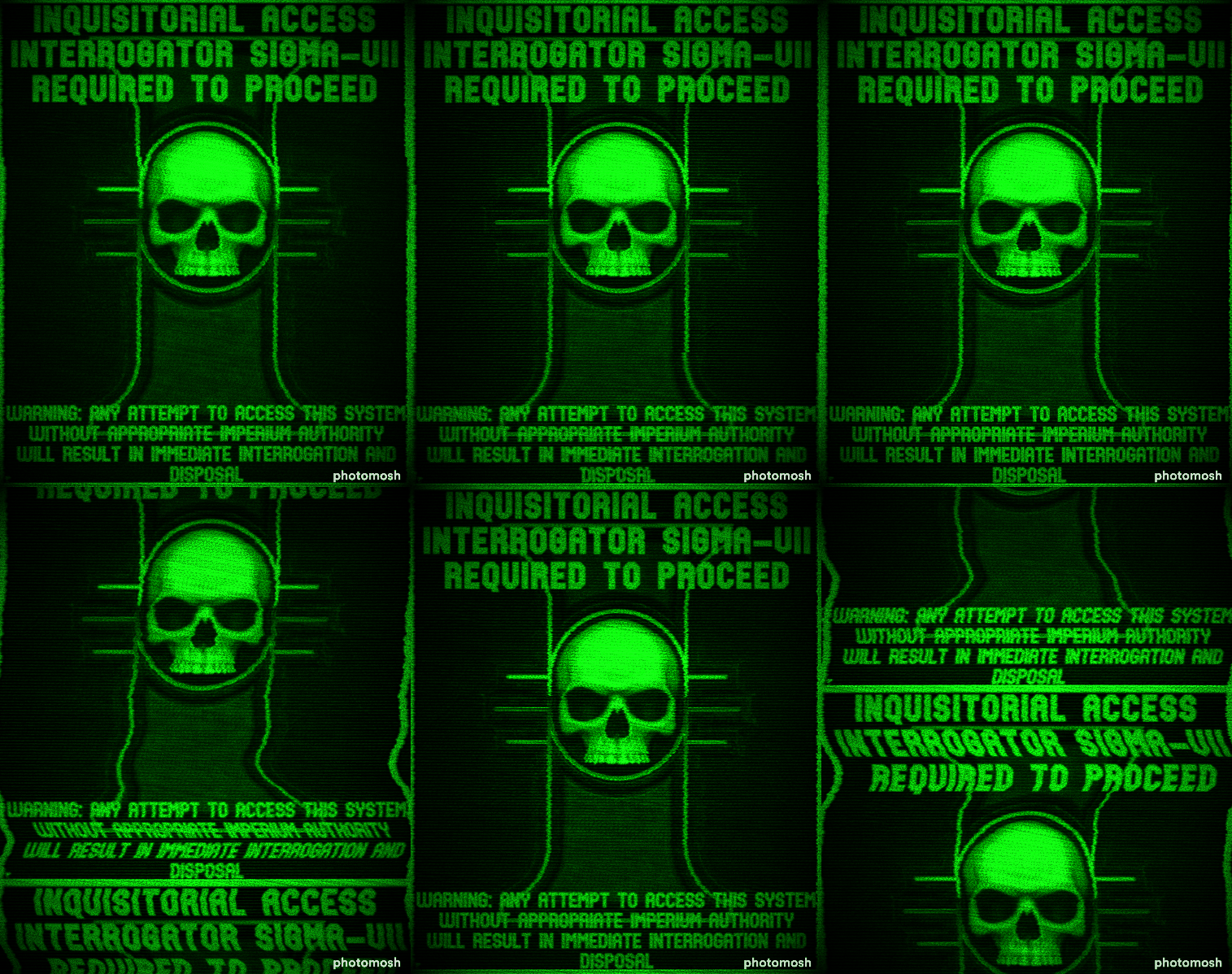
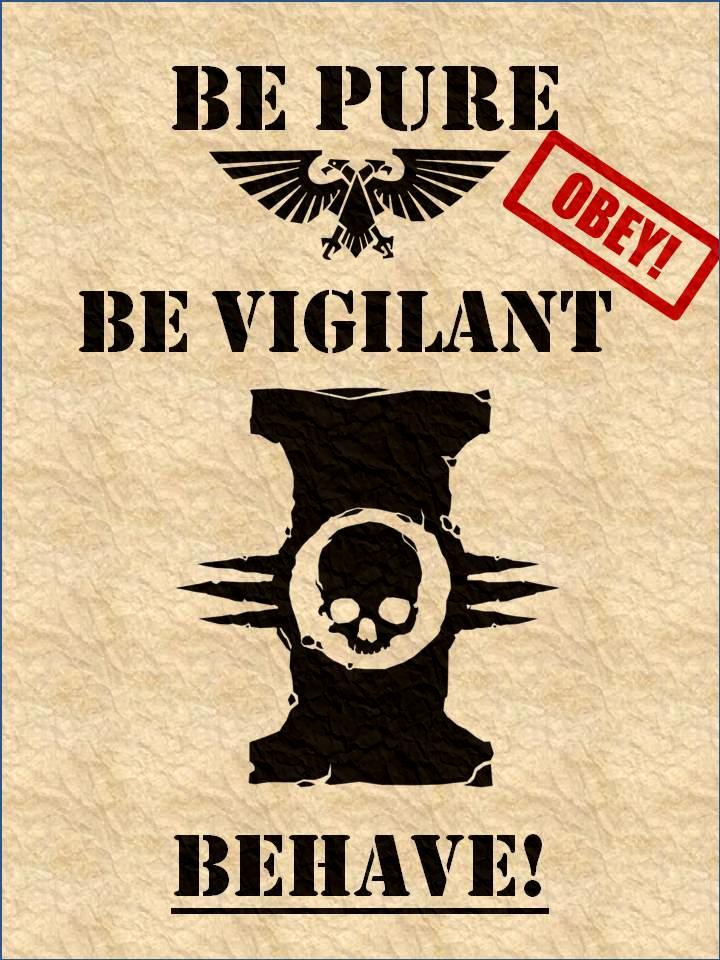
I chose a stylized realism for the overall theme. I sifted through many AI art sites and styles before settling on one that captured my look. I’ve used a lot of iterations of a single concept before settling on any image that makes its way to the site. As I learned more about how the AI responded to particular prompts I’ve been able to achieve my desired outcomes more efficiently. I’ve also tracked down specific pieces (like the propaganda posters) from existing art and included my favorites in entries or slideshows where appropriate. I’ve created or modified images and run it through a program that creates short videos for the cover page to create a more dynamic feel, hoping to give the viewer a more engaging experience like they’re breaking in to the Inquisitorial Journal System.
As you’ve been on Obsidian Portal for quite some time, what is your favorite campaign wrangling feature?
I have mostly used OP as a way to stay consistent as a GM – once its online, it’s easy to reference and I don’t have to deal with lost papers. I should probably use more of the functions truth be told. I like the session reminders, and the forum to post little things in-between sessions to keep players and fans engaged.
Swapping to your intense site for a moment, where did you come up with the style design you have?
I want to give the OP a more exciting feel than the standard campaign designs that I see. I want it to be an experience, and I want the players to sign in and make updates feeling like their characters journaling their horrifying experiences fighting the Chaos cultists. I also want fans to get excited to see the next update, to present a taste of how things would look in the collapsing world of 40K. I want them to feel like they’ve snuck into this secret archive and they’re watching the story evolve from afar. To inspire them to create their own star system, their own Inquisitorial warband and fight off the wickedness of a violent, indifferent universe.
I love your adventure logs, I see that one of your players is involved with them as well. How do you split that load?
Mendacia handles most of the details of the Logs – the game notes, the notable events/locations/people, that sort of thing. kenkewl00 gets involved by occasionally putting a placeholder Log in there for Mendacia to edit later, since one way to encourage player involvement we are utilizing is to give out in-game goodies (extra wrath tokens, given our system) for players to put notes from their characters perspective. kenkewl00, as a normally-GM type, tend to put more detailed notes than others, but the Ogryn puts a lot of time in to write the log in a low-int style since they are “in character journals”.
Back to your game, can you share an example of a particularly memorable moment from your campaign?
Lots of epic moments for a campaign that’s only six months old, plenty of acts of heroism and bloody conflict that I could reference here. However, I think the bright spots in this violent, grim saga are the personal exchanges between the Inquisition Pact members. The intro session for Roland (The Navis Imperialis Pilot) and Smasha (Militarum Ogryn) cemented their dynamic and it led to some great roleplaying. In the Calamitous Intent session this plays out with the Ogryn’s massive bulk and clumsiness enraging an entire bar full of patrons, effectively chasing him with torch and pitchfork. A few blocks of pursuit later the noble-born Pilot puts himself between the Ogryn and the crowd and has to use every trick up his sleeve (charm, bribery, his Navis uniform) to calm them. There’s a sense of obligation between Roland and Smasha, just the prior session Smasha had put himself between Roland and the blades and lasers of cultists.
Let’s round this out with one of our favorite questions for our featured GMs! If you had a secret sauce for running a great game, what would be the most important ingredients?
1. Don’t over-prepare. Set up the big detail points, but let the players choose how they get there. They’ll almost always surprise you.
2. When you’re getting started, don’t fall in love with your NPCs. Put out a large amount of them initially, and see which ones that players gravitate towards. I’ve had so many throwaway NPCs that wound up being central to the story because they meshed so well with the troupe.
3. Critical successes can lead to epic moments. So can critical failures. On both sides of the table! Make the most of these opportunities to engage the table and make memories.
Thank you to the community for making this campaign of the month possible! That’s all for now, join us on our next adventure November 1st, and don’t forget to nominate your favorite campaigns for our next Campaign of the Month!
Update Post – October 20, 2024

Hail, Portal People!
The season clock has chimed again, so it’s time for another reckoning. See below for all of the new features and bug fixes that were added to OP since the previous Update Post.
If you have any questions, comments, or feedback, feel free to post them in the Community Forums, or email support directly at [email protected].
Obsidian Portal Campaign of the Month October 2024: Aloft!

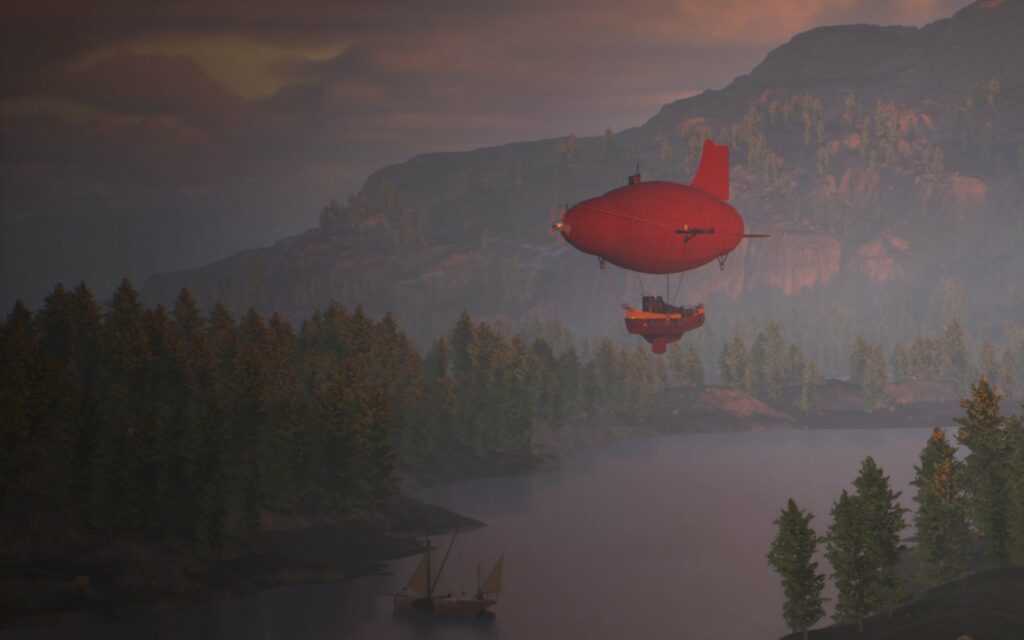
Join the ranks of great literary heroes like Francis Grimm, Tristan Thorn and Darian Frey, fly aboard a merchant airship and explore the world from above! In this homebrew world (and system!), the heroes embark on a great journey that takes them high above the clouds. The characters are deeply entrenched in this medium-fantasy world, with their attachments and goals guiding them as they plan and prepare for their future. Detailed, layered maps, deep roleplay and memorable antagonists – all are waiting for you inside GM rus1001‘s adventure, Aloft!
First off, feel free to tell us about the person behind the GM screen. Where are you from? What do you do aside from gaming? Alter Egos? Life partners? Family? Where can we interact with you on the internet?
I’ve travelled the world and done many jobs – some of which most people only see on TV. I try to tell myself that it’s not just about bringing authenticity to my tabletop and live roleplaying games. Sadly, as a saggy 50-ish adult with a kid, I’m not likely to be making it into space anytime soon, but I’m content with what I’ve done and where I’ve been.
I try to match my fantasy life with some real-life adventure; thus wild-camp and Canadian canoe in Scotland – a dawn on a Scottish loch and watching sea-eagles hunt is as close as I’ll get to my game for real. If anyone wants tips on visiting Scotland, feel free to contact myself through Obsidian Portal.
Tell us about “Aloft” in a nutshell. How did you design the world? What was your inspiration?
Aloft is a medium-fantasy game, where the players have decided to take a gift of a ridiculous airship and found a trading company.
In the last ten years, I’ve run some lengthy war-campaigns that stretched between players in two continents. They were exciting but quite serious games. I wanted something more whimsical. And I was inspired by the latest D&D movie – what fun!
Aloft takes me back to delivering great locations, great NPCs, complex and layered plots to the tunes of Led Zeppelin. Just like I did in the ‘good-old-days’. But with more adult themes than the teenage me would ever had dared.
How regularly do you play, and where do you play? Tell us about your current group of players.
I play online every two weeks, using Zoom. And four times a year in person for weekends, or a whole week on a small Scottish-island rocked by the Atlantic rollers.
The core of my players have been in my games for about 30 years. I play with great friends. But there is always opportunity to add new chums. I had a diverse and wonderful group after co-founding the Gulf Roleplaying Community (https://www.facebook.com/groups/gulfroleplayingcommunity/).
I interview rigorously for my games, as I know they are marmite. If you love them you’ll stay for years or decades; if not, you’ll be gone in three sessions. For people who know me they’ll compete to join the campaigns if a space comes up.
What game system are you using? What made you choose that system? How does that system complement your campaign?
I started life with AD&D 2nd ed. Stayed with that for years, and now run my own homebrew system. It has everything I need: narrative based PC build, and no initiative in combat.
The system allows me to run nerve-wracking combat, either at the personal level or to enact huge battles and campaigns at various levels. More importantly, the system allows me to bring the past 6,000 years of history of my campaign to reality through rules.
Your landing page puts a lot of emphasis on the flying ships, including propeller gifs. It gives a sense of exploration and wandering. Can you tell us what role exploration takes in your campaign? How do you handle it?
Exploration of ideas, themes and places is at the heart of any roleplay, and with my shift from a ‘serious’ campaign to something zestier I’ve given myself space to play as a ref. I also got used to travelling PCs with my sc-fi campaign.
With a whole world before them I rely on my players being the veterans they are. They have fully formed PCs with motivations and attachments to the world (baby dragons, family and businesses); therefore, they don’t just ‘fly off’ randomly. They are also adults, and know that I have a life too, and need a bit of planning to map out and deliver regions. Younger-in-service and more impulsive players are kept in check by the oldster’s social-norms.
And I’ve given myself the luxury of a long campaign. Aloft is likely to last for another 4-5 years. My players may think they have settled in the, Kingdom of The White, but they have much, much more exploration to enjoy and be challenged by.
In your maps section, you have several identical maps with different layers on them. Can you please tell us a little about your campaign setting and the use you make of the map section?
I have two brilliant players who manage the uploading and meta-tagging of OP. They also manage the maps. The maps are used extensively by players/PCs during the games. They are used for different levels of planning, understanding the world, and acting as a prompt and a reminder to the politics of the world. My players use them in and out of time frequently.
How much time is usually spent preparing your game sessions? Describe a typical session.
I must balance my sessions between those who want to swing a sword and roll dice, and those that want political and adult-themed intrigue.
With my DMing experience the more romantic, sexy, political, moving, and personal angles I usually sketch out when doing sport, and they will end up as three bullet points, written in twenty minutes and will last for about 12 hours playing.
Sadly, online roleplaying is much more demanding of a ref’s time. As soon as you want combat or dungeons, you cannot just draw them on a white board. It’s much easier to write for a week of face-to-face than it is for two months of online sessions.
And a lot of that is my fault. I want to make the world engaging and real for the players. I want them dreaming of it and lying awake after sessions obsessing about what has just happened. Therefore, I will construct my own maps in Fractal Worlds, Campaign Cartographer and Photoshop.
I do a lot of 3-d modelling as well. Most of my PCs I will render out in Daz3d, which despite its appalling misogyny, is still a great resource.
On the more creative side I will build very simple models and animations to illustrate a session, such as in Sketchup with a castle. If I have time I will render in Unreal Engine 5, which allows me to prepare videos such as ‘sneaking’ around Sturmburg or even to quickly render out on the fly when players choose a different route with the balloon. You’ll note I don’t do NPCs – UE5 is awesome, but I don’t have the time to master that – yet. I have managed to make one with a moving dinosaur, I’ll post the link here, but I cringe a bit as it’s only my third animation in UE5 and clunks – but it mesmerized my players.
What I do is to show my players my dungeons. These are quite rough and ready, I’ve often only a few evenings, say four, to build or buy models, learn how to use lighting, animation and texturing in Unreal and then pose and photograph them. The players love it and said ‘dungeons’ and the like utterly grip and involve them. My favorite is probably this, with this being a close second (for scale.)
With many of the zeppelins I will sometimes create ‘playable’ UE5 levels that my players can download and run around the interiors – as I said I want my players as immersed (and obsessed) as me.
In your wiki section, you link to several other campaigns. Can you please explain what these campaigns are and how they are connected to Aloft?
Aloft sits as one of my current campaigns in a world I have been reffing and creating since I was 12. I got ‘serious’ about the internal logic of my world at about the age of 21. Since then, no matter where I have lived, or whom I have reffed, I have played in that world. My campaigns tend to last for 4-12 years in real life, with PCs retiring into my stable of NPCs. My world has been shaped by my players and me for about 30 years.
It has great mapping and moons and its technology has evolved over the decades (out of game) and centuries and millennia (in game – I’m not that old).
I am currently running another campaign that is running concurrently with Aloft, which is set in a major city of the world.
How long have you been using Obsidian Portal? What brought you to the site and what keeps bringing you back?
I have been using OP for over 11 years, and I love it. It was the most prominent site like it at the time of joining, and it has weathered well.
If you had to pick just one thing, what would you say Obsidian Portal helps you with the most?
Helping old and new players explore, in their own time, or during time-ins the rich and decades old world we have been building.
What would you say is the biggest highlight of your game so far (please also provide images and links if possible)?
The biggest highlight of my game has been having the PCs have their own baby dragons for the first time in any of my campaigns. Watching my players get competitive and protective of them has been a joy to watch.
Okay, as a last question, we always ask for the GM’s “pearls of wisdom”. What GM insights can you offer the community this month?
Use great music. I have over 70GB of music that I use in my games. Get to know your music, make up playlists for general types of play (sneaking, battle, the tavern), and then run special sessions to the second using a soundtrack of your own making.
Thank you to the community for making this campaign of the month possible! That’s all for now, join us on our next adventure November 1st, and don’t forget to nominate your favorite campaigns for our next Campaign of the Month!
Obsidian Portal Campaign of the Month September 2024: Echo of The Mists

Travel into this dark fantasy world – tune into the dedication of carefully crafted set up designs and story telling, by joining us in talking with shawnrstaub, the GM behind Echo of The Mists, the winner of our Campaign of the Month for September 2024!

First off, feel free to tell us about the person behind the GM screen. Where are you from? What do you do aside from gaming? Alter Egos? Life partners? Family?
Answer: Where can we interact with you on the internet? I am originally from West Virginia until my wife and I moved to Maryland for work and to start our family. My wife teaches 2nd grade and I work as a branch manager at a bank. Before COVID, I played bass in a heavy metal band themed around the “Legend of Zelda” game series called “Master Sword,” touring around the country playing the nerdy convention circuits. I retired from that life after my oldest daughter was diagnosed with cancer, which I’m happy to report, she has made a full recovery and started 2nd grade today at the school my wife teaches. Now, I spend my free time with my family and building terrain for my D&D games as well as 3D resin printing.
How regularly do you play, and where do you play? Tell us about your current group of players.
Answer: My D&D group is actually a really great story. I only started playing D&D around 2021/2022 when I was invited as a player to a game hosted by my former band mate and her husband and two other couples (sadly, my wife has no interest in TTRPGs). I’ve always enjoyed building and creating cool nerdy things (in my Zelda band, I learned how do leather working so we could wear custom armor on stage). So for that group, I built a custom gaming table with a 55′ TV screen in the center so we could use digital maps – this was before I started building 3D terrain.
After posting pictures of my gaming table, I was messaged by two separate Fraternity Brothers that I’ve not spoken with in nearly a decade telling me how much they liked my table. They shared with me that they had never played D&D, but never had a group or the confidence to try it out. So I reached out to 2 other Fraternity brothers who I knew played, and the five of us started a game with myself in the position of DM! What started out as a Ravenloft one shot turned into an full-blown campaign that continues to this day. Life is busy, however, so we only get to play once or twice a month, alternating between in person and digital games depending on everyone’s availability.
Tell us about “Echo of the Mists” in a nutshell. How did you design the campaign? What was your inspiration?
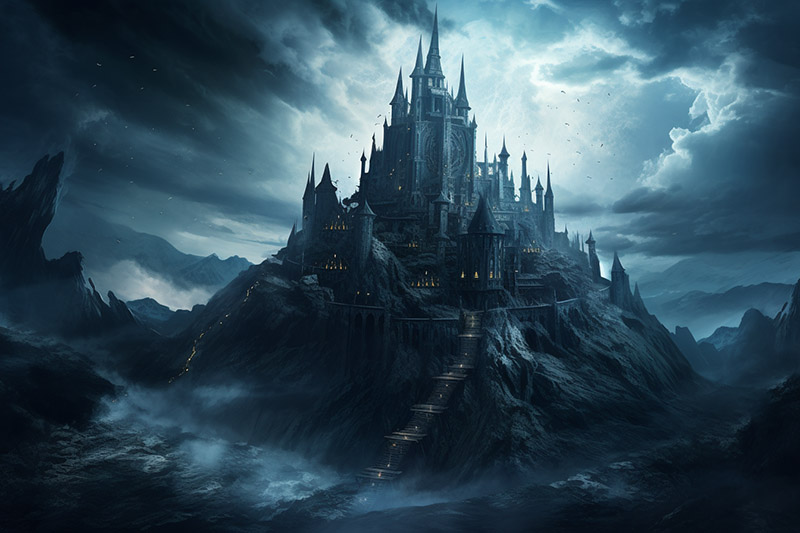
Answer: Echo of the Mists is a homebrew campaign based in the Ravenloft setting combining classic Ravenloft lore, 5e lore, or homebrew content (whatever speaks to me or works in the moment). Although it has yet to be revealed to my players, they will eventually learn that an “echo” refers to the manifestations of specific, powerful entities that exist throughout the multiverse of D&D as “variants” of those entities. One such entity has unwillingly trapped itself within the cage of Ravenloft and is using its power to draw in (and devour) its own echoes in an effort to gain more power and escape.
Why did you choose Ravenloft as the setting for your campaign? How does the setting complement your plot?
Answer: I love vampires, werewolves, ghosts, and all things spooky, so Ravenloft was a natural choice. Admittedly, our game is more “dark fantasy” than “horror,” but it still allows for me to explore dark themes and spooky stories.
Your wiki section details a lot of domains, but some don’t have a wiki page. Do you add the details of these domains as the players move from one domain to another?
Answer: There are A LOT of Domains in Ravenloft – too many for me to possibly develop between my family life, work, and creating terrain, painting minis, and creating content. So I develop the world as the players move through it and help guide what needs to be developed and what doesn’t. I also love having my players contribute to the world, so whenever I can, I have them make decisions about the world and characters within it. For example, there are times I’ll ask my players to create features in the world like a family estate or a describe the people from their past. I’ll take their ideas and integrate them into the stories, scenes, and settings that they will explore.
Dungeons & Dragons 5th edition has relatively few Ravenloft books. Are you using any materials from previous editions for your domains?
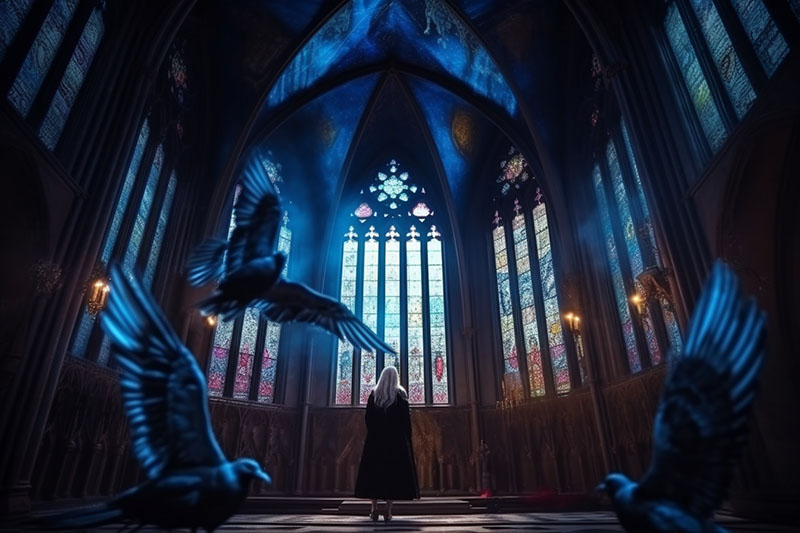
Answer: Oh yes, the older lore has lots of great content. I routinely incorporate “canon” material into my game, but love to fill in the gaps with my own homebrew. I’ll even try and marry the old and new lore on occasion. For example, in 5e they gender bend the ruler of Falkovnia – Vlad Drakov – into Vladeska Drakov. In my game, Valdeska is the daughter of the original Dark Lord who has systematically butchered her many, many siblings to take the reigns of power as the undisputed ruler of the land.
How much time is usually spent preparing your game sessions? Describe a typical session.
Answer: Its hard to say how long I prepare because I do it in bite sized chunks after my kids go to bed while I’m watching Netflix with the wife! I’ll write it little notes and ideas to myself and come back to it later. As any DM knows, some content you make gets completely bypassed by players, but I’ll often “recycle” that content. The old catacombs that the players never explored becomes and underground fortress of a necromancer of laboratory to a mad scientist. I’ve learned that if you “save it for later,” later never comes!
How long have you been using Obsidian Portal? What brought you to the site and what keeps bringing you back?
Answer: I think I started in 2022 as a way to store my ideas and content. I would never be able to remember everything, so having a man repository that is organized the way I like it is super helpful. I’m 99% sure my players don’t even use this wiki, but it sure is helpful for me to keep my world straight and organized.
If you had to pick just one thing, what would you say Obsidian Portal helps you with the most?
Answer: Organization for sure. Visuals help me remember things far better than names and texts, so having things arranged exactly the way that makes sense to me is very helpful.
What would you say is the biggest highlight of your game so far (please also provide images and links if possible)?
Answer: Anytime I can get the reaction of “I REALLY hate that guy” from my players regarding an antagonist feels like an absolute victory to me. Also, when my players geek-out over my table setups, it makes all the work I put into them worth it.
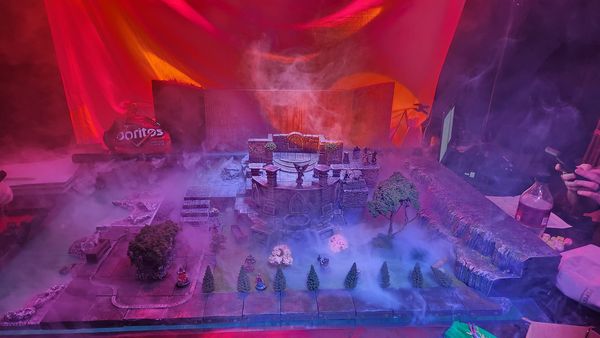
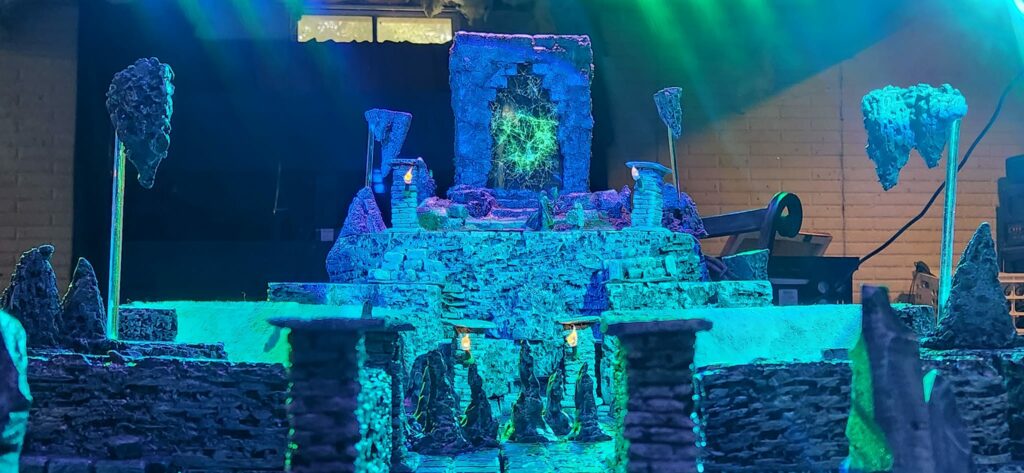
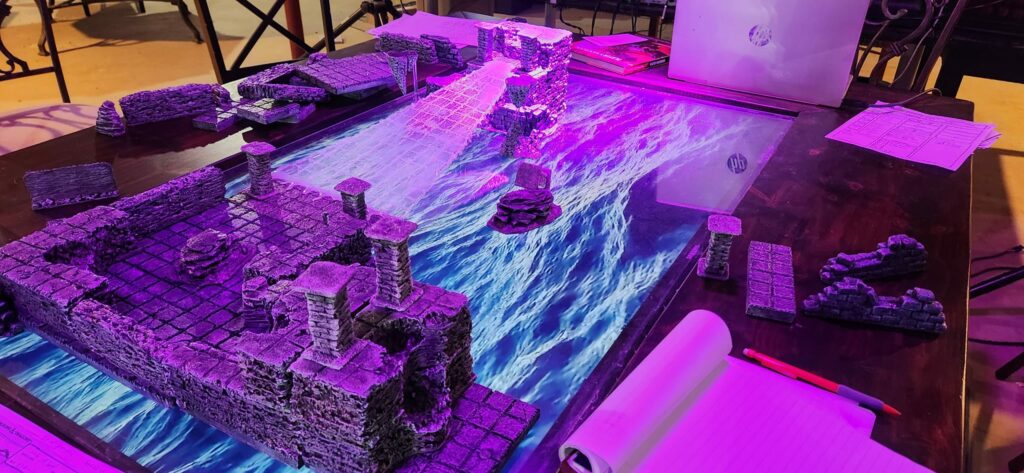
Okay, as a last question, we always ask for the GM’s “pearls of wisdom”. What GM insights can you offer the community this month?
The game and story are better if you don’t stubbornly cling to what you think SHOULD happen, but instead let the story naturally progress. The classic saying is that no story survives the encounter with the players, so let that inspire you. I often will come at a setting with the mentality of “what would happen if the players did NOT intervene?” Then, I use the choices the players make inform what DOES happen, and more often than not, its unexpected and better than what I would have planned. I love not knowing what will happen, so every session is exciting and rewarding for everyone at the table.
Thank you to the community for making this campaign of the month possible! That’s all for now, join us on our next adventure September 1st, and don’t forget to nominate your favorite campaigns for our next Campaign of the Month!
Obsidian Portal Campaign of the Month August 2024: Freeing Phandalin

Greetings, brave souls and seekers of tales untold! Today, we embark on a journey into the heart of a fantastical realm where dragons soar and heroes rise. Join us in talking with Bortas, the GM behind Freeing Phandalin, the winner of our Campaign of the Month for August 2024!
I want to jump straight into your setting. Phandalin is a location I am sure many folks are at least passingly familiar with, given that, what drew you to run your game here?
I’ve ran LMoP and really had a great time, and in reviewing the newer starter box, DoIP, I noted the questing system is more “West Marches” style, putting a lot of agency on the players to pick the sort of adventure they want, with far less railroading involved. The plot sort of develops out of ‘order,’ but it develops in a way the players pick.
Next, tell us a bit about yourself as a GM. How long have you been running games? I notice you have a few other games, some in the same system, some in Pathfinder, do you have a favorite system? Lastly on this topic, do you get a chance to play much or do you prefer to live behind the screen?
I started playing in 2011, and almost immediately started writing for my own campaign. I’ve done homebrew campaigns, and I’ve run prebuilts, both have differing appeals. I don’t get to be a player as much as I like (no one can relate, I’m sure!); every couple of years I get into a campaign, but I’ve never been in one that last longer than 6 or so sessions. I like systems that are sort of vanilla fantasy, they are flexible enough that we can add our own weirdness on top of, but universal enough that no one has to be a rules expert.
Switching gears for a moment here. Tell us a little about why you chose 5e for this game (as well as some of your others)? Do you have any homebrew you typically include in 5e games or anything special just for this one?
I’m fond of 5e, as it feels like you can ramp up or down the ‘crunchiness’ of it depending on player ability, even in the same game. My buddy can get really into utilizing complex mechanics for the fun/silly, but his daughter is likely to just move and blast 🙂 As for home brewing, I’m not great at developing a game world that comes out at the table, so I do less of that these days, and let basic settings handle the heavy lifting, let me focus on engaging encounters.
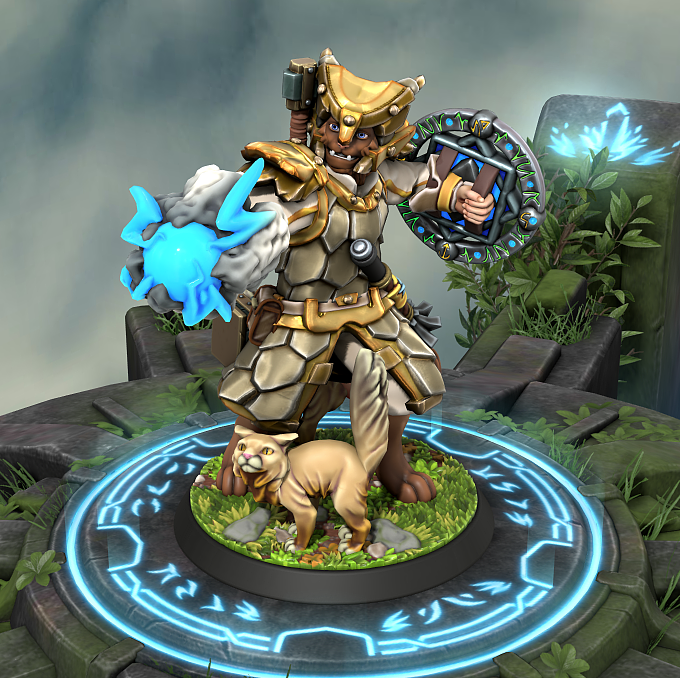
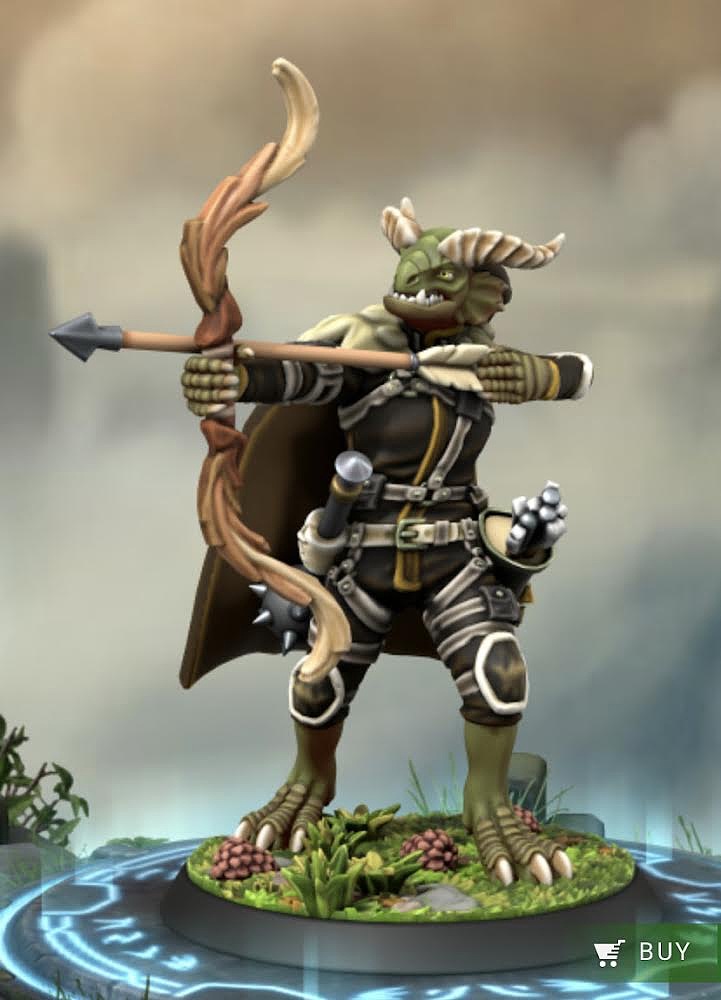
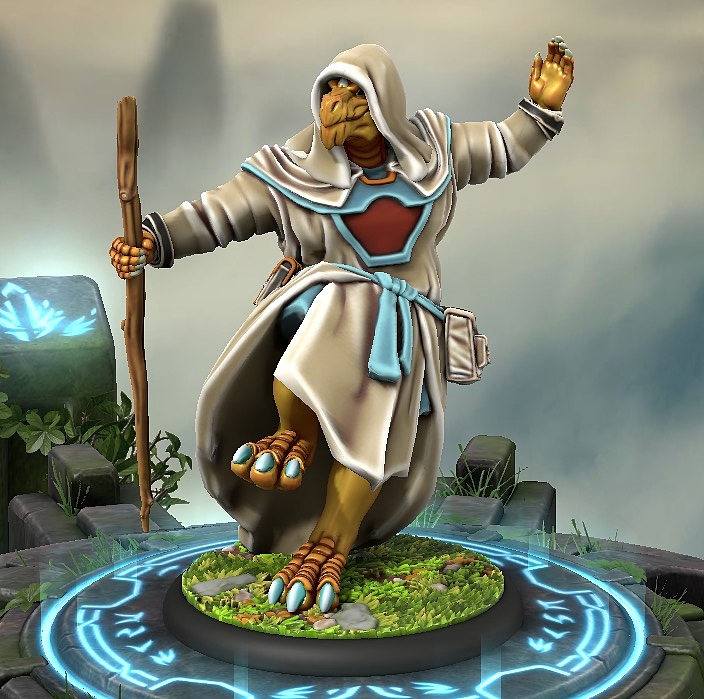
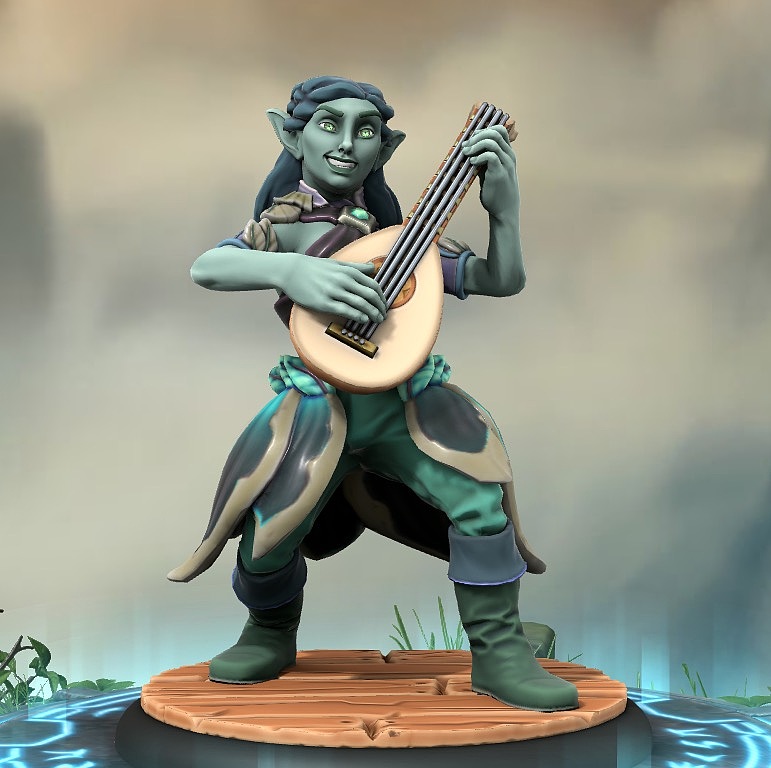
I love the mix of character art in this game, there is a very consistent feel to it yet the individual characters are quite distinct. How do you come by it? Made by yourself or a player, AI tools, borrowed from the internet?
Artwork most of the basic graphics for the site I built with the community experts, but if it looks like a graphic, I probably just used google image search. I do tend to run it through the same filter and crop them similarly for consistency. The character artwork is using the HeroForge system to make minis, then just a screenshot :-). I find that you can take pretty different image art styles, but if they both have a sepia filter and similar contrast, it’ll work out.
What’s your group like and how do you play? In person, remote, a mixture? How did you assemble your party?
I’m fortunate enough to play in person. I’m even more fortunate, in that I only have to schedule with one other family. Our gaming group started as my partner inviting another couple, but almost immediately our oldest kids wanted in, and after a couple of months, the two younger kids wanted in. So….. I have too many players, 3 adults and 4 kids…. But they get along, and less adult scheduling disasters. As for summoning the crew, the adults get together and cry over our calendars for a while, before agreeing on a date way too far in the future. Adulting sucks.
The look and feel of your site is fantastic, seeing as you’ve been on Obsidian Portal for a while, I’d love to know how long it took you to nail this one down, also if you have any tips or tricks that might be useful to others when it comes to planning and execution of such a stellar site we’d love to hear them!
Re site design: I spent a lot of 2016-2018 in the community section of this site. My goal when I first started learning was simple: to resent a medieval feeling, while on a website – replace the feeling of ‘tech’ with ‘magic’. This sort of informed every design decision: the right is on parchment, character images expand when focused on, etc. OP really helped me discover CSS and what it could do. I worked really hard on my first OP site. But after that campaign concluded, I realized a bunch of my design work had been too specific for that campaign. I took that campaign’s CSS and whittled a bunch out, my goal updated to being able to take just the CSS and drop it into any campaign and have that campaign be transformed, without customization needed. My only advice to people learning: look at other people’s code. Look at your site at different browsers. Look at it with different browser widths. You can do it, AND we want to see it!
Shifting back to the game itself, do you or your players have any great, or terrible, moments you’d like to highlight?
The party had come upon an orc-infested shrine. At the start of the round, they rolled an escalating doom die (each round, add +1, bad things happen at high numbers), more orcs would spawn, a mini boss, an environmental disaster (collapse of some kind). Anyway, the orcs just keep coming and coming, and after a few rounds, they started trying new things. From my perspective, there was no exit condition. They tried new things and they worked. When they elevated above move smash move, the orcs spit out some bosses and that was the end.
Looking through the reports (Adventure Logs) for this game, I adore the use of elements like “(text missing)” as well as the odd image. Is that a collaborative effort or do you manage the chronicling all by yourself?
I’m glad you picked up on the “text missing” – i utilize that to cover a section where I could write a lengthy description… that doesn’t necessarily serve to advance the story, even if it would recap highlight. I do all of the cataloging, so partly it is about saving me effort. But I also review the last log with the crew before we play, and this is better done in a short, punchy way, so I try to write my logs as very dense highlights. The parts that were in our imagination when we did it, I try to leave in our imagination and instead remind us, rather than tell us.
Famous last question. What’s a bit of your GM secret sauce you think others should know about?
Secret GM Sauce: TTRPGs are not players vs DM. You celebrate their wins, feel mourn their defeats. Your job is to present tough problems, not solutions – present them a problem you don’t know how to solve and then lean into their creative genius. Remember your job in response Is very very simple: “that just works” “that could never work” “hmmm, I’m not sure, and if you failed, that could be bad – let the dice decide!” Don’t jump to the last option “roll dice” first – your world makes far more sense to people if the obvious failure points obviously fail. Or the trivial tasks don’t warrant dice. When we operate inside of set of rules (more so if we aren’t super familiar with the rules), it’s easy to say no: but your job is “yes, and!” And…. If you’re behind the screen, you’re a servant and hero to me <3
Thank you to the community for making this campaign of the month possible! That’s all for now, join us on our next adventure September 1st, and don’t forget to nominate your favorite campaigns for our next Campaign of the Month!